Let me tell you what’s actually happening in procurement meetings right now.
A logistics operator sits across from a client — a client they’ve worked with for years and gets asked a question they weren’t expecting. Not about pricing. Not about turnaround times. About emissions data. Specifically, what fuel their yard equipment runs on, how many diesel hours their forklift truck fleet clocks monthly, and whether they have any electrification plans in place.
Five years ago that question didn’t exist. Today it’s ending contracts.
Carbon compliance has left the sustainability department. It’s sitting in boardrooms, vendor audits, and supply chain reviews and it’s being driven by people who have their own emissions targets to hit and are looking very carefully at whether their suppliers are helping or hurting those numbers.
That’s Scope 3. And if you’re running cargo handling services, port operations, warehousing, or aviation logistics this is your problem now, whether you’ve started treating it that way or not.
Here’s the Part That Surprises Most Operators

Most people understand their own direct emissions — the fuel they burn, the electricity they buy. That’s Scope 1 and 2. Manageable. Familiar.
Scope 3 is different because it reaches into operations you don’t control. Outsourced logistics. Equipment rentals. Vendor operations. Transport services. All of it gets counted by someone.
Here’s what that means practically, if a global retailer is auditing their supply chain and your diesel forklift truck fleet is moving their cargo, those emissions appear in their Scope 3 report. Your equipment. Their compliance problem. And when compliance becomes someone else’s problem, contracts get reconsidered.
At Mazda Movers, we’ve spent decades alongside shipping companies in India, ports, and airports. The conversations have genuinely changed. Customers who used to open with “what’s your lifting capacity?” are now leading with questions about electric fleets and lifecycle emissions. That shift happened faster than most of the industry was ready for.
Global Buyers Aren’t Waiting for Regulations
International retailers, automotive manufacturers, aviation operators, e-commerce giants they’re not sitting around waiting for governments to force sustainability requirements into contracts. They’re already doing it themselves.
If you’re providing container handling services, handling yard transfers, or supporting airport operations on diesel-heavy equipment, you’re creating carbon exposure for everyone upstream from you. That exposure is being measured, reported, and factored into supplier decisions right now.
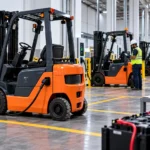
The operators responding well are moving toward forklift rental service models that include electric alternatives reducing compliance risk without betting the balance sheet on a full fleet purchase overnight. In Mumbai particularly, more businesses are working directly with an Electric forklift dealer in Mumbai to start the transition before clients start asking why it hasn’t happened yet.
That last part matters. Being asked why you haven’t started is a much worse conversation than explaining how far along you are.
Airports and Ports Are Feeling This Differently
Ground-level operations at airports and ports face a specific kind of pressure that warehouse operators don’t always experience they’re visible, regulated environments where environmental performance gets scrutinized externally, not just internally.
Airports expanding cargo terminals aren’t just looking for airport ground handling equipment that performs well on the ramp. They need equipment that meets environmental targets, because their own sustainability commitments depend on it. Older diesel Ground Handling Equipment is being replaced not because it stopped working, but because what it emits stopped being acceptable.
Port operators serving global shipping alliances are in a similar position. Sustainability benchmarks set at the alliance level filter down to every partner in the chain. As a long-standing container handler dealer partner to logistics operators across India, we see this consistently — equipment decisions that used to be purely operational now have a compliance layer sitting on top of them.
The Financial Argument Is Actually the Strongest One
Here’s what cuts through the environmental conversation for operators who are focused on margin: staying diesel-heavy is becoming expensive in ways that weren’t priced in before.
Carbon-related taxes are building. Contract eligibility is narrowing for operators who can’t demonstrate sustainability progress. Insurance costs are moving. ESG ratings which affect financing are being downgraded for businesses that haven’t modernized fleets. None of these are distant possibilities. They’re already affecting operators who assumed they had more runway.
Electric fleets backed by structured annual maintenance contract programs flip that risk profile. Energy costs become predictable. Maintenance complexity drops. Long-term operational efficiency improves in ways that compound quietly over time.
Why Rental Is the Realistic Starting Point
Upfront cost is the honest reason most operators delay and it’s a fair concern. Full fleet electrification isn’t cheap.
Rental changes the math. No large capital commitment sitting on the balance sheet. Access to current technology without locking into yesterday’s specs. Predictable costs through forklift service contracts. Reduced downtime exposure.
Structured annual maintenance contract programs keep battery health monitored, forklift spare parts available, and technical support accessible when things need attention. For businesses working with a Material handling equipment supplier in Mumbai or evaluating a Forklift dealer in Mumbai, the right partner makes this manageable rather than overwhelming.
Replacing a forklift crane is the easy part. The service infrastructure behind it — battery management, compliance documentation, technical response that’s what determines whether electrification actually works in practice.
Practical Steps Worth Taking Now
Not next quarter. Genuinely now:
- Run an honest audit of your current fleet emissions exposure
- Identify which diesel-heavy categories create the most compliance risk
- Explore rental-based electrification options before ownership conversations
- Strengthen annual maintenance contract frameworks across electric assets
- Align procurement planning with ESG reporting requirements
One Last Thought
The businesses that move on electrification now — not because regulators forced them but because clients started expecting it — are building a competitive position that’s genuinely hard to replicate quickly.
At Mazda Movers, scalable fleet options, reliable cargo handling services, and structured maintenance support are how we help operations make this transition without dismantling what’s already working.
Follow us on Instagram, Facebook and LinkedIn for real insights on fleet modernization and carbon-smart logistics.
Fleet electrification stopped being optional a while ago. The only question left is whether you move on your terms or scramble to catch up on someone else’s timeline.