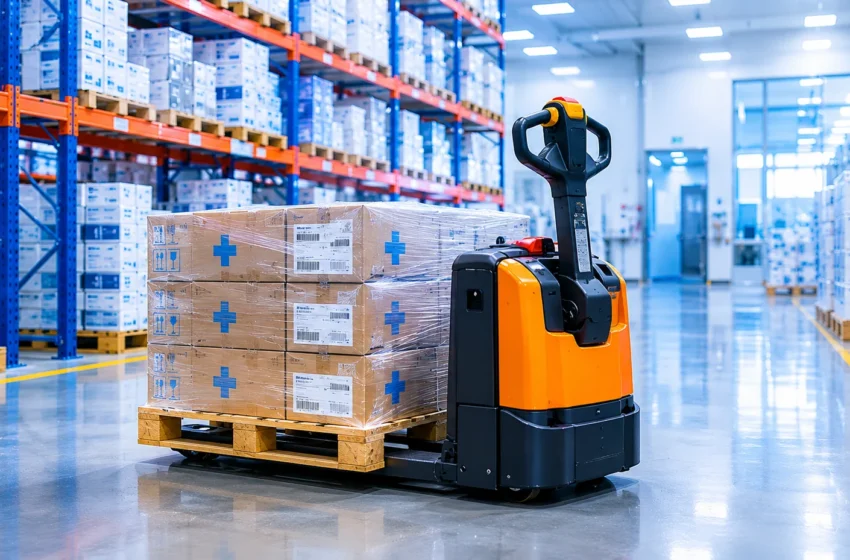
Pharmaceutical warehousing is not like any other. GMP (Good Manufacturing Practice) is a mandatory criterion, as is control of temperature, expiry dates, and prevention of contamination. Selecting the wrong MHE for pharma can lead to compliance issues, product loss, patient safety concerns, and more.
What Makes Pharma Warehousing Different?
Pharma products are:
- High-value: ₹1,000-100,000+ per unit
- Temperature-sensitive: Storage requirements vary by product, ranging from cold-chain conditions (2–8°C) to controlled room temperature environments.
- Regulated: Governed by GMP, WHO, and pharmaceutical compliance standards
- Traceable: From the manufacturing process to dispensing
- Fragile: Incorrect handling = damaged goods
In pharmaceutical warehouses, improper MHE for pharma can lead to major product losses and compliance risks.
GMP Standards for Warehouse Equipment
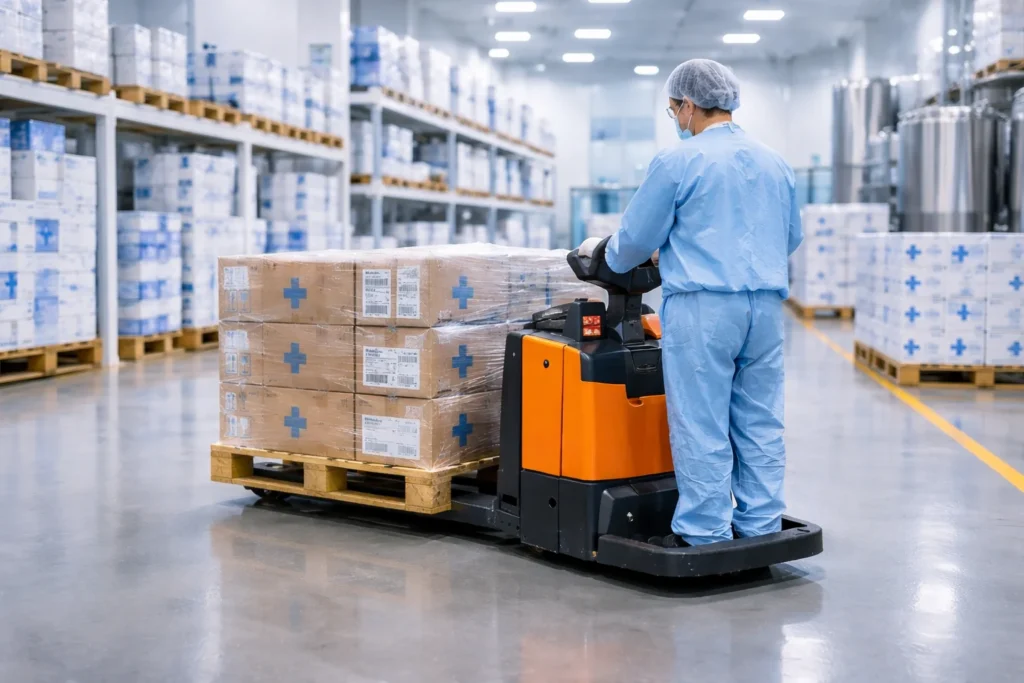
GMP (Good Manufacturing Practice) guidelines define the way in which pharmaceutical products are to be handled, stored, and transported.
Most important GMP guidelines for Material Handling Equipment for Pharma:
- Cleanliness: Equipment should be of the type that can be easily cleaned (no dirt buildup, sanitizable)
- Non-contamination: No metallic shedding, particle release, or chemical leaching
- Documentation: All equipment maintenance, operation, and servicing records must be documented.
- Maintenance: No equipment failures, maintenance schedule followed for preventative maintenance.
- Operators: Trained, certified, monitored for compliance
- Segregation: Equipment for different product lines separated (cross-contamination prevention)
Non-compliance with GMP can result in product rejection, regulatory action, financial losses, and, in severe cases, suspension of manufacturing or distribution licenses.
Best MHE for Pharma Warehouses
1. Battery-operated pallet trucks
Why electric?
- Zero emissions (very important for air quality in closed warehouses)
- Quieter operation helps maintain a cleaner and safer working environment.
- No fuel storage (pharma regulation requirement)
- Lower maintenance requirements (fewer moving parts)
Specs for pharma:
- Load Capacity: 2–3 Tons
- Power Type: Electric Battery-Operated System
- Noise Level: Low-noise operation below 70–75 dB
- Fork Length: 1150–1220 mm standard pallet support
- Lift Height: 120–200 mm pallet lifting range
- Battery Type: Maintenance-free Lead Acid / Lithium-Ion Battery
- Operating Time: 6–8 Hours per charge
- Charging Time: 4–6 Hours
- Application: Pharma warehouses, temperature-controlled storage facilities, and GMP-compliant logistics operations. Cleanroom use requires equipment specifically designed and certified for cleanroom environments.
- Rental Cost: ₹15,000–25,000/month depending on capacity & battery configuration
2. Shelving Systems
Requirements:
- Stainless steel or epoxy coated (No rust, cleanable)
- Smooth surfaces (without crevices where dust can collect)
- Load capacity per shelf: 100-500kg
- Adjustable shelves (flexibility for different product sizes)
- Cost: ₹10,000-50,000 per unit (purchased, not rented)
3. Automated Conveyor & Transfer Systems
Why automated?
- Automation reduces contamination risk by minimizing direct human handling
- Temperature-controlled compartments available
- Supports FIFO (First In, First Out) inventory management when integrated with warehouse management systems.
- Real-time inventory visibility
- Capacity: 500-5,000 unit positions
- Cost: ₹50 lakhs-5 crores (for full system)
- Suitable for: Large pharma distribution centers
4. Cleanroom-Friendly Carts & Bins
Requirements:
- Stainless steel construction
- Smooth, crevice-free design
- Easy to sanitize
- Wheels with brakes (prevent accidental movement)
- Cost: ₹5,000-20,000 per cart
5. Conveyor Systems
Why conveyors?
- Minimizes manual handling
- Minimises risk of operator contamination
- Smooth, controlled movement
- Hygienic surfaces (stainless steel options)
Conveyor systems are commonly used between receiving, putaway, picking, and packing zones.
Forklifts in Pharma Warehouses – When & How
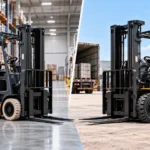
Forklifts should be used when:
- High-volume operations (>1,000 pallets/day)
- High shelf (>3m)
- Heavy loads (>2 tons)
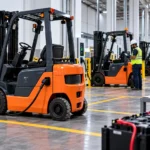
GMP-compliant forklifts should include:
- Low emission electric forklifts frequently preferred due for its lower emissions and cleaner operation.
- Operators must complete GMP and equipment-handling training
- Documentation Maintenance logs, operator certifications
- Cleanability Daily clean minimum (regular cleaning schedule)
- Speed control Maximum 10 km/h in the warehouse (safety, dust control)
- Price ₹30,000-50,000/month rent for Electric Forklift
Safety Standards for Pharma Warehouses
General Warehouse Safety Requirements:
- Never exceed the rated load capacity. (Risk of tipping)
- Operator certification is required (safeguards against accidents)
- Equipment maintenance schedule followed (Prevents failures)
- Hazard communication (warning labels and safety signage on equipment).
FDA/WHO GMP Compliance:
- Product is not contaminated by equipment design
- Maintenance records are maintained and should be available for inspection
- Operator training documented
- A system for reporting non-conformances is in place
Choosing MHE for Pharma Logistics – 5 Steps
Step 1: Assess Volume
- <500 pallets/day: Manual/Semi-Auto (pallet jacks, carts)
- 500-2,000 pallets/day: Electric forklift + shelving
- 2,000+ pallets/day: AS/RS + conveyor systems
Step 2: Evaluate Space
- Limited: AS/RS (Vertical reach system)
- Abundant: Counterbalance systems
Step 3: Temperature Requirements
- Ambient: Standard equipment
- Controlled (15-25°C): Closed warehouse systems, AS/RS with climate control
Step 4: Product Sensitivity
- Products with robust packaging may be handled using standard GMP-compliant equipment.
- Fragile/sensitive: Gentle-handling systems (slow conveyors, padded racks)
Step 5: Budget
- Cost of capital expenditure versus operating expenditure (rent vs buy)
- Maintenance cost included in rental agreements
- Training costs (important for GMP compliance)
Cost-Benefit for Pharma MHE
The importance of investing in proper Material Handling Equipment for Pharma:
- Can significantly reduce product damage and handling errors.
- Can improve picking accuracy when supported by barcode scanning and warehouse management systems.
- Reduces inventory holding costs (increases inventory turnover)
- Supports GMP compliance (prevents regulatory fines)
- Reduces labour costs (more efficient operations)
Key Takeaway
Pharma warehouse Material Handling Equipment for Pharma must not compromise on efficiency while being safe, clean and compliant with GMP. For many modern pharmaceutical warehouses, automated systems, electric equipment, and hygienic storage solutions play a critical role in maintaining compliance, product integrity, and operational efficiency.
Operating a pharma warehouse? Mazda Movers offers GMP-compliant material handling solutions tailored to the requirements of pharmaceutical warehouses and logistics operations.
Connect now and let us take care of material handling operation requirements for your pharma business.
Also, follow us on Instagram, Facebook and LinkedIn for insights on fleet modernization, automation trends, and advanced logistics strategies.