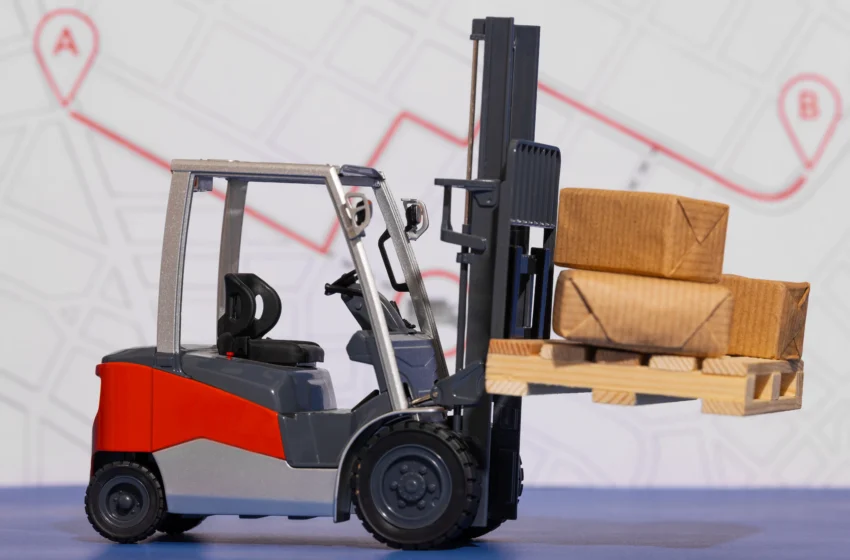
FMCG (Fast-Moving Consumer Goods) warehousing is a unique category of warehousing. FMCG warehousing is characterised by rapid inventory turnover, continuous replenishment, and tight profit margins. The forklift you choose is not just a piece of equipment—it can either improve profitability or increase operational costs.
The FMCG Challenge: Why Forklift Choice Matters
Choosing the wrong forklift for FMCG can result in higher fuel costs, increased maintenance requirements, and reduced warehouse productivity.
The characteristics of FMCG operations include:
- High volume: 100-500+ pallet movements per day (24/7 operations are common)
- Thin margins: 5-15% margin per product (efficiency is survival)
- Continuous operation: Machines operate between 16 and 24 hours a day
- Product variety: Both light (snack products, beverages) and moderately heavy (beverages in bulk, oils)
The wrong forklift can lead to downtime, delayed shipments, dissatisfied customers, and lost revenue.
Types of Forklifts for FMCG – Comparative Analysis
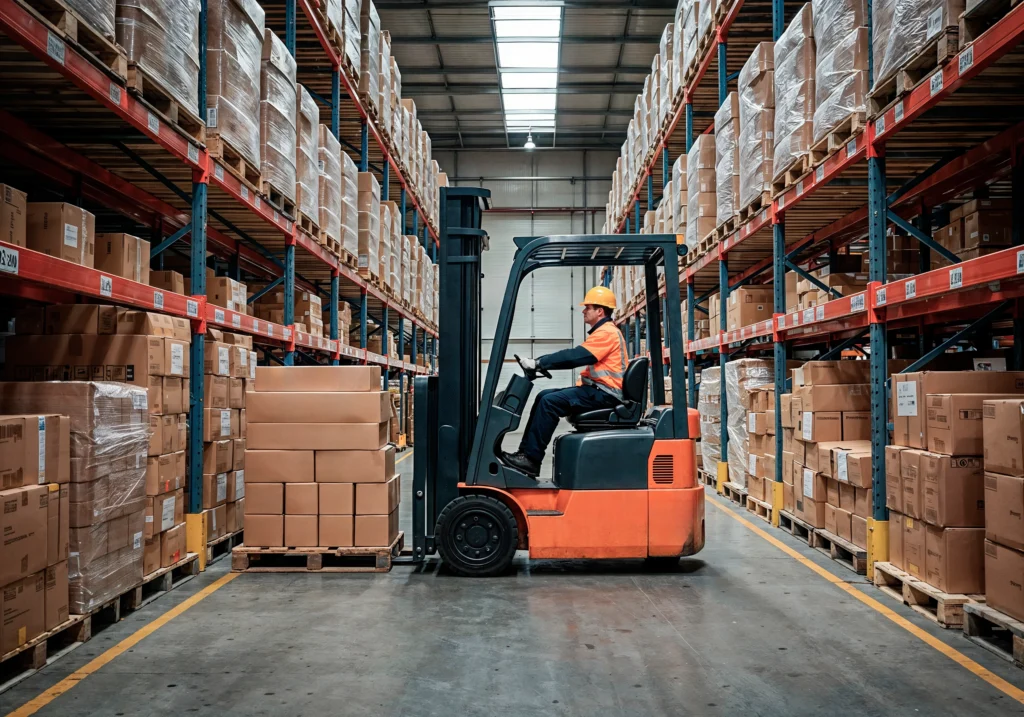
1. Diesel Forklifts
Best suited for:
- Outdoor operations
- Heavy-duty applications
- Uneven or rough surfaces
Specs for FMCG:
- Capacity: 3-5 tons
- Cost of fuel: ₹8-12 per hour
- Running expenses: ₹150-200/hour
- Lift height: 4-6 meters
- Speed: 15-18 km/h
Cons:
- Emissions (not suitable for indoor warehouses)
- Noise (impacts operations)
- Higher maintenance (more moving parts)
- Fuel storage and compliance requirements
Cost: ₹20,000-35,000/month forklift rental service
Best FMCG scenarios:
- High volume operations with a mixed goods inventory
- Outdoor storage areas
- Extended hours of operation
2. Electric Forklifts
Best for:
- Indoor applications
- Hygiene-sensitive applications
- Cost-conscious long-term applications
Specs for FMCG:
- Capacity: 2-3 tons
- Charging cost: ₹1-2 per hour
- Operating cost: ₹20-40 per hour (significantly lower than diesel in most applications)
- Lift height: 4-6 meters
- Speed: 12-15 km/h
Cons:
- High up-front costs
- Battery charging time (8-10 hrs overnight or hot-swap batteries)
- Limited capacity (2-3 tons max)
- Less suitable for rough outdoor terrain unless specifically designed for such conditions
Cost: ₹25,000-40,000/month forklift rental service
Best FMCG scenarios:
- High frequency operations
- 24/7 (with battery-swap)
- Enclosed warehouses
- Cost-optimization focus
3. LPG Forklifts
Middle ground between diesel and electric.
Specs:
- Capacity: 2-4 tons
- Operating cost: ₹30-60 per hour
- Emissions: Cleaner than diesel
- Maintenance: Moderate
Ideal for operations that require frequent movement between indoor and outdoor environments.
Why Electric Forklifts Are Preferred in FMCG
Many modern FMCG warehouses increasingly favour electric forklifts due to lower operating costs and reduced emissions.
| Metric | Diesel | LPG | Electric |
| Operating cost/hour | ₹150-200 | ₹40-60 | ₹20-40 |
| Annual cost (2,000 hrs) | ₹3-4 lakhs | ₹80-120K | ₹40-80K |
| Maintenance cost/year | ₹50,000-1,00,000 | ₹30,000-50,000 | ₹10,000-20,000 |
| Environmental score | Low | Medium | High |
| Impact on warehouse air quality | High | Medium | None |
5-year cost for 2 forklifts for FMCG (10,000 hours):
- Diesel: ₹15-20 lakhs operating + ₹10 lakhs maintenance = ₹25-30 lakhs
- Electric: ₹6-12 lakhs total cost (operating + maintenance)
Electric forklifts can significantly reduce operating and maintenance costs compared with diesel alternatives, depending on utilization levels and electricity rates.
Ideal Load Capacity for FMCG Forklifts
The weights of FMCG products vary as follows:
Light FMCG products
- Snacks
- Biscuits
- Breakfast cereals
- Packaged consumer goods
Medium-weight products
- Bottled beverages
- Dairy products
- Edible oils
Heavy products
- Bulk liquids
- Concentrates
- Large-volume beverage stock
Best strategy – 80% of operations on 2-3T forklift, reserve 5T forklift for occasional heavy loads.
Choosing a Forklift for High-Speed Operations
FMCG centers work quickly. Orders are received, sorted and dispatched all within a few hours.
Speed considerations:
- Instant response (no delay from cold start) → Winner: Electric Forklifts for FMCG
- Maneuverability (lift, lower, change direction quickly) → Winner: Electric (smooth hydraulic, no clutch engagement)
- Reliability: Electric forklifts generally have fewer moving parts, which may reduce maintenance requirements.
- Continuous operation can be achieved through battery-swapping systems or opportunity charging strategies.
For high-speed FMCG applications, the verdict is electric forklifts for FMCG with a hot-swap battery strategy (2 sets of batteries, swap every 8 hours) for 24/7 high speed operation with minimum downtime.
Forklift Rental Cost for FMCG Warehouses
Small operation (2 forklifts – 100 pallet moves/day):
- Electric forklift rental service: ₹25,000 × 2 = ₹50,000/month
- Battery/charger: Included
- Maintenance: Included
- Annual cost: ₹6 lakhs
Large operation (10 forklifts – 500 pallet moves/day):
- Electric forklift rental service: ₹20,000 × 10 = ₹2 lakhs/month
- Volume discount: 10-20% available
- Net monthly: ₹2-2.4 lakhs
- Annual cost: ₹24-29 lakhs
Buy vs Rent Decision:
| Factor | Rent | Buy |
| Upfront cost | ₹0 | ₹15-30 lakhs per unit |
| Monthly cost | ₹25,000-40,000 | ₹5,000-10,000 (depreciation + maintenance) |
| Flexibility | High (scale up/down) | Low (committed assets) |
| Maintenance | Included | Your responsibility |
| Downtime risk | Low (spare provided) | High repair cost |
For many FMCG businesses, renting offers flexibility, predictable maintenance costs, and easier fleet scaling. However, purchasing may be more cost-effective for organisations with consistently high utilisation and long-term operational requirements.
Best Practices for Forklift Operations in FMCG
- Operator training: Ensure operators receive appropriate certification, safety training, and warehouse-specific orientation.
- Daily checks: Before each shift, tires, hydraulics, forks inspected
- Speed limits: 10 km/h in warehouse (for safety, protection of product)
- Load securing: Avoid over-stacking and ensure proper pallet placement.
- Maintenance schedule: Monthly maintenance for rented equipment (included in rental)
- Fuel/battery management: Electric – overnight or hot-swap; Diesel, fuel stored according to regulations
Key Takeaway
Electric Forklifts for FMCG with hot-swap batteries are now the standard solution for FMCG warehouses, offering cost efficiency (60-80% savings), reliability (minimal downtime) and flexibility for high speed operations. Combine with a good forklift rental service company (maintenance fees included) and you have this vital process down to a science.
Are you managing FMCG warehouse operations? Mazda Movers offers dedicated forklifts rental service for FMCG, with trained professionals to manage & execute seamless operation.
Don’t stress out, let the expert handle it.
Connect now and let us take care of the material handling operation requirements for your warehouse.
Also, follow us on Instagram, Facebook and LinkedIn for insights on fleet modernization, automation trends, and advanced logistics strategies.