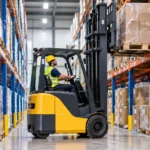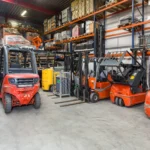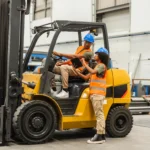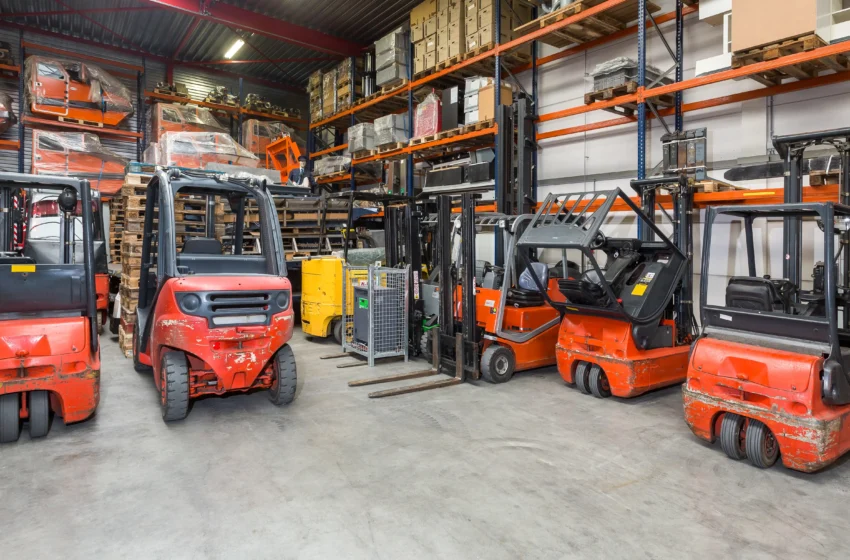
Managing multi shift forklift operations requires a structured approach to equipment allocation, operator handovers, preventive maintenance, safety inspections, and performance monitoring. Forklifts must remain suitable for the workload across every shift, with clear responsibility for reporting faults, checking equipment condition, and coordinating maintenance.
Businesses should plan equipment availability around shift schedules, monitor operating hours, and establish preventive maintenance routines. Where demand increases or existing equipment cannot support continuous operations, forklift rental services and forklift AMC services can help maintain operational continuity.
Key Takeaways
- Allocate forklifts according to workload, shift timings, and material-handling requirements.
- Conduct pre-shift inspections and structured handovers between operators.
- Monitor operating hours to schedule maintenance before equipment breakdowns.
- Maintain trained operators and consistent safety procedures across shifts.
- Evaluate forklift rental and AMC options when equipment demand or utilisation increases.
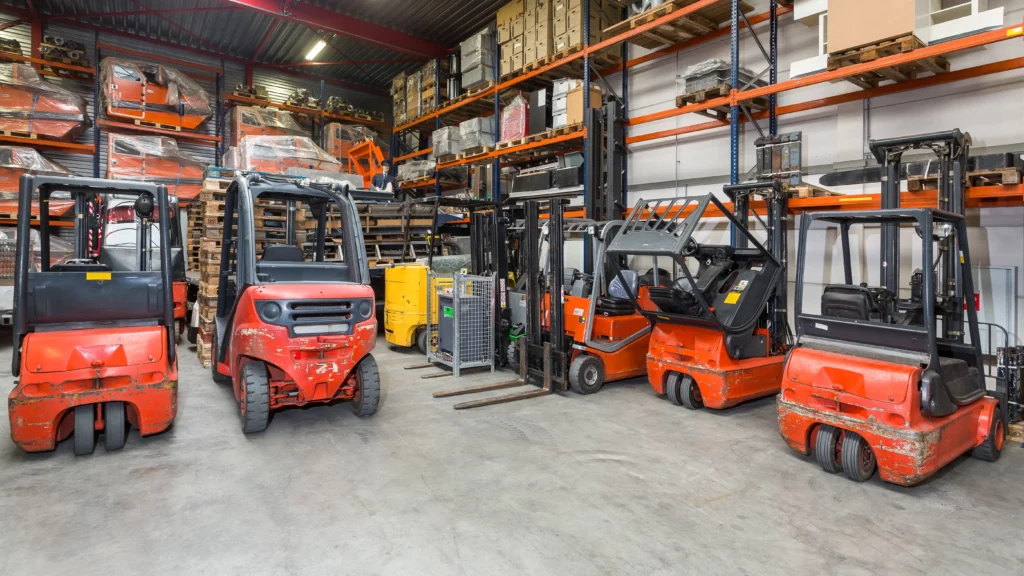
Managing Forklift Availability and Performance in Multi-Shift Operations
Warehouses, automotive facilities, manufacturing plants, and logistics centres often operate across two or three shifts to maintain continuous material movement. Forklifts support activities such as receiving, pallet movement, production-line supply, inventory storage, and dispatch.
However, operating forklifts across multiple shifts introduces additional responsibilities. Equipment used by one operator during the morning shift may be handed over to another operator in the evening. Maintenance requirements can also become harder to coordinate when machinery operates for extended periods.
Without proper planning, multi shift forklift operations can lead to equipment shortages, inconsistent inspections, unexpected breakdowns, and productivity losses.
The objective is to maintain equipment availability while ensuring that every shift follows consistent operating and maintenance procedures.
What Are the Main Challenges in Multi-Shift Forklift Operations?
1. How Can Businesses Maintain Equipment Availability?
When multiple shifts share the same forklifts, equipment availability becomes an important operational consideration.
A forklift undergoing maintenance during a busy shift can delay material movement and affect production schedules.
Businesses should evaluate:
- Number of forklifts required per shift.
- Peak material-handling periods.
- Equipment utilisation and operating hours.
- Availability of backup equipment.
- Planned maintenance windows.
Equipment allocation should reflect actual workload rather than assuming that every shift requires an identical number of forklifts.
2. How Should Operators Manage Shift Handovers?
Poor communication between operators can result in faults going unreported.
For example, an operator may notice unusual braking behaviour or tyre damage towards the end of a shift but fail to communicate it to the next operator.
A structured handover should include:
- Current equipment condition.
- Reported faults or unusual noises.
- Fuel or battery status.
- Operating-hour readings.
- Outstanding maintenance requirements.
- Any restrictions on equipment use.
A simple handover register helps maintain accountability.
3. How Can Maintenance Be Managed Across Shifts?
Extended operating hours can increase the importance of maintenance planning.
If maintenance is scheduled only during standard office hours, equipment may remain unavailable when operational demand is highest.
Businesses should track operating hours, follow manufacturer-recommended service intervals, and coordinate inspections around shift schedules.
4. How Can Safety Standards Remain Consistent?
Different operators may have different levels of experience and familiarity with equipment.
Without consistent procedures, forklift handling practices can vary between shifts.
Businesses should maintain uniform safety requirements covering load limits, pedestrian movement, speed restrictions, parking, and pre-operation inspections.
MHE Selection Table: Matching Equipment to Shift Requirements
The right equipment depends on the material being handled, operating duration, facility layout, and working environment.
| Operational requirement | Suitable equipment to consider | Selection factor |
|---|---|---|
| Indoor pallet movement | Electric forklift | Operating hours and charging arrangements |
| Heavy industrial material handling | Diesel forklift | Load capacity and ventilation requirements |
| High-volume warehouse storage | Reach truck | Aisle width and storage height |
| Production-line material movement | Counterbalance forklift | Load dimensions and movement frequency |
| Extended warehouse operations | Application-suitable forklift fleet | Utilisation and maintenance planning |
| Temporary peak demand | Rented forklift | Rental duration and equipment suitability |
Equipment should be selected according to the complete application, not simply the number of shifts.
Operational Challenges That Affect Multi-Shift Productivity
Continuous forklift usage can create operational pressure when equipment allocation and maintenance are not coordinated.
Some common challenges include:
- Equipment downtime: Mechanical issues during peak shifts can interrupt warehouse activities.
- Operator fatigue: Extended working hours and demanding handling schedules can affect alertness.
- Uneven equipment utilisation: Some forklifts may be overused while others remain underutilised.
- Maintenance delays: Limited maintenance windows can make it difficult to service equipment without affecting operations.
- Shift communication gaps: Incomplete handovers can result in unresolved faults and repeated operational issues.
These challenges can affect warehouse throughput, production schedules, and dispatch commitments.
How to Manage Multi-Shift Forklift Operations Effectively
Businesses can establish a consistent operating framework using the following steps.
Step 1: Map forklift requirements for each shift
Identify the material-handling activities performed during each shift. Record peak workloads, movement frequency, load types, and equipment requirements.
Step 2: Allocate equipment based on utilisation
Assign forklifts according to operational demand. Avoid unnecessary equipment movement between departments and ensure suitable backup arrangements for critical activities.
Step 3: Introduce pre-shift inspections
Every operator should inspect the forklift before use. Checks should cover:
- Tyres and wheels.
- Forks and mast condition.
- Brakes and steering.
- Horn, lights, and warning devices.
- Hydraulic systems.
- Fuel or battery condition.
Any safety-related defect should be reported immediately, and unsafe equipment should not be operated.
Step 4: Standardise operator handovers
Use a common handover checklist or digital register. Record operating hours, equipment condition, reported faults, and pending maintenance.
Step 5: Track operating hours
Monitor usage across all shifts rather than relying only on calendar-based maintenance schedules. Follow the manufacturer’s service recommendations.
Step 6: Schedule preventive maintenance
Coordinate servicing during suitable low-demand periods. Ensure that maintenance personnel have access to equipment history and reported faults.
Step 7: Review performance regularly
Track equipment availability, downtime, maintenance frequency, utilisation, and operational delays. Use these records to identify recurring issues and adjust equipment allocation.
When Should Businesses Consider Forklift Rental and AMC Services?
Businesses with changing workloads may not always need to purchase additional forklifts.
Forklift rental services can be useful when:
- New shifts are introduced.
- Production or dispatch volumes increase.
- Seasonal warehouse demand rises.
- Existing equipment is temporarily unavailable.
- A project requires additional material-handling capacity.
Forklift AMC services can support businesses that depend on regular equipment availability. A structured maintenance arrangement helps coordinate servicing, inspections, and equipment upkeep according to agreed service terms.
For facilities operating continuously, maintenance planning should account for equipment usage across all shifts.
Cost Considerations for Multi-Shift Forklift Operations
The cost of operating forklifts across multiple shifts extends beyond fuel or electricity consumption.
| Cost factor | What to evaluate |
|---|---|
| Equipment investment | Purchase or rental costs based on utilisation |
| Energy or fuel | Consumption across operating shifts |
| Maintenance | Scheduled servicing and component replacement |
| Downtime | Lost productivity and delayed material movement |
| Operators | Training, shift allocation, and staffing |
| Attachments | Compatibility and maintenance requirements |
| Battery management | Charging time, battery condition, and charging infrastructure |
| Fleet utilisation | Whether equipment is adequately used across shifts |
A larger fleet is not automatically more economical. Businesses should compare equipment utilisation, rental costs, maintenance requirements, and the consequences of equipment shortages before expanding their fleet.
Managing Multi-Shift Forklift Operations in Indian Industries
Indian warehouses and manufacturing facilities often coordinate material movement around production schedules, dispatch deadlines, and changing workforce arrangements.
Automotive plants may require consistent movement of components between storage and assembly areas. Logistics warehouses may experience different receiving and dispatch volumes across shifts. Aviation-related ground support operations also require equipment availability aligned with operational schedules.
Businesses should pay particular attention to:
- Maintaining inspection records across shifts.
- Planning maintenance around production schedules.
- Managing battery charging and fuel availability.
- Ensuring trained operators are available for every shift.
- Addressing monsoon-related surface conditions in loading and outdoor handling areas.
- Maintaining clear pedestrian and forklift movement routes.
Consistent procedures help maintain operational discipline even when different teams operate the same equipment.
Common Mistakes to Avoid
- Allowing operators to use forklifts without pre-shift inspections.
- Ignoring equipment faults during shift handovers.
- Scheduling maintenance only when a breakdown occurs.
- Failing to monitor cumulative operating hours.
- Using the same forklift configuration for every material-handling task.
- Overlooking operator training and shift-wise responsibilities.
- Expanding the fleet without reviewing actual utilisation.
- Treating forklift availability as a substitute for equipment safety.
Industry Insight: Consistency Across Every Shift
At Mazda Movers, we recognise that forklift requirements are influenced by operating hours, material movement frequency, equipment condition, and the working environment.
For businesses operating multiple shifts, equipment selection and maintenance planning need to work together. A forklift that performs well during one shift must also remain suitable for the demands placed on it throughout its operating schedule.
We recommend evaluating equipment utilisation, maintenance requirements, and operational workload together rather than treating each shift as a separate activity.
How to Choose the Right MHE Partner
Before selecting a forklift rental or maintenance provider, evaluate:
- Equipment availability: Can the provider support changing operational requirements?
- Fleet suitability: Are suitable forklifts available for your load types and warehouse layout?
- Maintenance support: Are preventive maintenance and AMC arrangements available?
- Technical assistance: Can equipment issues be assessed and addressed appropriately?
- Service flexibility: Can maintenance be coordinated around shift schedules?
- Operational understanding: Does the provider understand continuous material-handling requirements?
A suitable MHE partner should help businesses plan for equipment availability and maintenance, not just supply machinery.
Why Mazda Movers?
Mazda Movers provides forklift rental, material-handling equipment solutions, maintenance support, and annual maintenance contracts for industrial and warehouse requirements.
For businesses operating across multiple shifts, these services can support equipment planning, additional capacity requirements, and ongoing maintenance needs.
Whether you are expanding warehouse operations or reviewing your existing forklift fleet, Mazda Movers can help you explore suitable material-handling solutions.
Key Takeaway: Plan Equipment Around the Entire Shift Cycle
Effective multi shift forklift operations depend on more than having enough forklifts. Businesses need structured inspections, operator handovers, utilisation tracking, and preventive maintenance across every shift.
If your warehouse operates continuously and faces equipment availability or maintenance challenges, connect with Mazda Movers to explore suitable forklift rental and AMC solutions.
Frequently Asked Questions
Q1. How many forklifts does a multi-shift warehouse need?
It depends on workload, material movement frequency, equipment utilisation, and peak demand during each shift.
Q2. How often should forklifts be inspected during multiple shifts?
Operators should conduct pre-operation inspections before each shift or use, following the manufacturer’s procedures and workplace safety requirements.
Q3. How can businesses reduce forklift downtime across shifts?
Monitor operating hours, conduct regular inspections, report faults promptly, and schedule preventive maintenance around operational requirements.
Q4. Are forklift rental services suitable for multi-shift warehouses?
Yes. Rental can help businesses manage additional demand, temporary projects, and equipment shortages without purchasing additional machinery.
Q5. Why are forklift AMC services important for continuous operations?
AMC services help organise scheduled maintenance and equipment upkeep, supporting better maintenance planning and reducing avoidable interruptions.
Related Reads
Running forklifts across several shifts puts pressure on power, uptime and maintenance. If you read one more guide, we recommend Electric Forklift Battery Charging Best Practices for Multi-Shift Warehouses, which covers charging practice for warehouses that never stop. The other two help you measure fleet performance and plan maintenance cover.