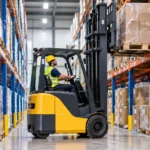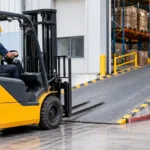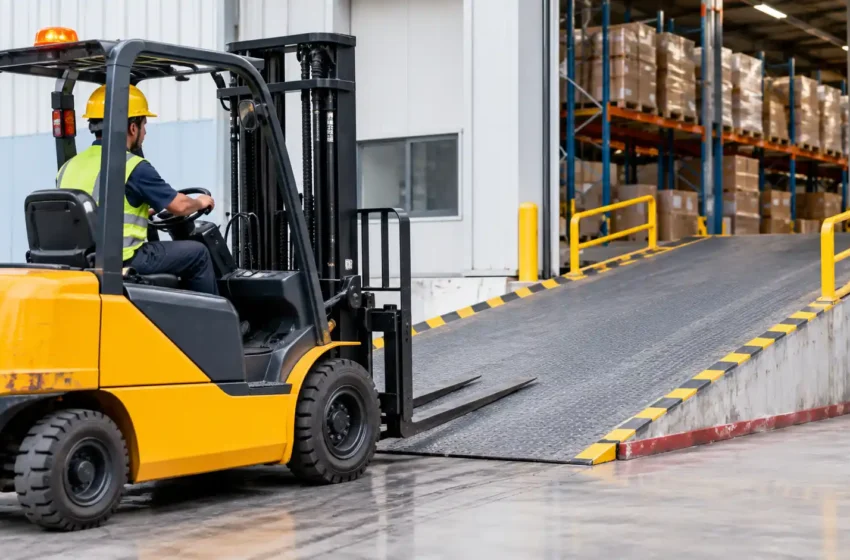
When a forklift cannot climb a warehouse ramp, stop the operation safely and identify the cause before attempting another climb. Common reasons include excessive ramp gradients, overloaded equipment, incorrect load positioning, inadequate tyre traction, poor ramp conditions, and mechanical issues affecting the engine, transmission, or braking system.
The solution may involve correcting the load, improving ramp conditions, inspecting the forklift, or selecting equipment better suited to the application. Repeatedly accelerating or attempting to climb with an unsuitable forklift can increase safety risks and equipment damage.
Key Takeaways
- Forklift ramp climbing problems can result from traction issues, excessive loads, unsuitable gradients, or mechanical faults.
- Always check the ramp condition, forklift capacity, load positioning, and equipment condition before operation.
- Never exceed the manufacturer’s approved ramp gradient or operating limits.
- Diesel forklifts may suit certain heavy-duty outdoor and industrial applications, depending on site conditions.
- Regular maintenance and appropriate equipment selection help reduce downtime and improve material-handling efficiency.
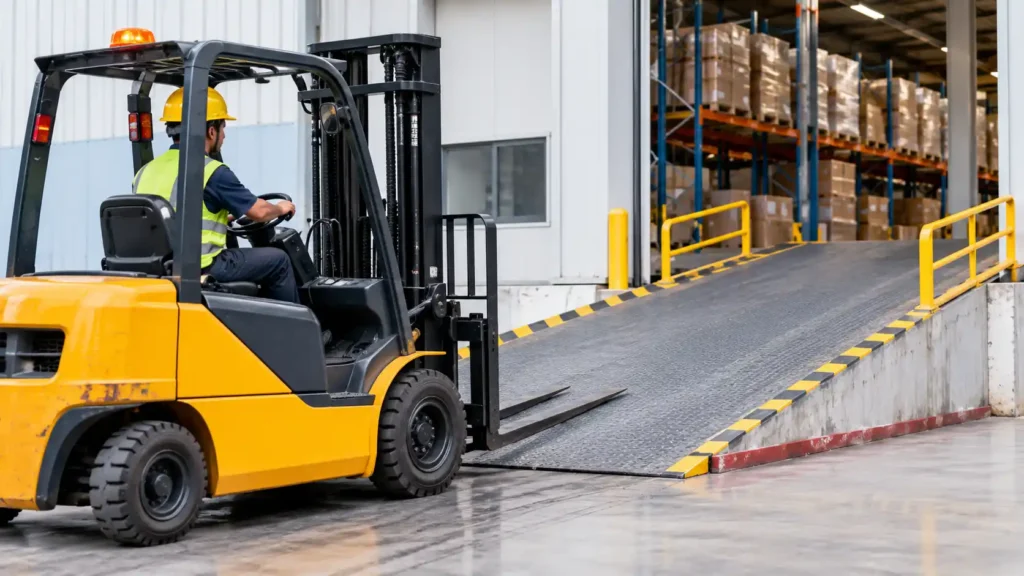
Understanding Forklift Climbing Problems and Their Impact on Material Handling
Forklifts regularly move materials between different operational levels in warehouses, manufacturing facilities, loading bays, and industrial storage areas. Ramps are particularly important where goods need to move between ground-level operations, elevated platforms, and loading docks.
However, a forklift that operates efficiently on a flat surface may struggle when climbing a ramp. These forklift ramp climbing problems can interrupt material movement, delay dispatch schedules, and create potentially unsafe operating conditions.
The issue is not always related to engine power. Ramp gradient, load weight, tyre condition, surface traction, and forklift configuration all influence climbing performance.
Understanding these factors helps businesses identify the problem and select the right material-handling solution.
Why Is a Forklift Unable to Climb a Warehouse Ramp?
1. Is the Ramp Too Steep for the Forklift?
Every forklift has operating limitations determined by its design and manufacturer specifications. A ramp with an excessive gradient can make climbing difficult, particularly when the equipment is carrying a heavy load.
Before operation, check:
- Ramp gradient and length.
- Manufacturer-approved gradeability.
- Loaded and unloaded operating limitations.
- Surface condition and available traction.
Gradeability figures should not be treated as automatic approval for every loaded ramp operation. Always follow the manufacturer’s instructions.
2. Is the Forklift Carrying Too Much Weight?
An overloaded forklift may struggle to climb a ramp because the load affects traction, stability, and available lifting capacity.
The load centre also matters. A load positioned too far forward or unevenly distributed can affect forklift stability.
Check the load weight, centre of gravity, and rated capacity before attempting another movement.
3. Are the Tyres Providing Sufficient Traction?
Worn tyres, unsuitable tyre types, loose gravel, oil, water, and uneven surfaces can reduce traction.
This is particularly relevant in industrial facilities where forklifts operate between indoor warehouses and outdoor loading areas.
Inspect tyres and the ramp surface before use. Do not attempt to compensate for poor traction by accelerating aggressively.
4. Could There Be a Mechanical Problem?
If the forklift struggles on a ramp despite suitable operating conditions, the problem may be mechanical.
Potential causes include:
- Engine performance issues.
- Transmission or drivetrain faults.
- Hydraulic system problems.
- Incorrect tyre pressure, where applicable.
- Brake drag or other mechanical resistance.
A qualified technician should inspect the equipment rather than allowing repeated climbing attempts.
Which Forklift Is Suitable for Different Ramp Conditions?
Equipment selection depends on the load, ramp design, surface, operating environment, and manufacturer specifications.
| Operating requirement | Equipment to consider | Important consideration |
|---|---|---|
| Indoor warehouse ramps | Suitable electric or IC forklift | Ramp gradient, traction and operating limits |
| Heavy outdoor material movement | Diesel forklift | Surface conditions and gradeability |
| Loading bay operations | Counterbalance forklift | Ramp dimensions and load positioning |
| Repeated movement between levels | Application-suitable forklift | Duty cycle and manufacturer approval |
| Uneven outdoor surfaces | Suitable rough-terrain forklift | Ground conditions and load capacity |
| Restricted indoor spaces | Suitable electric warehouse forklift | Aisle dimensions and ramp compatibility |
A diesel forklift is not automatically the right solution for every ramp. The equipment must be matched to the actual operating conditions.
Operational Challenges Caused by Forklift Ramp Climbing Problems
When a forklift cannot climb a ramp efficiently, the impact can extend across the entire material-handling operation.
Common operational challenges include:
- Dispatch delays: Materials cannot move smoothly between warehouse levels and loading areas.
- Reduced productivity: Operators may need additional time to reposition loads or use alternative equipment.
- Equipment wear: Repeated attempts to climb unsuitable ramps can place additional stress on mechanical components.
- Safety concerns: Loss of traction, uncontrolled movement, or incorrect load positioning can increase accident risks.
- Operational bottlenecks: Other material-handling activities may be delayed while equipment remains unavailable.
Identifying the underlying problem early helps businesses avoid unnecessary downtime.
How to Resolve Forklift Ramp Climbing Problems: A Step-by-Step Approach
Businesses should follow a systematic inspection process rather than repeatedly attempting to move the forklift uphill.
Step 1: Stop and secure the equipment
If the forklift cannot climb, stop the operation safely. Follow the manufacturer’s procedure for securing the equipment. Do not allow the forklift to roll backwards or attempt an uncontrolled descent.
Step 2: Inspect the ramp
Check for water, oil, loose material, uneven surfaces, damaged flooring, and excessive gradients. Ensure the ramp is suitable for the intended forklift operation.
Step 3: Reassess the load
Verify the load weight against the forklift’s rated capacity. Check the load centre, fork positioning, and weight distribution.
Step 4: Check the tyres
Inspect tyre condition, pressure where applicable, and suitability for the operating surface. Replace damaged or excessively worn tyres as required.
Step 5: Inspect the forklift
If the problem continues, arrange a technical inspection of the engine, transmission, drivetrain, brakes, and other relevant systems.
Step 6: Review equipment suitability
If the existing forklift is unsuitable for the ramp, evaluate alternative equipment based on manufacturer-approved gradeability, load capacity, and site conditions.
Do not attempt further climbs until the cause has been identified and the equipment is confirmed safe for operation.
When Should Businesses Consider Diesel Forklift Rental?
Diesel forklifts are commonly considered for heavy-duty material handling in suitable outdoor and industrial environments. They may be appropriate for operations involving heavy loads, frequent movement, and outdoor loading areas.
Businesses may consider diesel forklift rental when:
- Existing equipment struggles with the site’s operating requirements.
- Temporary projects require additional material-handling capacity.
- Manufacturing facilities experience increased material movement.
- Warehouses need backup equipment during maintenance.
- Outdoor operations require a suitable internal combustion forklift.
Rental decisions should account for ventilation, emissions, noise, surface conditions, and the equipment manufacturer’s operating recommendations.
Cost Considerations: Repair, Replace or Rent?
When forklift ramp climbing problems interrupt operations, businesses should evaluate the total cost rather than focusing only on immediate repair expenses.
| Cost factor | What businesses should evaluate |
|---|---|
| Maintenance | Engine, transmission, tyre and brake inspections |
| Downtime | Lost productivity and delayed material movement |
| Equipment utilisation | Frequency and duration of ramp operations |
| Rental expenses | Cost of suitable replacement equipment |
| Operator requirements | Training and familiarity with equipment |
| Fuel or energy | Consumption based on operating hours and workload |
| Attachments | Compatibility and impact on rated capacity |
For occasional heavy-duty operations, diesel forklift rental may be more practical than purchasing additional equipment. For regular operations, preventive maintenance and a suitable annual maintenance contract (AMC) can help manage equipment upkeep.
Forklift Ramp Operations in Indian Warehouses and Industries
Indian warehouses, automotive facilities, manufacturing units, and logistics centres often operate across different floor levels, loading docks, and outdoor handling areas.
During the monsoon, wet ramps and accumulated water can reduce tyre traction. Industrial sites may also have uneven surfaces, damaged concrete, or temporary loading arrangements.
Businesses should pay particular attention to:
- Ramp drainage and surface maintenance.
- Suitable forklift selection for indoor and outdoor operations.
- Safe movement around loading docks.
- Equipment inspections during seasonal changes.
- Adequate space for manoeuvring and load movement.
Automotive and manufacturing facilities should also consider the weight and dimensions of components being transported between production areas.
Common Mistakes to Avoid
- Repeatedly accelerating when a forklift cannot climb a ramp.
- Ignoring the manufacturer’s gradeability limits.
- Attempting to climb with an overloaded forklift.
- Overlooking worn tyres and slippery ramp surfaces.
- Changing load positioning without considering stability.
- Ignoring early signs of transmission or engine problems.
- Selecting a diesel forklift solely because it has a higher engine power rating.
- Allowing unqualified personnel to inspect or modify equipment.
Industry Insight: Understanding the Complete Operating Environment
At Mazda Movers, we recognise that forklift performance depends on more than engine power or lifting capacity. The operating environment, ramp gradient, load characteristics, tyre condition, and equipment configuration all influence material-handling performance.
Our approach is to consider these factors together when evaluating forklift requirements. A forklift suitable for flat warehouse flooring may not necessarily be appropriate for repeated ramp operations.
Businesses should assess their actual site conditions before choosing equipment, particularly when material movement involves different floor levels and outdoor loading areas.
How to Choose the Right MHE Partner
Before selecting a forklift rental or maintenance provider, consider the following:
- Equipment suitability: Can the provider recommend equipment based on ramp conditions and load requirements?
- Technical support: Is equipment inspection and troubleshooting available?
- Maintenance services: Does the provider offer preventive maintenance and AMC support?
- Rental flexibility: Can equipment be arranged for temporary or changing requirements?
- Equipment condition: Are servicing and safety inspections properly maintained?
- Industry understanding: Does the provider understand warehouse and industrial material-handling requirements?
A suitable MHE partner should evaluate the application before recommending equipment.
Why Mazda Movers?
Mazda Movers provides material-handling solutions, including forklift rental, forklift maintenance, and annual maintenance contracts.
With a focus on supporting industrial and warehouse operations, Mazda Movers helps businesses address equipment requirements through suitable forklift and MHE solutions.
Whether you need diesel forklift rental for an outdoor operation or maintenance support for existing equipment, evaluating the application is the first step towards reliable material movement.
Key Takeaway: Address the Cause Before Changing the Equipment
When a forklift cannot climb a warehouse ramp, the issue may involve ramp gradient, load weight, tyre traction, or mechanical performance. Identifying the actual cause is essential before selecting a repair or replacement solution.
Businesses should prioritise safe operating conditions, manufacturer specifications, and regular equipment maintenance.
If your warehouse or industrial facility is experiencing forklift performance issues, connect with Mazda Movers to explore suitable forklift rental and maintenance solutions.
Frequently Asked Questions
Q1. Why does my forklift struggle to climb a ramp?
Common causes include excessive ramp gradients, overloading, poor tyre traction, incorrect load positioning, and mechanical faults.
Q2. Is a diesel forklift better for climbing warehouse ramps?
Not always. Diesel forklifts may suit certain heavy-duty applications, but ramp suitability depends on gradeability, load, traction, and manufacturer specifications.
Q3. Can an overloaded forklift cause ramp climbing problems?
Yes. Excessive load weight can affect stability, traction, and lifting capacity, making ramp operations unsafe.
Q4. How can I improve forklift performance on warehouse ramps?
Inspect the ramp, tyres, load distribution, and equipment condition. Ensure the forklift is approved for the intended ramp operation.
Q5. When should I consider diesel forklift rental?
Consider rental when your existing equipment is unsuitable, additional capacity is temporarily required, or outdoor material-handling demands increase.
Related Reads
Ramp problems often come down to traction and equipment choice. If you read one more guide, we recommend Forklift Tyres Explained: Solid vs Pneumatic vs Polyurethane, which compares tyre types, a factor that directly affects grip on slopes. The other two cover terrain and stability basics and the electric versus diesel decision.