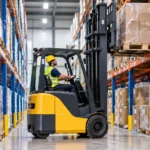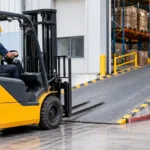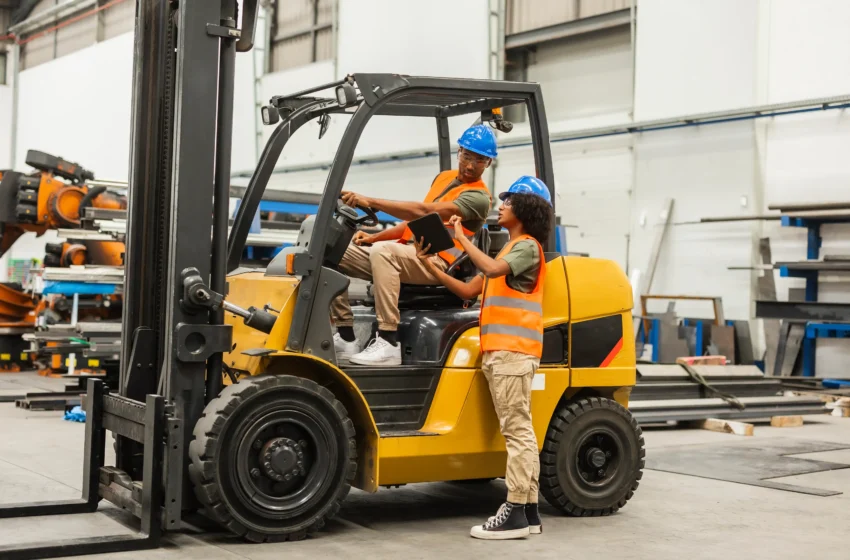
Choosing the right forklift fork length depends on the pallet’s dimensions, load weight, load centre, stability, and the way materials are positioned during lifting. The forks should provide adequate support beneath the load without extending unnecessarily beyond it or interfering with surrounding materials and storage infrastructure.
For oversized pallets and long loads, businesses should assess the actual load dimensions, weight distribution, forklift capacity, and handling environment before selecting fork length. Where handling requirements vary, suitable forklift rental services can help businesses access equipment configured for specific material-handling operations.
Key Takeaways
- Fork length should be selected according to pallet depth, load dimensions, weight distribution, and load stability.
- Oversized pallets may require longer forks to provide adequate support during lifting and movement.
- Longer forks do not automatically mean higher lifting capacity.
- Forklift capacity and load centre must be checked whenever fork dimensions change.
- Businesses should consider operational requirements, safety, and utilisation before purchasing or renting equipment.
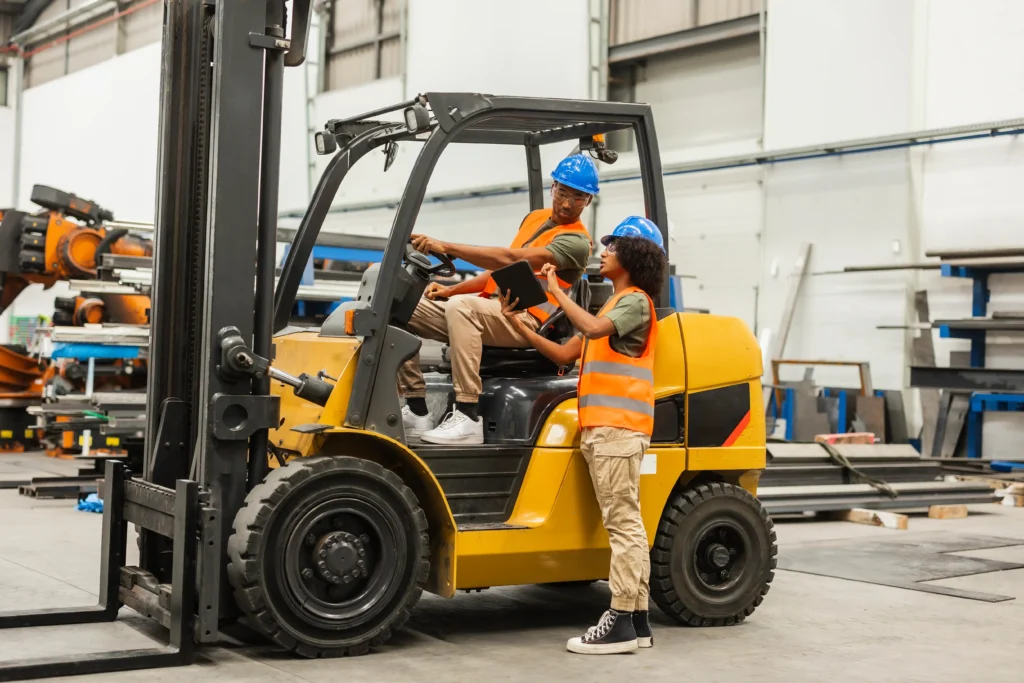
Forklifts are essential for moving materials across warehouses, manufacturing facilities, automotive plants, aviation support operations, and distribution centres. However, handling requirements are not always limited to standard-sized pallets.
Businesses frequently move oversized pallets, long components, industrial machinery, steel sections, and bulky packaged materials. These loads require careful consideration of forklift configuration, particularly the length of the forks.
Selecting an unsuitable forklift fork length can create problems such as insufficient load support, unstable handling, restricted manoeuvrability, and unnecessary operational risks.
The right selection is not simply about choosing longer forks. It involves understanding the relationship between load dimensions, load centre, forklift capacity, and the working environment.
What Challenges Arise When Selecting Forklift Fork Length?
1. How Does Pallet Depth Affect Fork Length?
Pallet depth determines how far the forks need to enter beneath the load. If the forks are too short, they may not provide sufficient support, particularly when handling deep or oversized pallets.
For example, a warehouse handling deeper-than-standard pallets must assess whether its existing forks provide adequate engagement and support.
The objective is to achieve sufficient fork engagement while maintaining load stability.
2. Why Does Load Weight Distribution Matter?
Two loads with identical dimensions can have different handling requirements because their weight distribution may vary.
A long component with most of its weight concentrated towards one end can create an uneven load centre. This affects the forklift’s stability and rated lifting capacity.
Operators must consider:
- Total load weight.
- Centre of gravity.
- Horizontal and vertical load distribution.
- Fork spacing and positioning.
- Manufacturer-rated forklift capacity.
3. Can Longer Forks Affect Forklift Capacity?
Yes. Fork length, attachment weight, and the resulting load centre can influence the forklift’s available lifting capacity.
A longer fork does not automatically increase the machine’s lifting capability. Changes in load centre can reduce the capacity available for a particular lifting configuration.
Always check the manufacturer’s load chart and rated capacity for the intended configuration before operation.
4. How Do Long Loads Affect Warehouse Manoeuvrability?
Long loads can extend beyond the forklift’s usual handling dimensions. This creates additional challenges when navigating narrow aisles, turning around corners, and operating near storage racks.
Businesses should evaluate:
- Aisle width and turning space.
- Loading and unloading areas.
- Overhead obstructions.
- Pedestrian movement.
- Load overhang and visibility.
MHE Selection Table: Matching Equipment to Handling Requirements
Different materials require different material-handling configurations. The following table provides a starting point for evaluating suitable equipment.
| Handling requirement | Equipment to consider | Selection consideration |
|---|---|---|
| Standard warehouse pallets | Counterbalance forklift | Pallet dimensions and rated capacity |
| Deep or oversized pallets | Forklift with suitable longer forks | Fork engagement and load centre |
| Long industrial components | Forklift with suitable fork configuration or approved attachment | Load balance and overall dimensions |
| Heavy automotive components | Heavy-duty forklift | Load weight and centre of gravity |
| Narrow warehouse aisles | Reach truck or suitable narrow-aisle equipment | Aisle width and handling height |
| Bulky packaged materials | Forklift with suitable attachments | Load shape and stability |
Equipment selection should always be verified against manufacturer specifications and the actual handling conditions.
Operational Challenges in Oversized Load Handling
Incorrect fork selection can affect more than the lifting operation. It can create bottlenecks across the material-handling process.
Common operational challenges include:
- Reduced productivity: Repositioning loads because the forks cannot provide adequate support increases handling time.
- Equipment downtime: Using unsuitable configurations can increase equipment stress and maintenance requirements.
- Safety risks: Poor load positioning can contribute to load instability and unsafe handling.
- Storage limitations: Long loads can restrict movement through narrow aisles and congested storage areas.
- Equipment mismatch: A forklift suitable for standard pallets may not be appropriate for oversized or unusually shaped materials.
These challenges make it important to evaluate the complete handling process rather than selecting equipment based only on lifting capacity.
How to Choose the Correct Forklift Fork Length
Businesses can follow this step-by-step selection framework before finalising their forklift configuration.
Step 1: Measure the load
Record pallet depth, width, overall load length, and height. For non-palletised materials, measure the dimensions of the actual handling surface.
Step 2: Determine the load weight and centre of gravity
Identify the total load weight and how it is distributed. An unevenly distributed load may require a different handling arrangement.
Step 3: Assess the required fork engagement
Determine how far the forks must extend beneath the load to provide adequate support. Do not assume that matching the pallet depth alone guarantees stability.
Step 4: Check forklift capacity
Verify the forklift’s rated capacity, load centre, fork specifications, and manufacturer-approved configuration. Consult the load chart whenever fork length or attachments change.
Step 5: Evaluate the working environment
Consider aisle width, turning radius, rack dimensions, floor conditions, loading docks, and the space needed to manoeuvre oversized materials.
Step 6: Conduct a suitability assessment
Have the proposed configuration assessed by a qualified MHE professional. Confirm that the forks, forklift, and handling method are suitable before regular operations begin.
When Should Businesses Consider Forklift Rental or MHE Support?
Not every business needs to purchase specialised forklifts for occasional oversized-load handling.
Forklift rental services can be useful when:
- A warehouse receives oversized consignments periodically.
- Manufacturing operations experience seasonal increases in material movement.
- Automotive facilities handle components of different dimensions.
- Aviation support operations require specialised ground material movement.
- A business needs additional equipment during maintenance or peak demand.
Rental arrangements can provide access to suitable equipment without requiring a permanent investment in machinery used infrequently.
For ongoing operations, businesses can also evaluate annual maintenance contracts (AMC) to support equipment upkeep and reduce the risk of unexpected operational interruptions.
Cost Considerations When Selecting Forklift Fork Length
Fork selection should be evaluated as part of the total cost of material handling.
Consider these factors before making a decision:
| Cost factor | What to evaluate |
|---|---|
| Equipment investment | Cost of the forklift and compatible fork configuration |
| Fork modifications | Approved replacement forks or specialised attachments |
| Utilisation | Frequency of oversized-load handling |
| Maintenance | Inspection, servicing, and replacement requirements |
| Downtime | Productivity losses during equipment breakdowns |
| Operator requirements | Training and familiarity with the equipment |
| Energy or fuel | Operating costs based on usage and equipment type |
A longer fork may appear to be a convenient solution for handling multiple pallet sizes. However, using one configuration for every application may compromise manoeuvrability or capacity. The most economical choice is the configuration that meets the actual handling requirement safely and efficiently.
Forklift Selection Considerations for Indian Industries
India’s manufacturing, automotive, logistics, and warehousing sectors handle a wide variety of materials, from standard export pallets to oversized industrial components.
Automotive facilities may move vehicle assemblies, engines, and bulky components. Warehouses handle different pallet dimensions depending on inventory and packaging requirements. Manufacturing units may also move long metal sections, machinery parts, and fabricated materials.
Businesses operating in industrial areas with high material movement should consider:
- Variations in domestic and export pallet dimensions.
- Congestion around loading bays and dispatch areas.
- Available aisle space in existing warehouse infrastructure.
- Monsoon-related floor conditions and outdoor handling requirements.
- Equipment availability and maintenance support.
Forklift selection should reflect the actual operating environment rather than relying on a standard configuration across every facility.
Common Mistakes to Avoid
- Selecting fork length based only on pallet dimensions.
- Assuming longer forks automatically provide greater lifting capacity.
- Ignoring the load centre and uneven weight distribution.
- Using incompatible or unapproved fork modifications.
- Overlooking aisle width and turning clearance.
- Failing to inspect forks for wear, cracks, bending, or damage.
- Choosing equipment without assessing the complete material-handling requirement.
Industry Insight: Selecting Forks Around the Load
At Mazda Movers, we recognise that material-handling requirements vary across industries and operating environments. A forklift that works efficiently for standard warehouse pallets may not be suitable for oversized pallets or long industrial materials.
Our approach to equipment selection centres on understanding the load, handling frequency, operating space, and equipment requirements together. Fork length should never be evaluated independently of forklift capacity and load stability.
Businesses benefit from assessing these factors before choosing a forklift configuration, particularly when their operations involve different material dimensions or changing workloads.
How to Choose the Right MHE Partner
Before selecting a forklift supplier or rental partner, evaluate the following:
- Equipment range: Does the provider offer forklifts suitable for different load requirements?
- Technical assessment: Can the team evaluate load dimensions, capacity, and fork suitability?
- Maintenance support: Are servicing and AMC options available?
- Operator suitability: Can the provider help establish appropriate operating requirements?
- Equipment condition: Are inspection and maintenance practices followed?
- Operational flexibility: Can equipment requirements be accommodated as workloads change?
A reliable MHE partner should understand your handling requirements rather than recommend equipment based on capacity alone.
Why Mazda Movers?
Mazda Movers supports businesses with material-handling equipment solutions, including forklift rental, equipment maintenance, and AMC services.
With experience supporting material-handling requirements across industries, Mazda Movers helps businesses evaluate equipment suitability, operational requirements, and maintenance needs.
Whether your facility handles standard warehouse pallets or requires equipment for more demanding material movement, selecting the right MHE configuration is an important starting point.
Conclusion: Match Fork Length to the Actual Load
Choosing the correct forklift fork length requires more than measuring pallet depth. Businesses must evaluate load dimensions, weight distribution, load centre, forklift capacity, and operating conditions together.
If your warehouse or industrial facility handles oversized pallets and long loads, consider assessing your current forklift configuration before increasing handling demands.
Speak with Mazda Movers to explore suitable forklift rental and material-handling solutions for your operational requirements.
Frequently Asked Questions
Q1. How do I determine the correct forklift fork length?
Measure the load and pallet dimensions, assess the required fork engagement, and verify load stability and forklift capacity using manufacturer specifications.
Q2. Are longer forklift forks better for oversized pallets?
Not necessarily. Longer forks can provide additional reach, but they may affect load centre, capacity, and manoeuvrability. Selection depends on the application.
Q3. Can I replace standard forklift forks with longer forks?
Yes, where a compatible, manufacturer-approved configuration is available. The forklift’s rated capacity and load chart must be checked before use.
Q4. Which forklift is suitable for handling long industrial loads?
A counterbalance forklift with a suitable fork configuration or approved attachment may be appropriate. The choice depends on load dimensions, weight, balance, and working space.
Q5. When should a business consider forklift rental services?
Rental is useful when equipment demand is temporary, seasonal, project-based, or varies according to material-handling requirements.
Related Reads
Fork length is only one part of a safe lifting setup. If you read one more guide, we recommend Understanding Forklift Load Charts: A Guide for Safe Material Handling, which explains how rated capacity and load centre affect what a forklift can safely lift. The other two cover attachment choices and the safety rules that apply wherever oversized loads are handled.