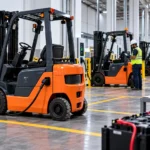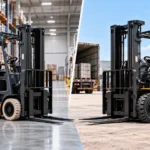
Quick Answer: Effective airport ground equipment maintenance combines pre-use inspections, manufacturer-prescribed servicing, condition monitoring, timely repairs, spare-parts planning and accurate maintenance records. The programme should reflect equipment type, operating hours, duty cycle and airport conditions rather than following one generic service interval. Preventive maintenance helps identify deterioration before equipment becomes unavailable during aircraft, baggage or cargo ground-handling operations.
Key Takeaways
- Preventive maintenance should follow OEM requirements, equipment usage and operating conditions.
- Daily or pre-shift checks complement scheduled workshop servicing rather than replacing it.
- Brakes, tyres, steering, hydraulics, batteries, safety devices and leaks deserve systematic attention.
- Equipment defects should be recorded, prioritised and repaired before they develop into larger failures.
- Maintenance planning should be coordinated with airport operations so servicing itself does not create avoidable capacity gaps.
Ground support equipment works in an unusually demanding operating environment.
Cargo loaders, baggage tractors, forklifts and other ground handling vehicles repeatedly start, stop, turn, lift and travel within tightly controlled airport areas. Equipment may also operate across multiple shifts, leaving limited time for unscheduled repairs.
For airport operators and ground handling teams in India, a structured airport ground equipment maintenance programme is therefore important not only for equipment condition but also for operational continuity.
Why Preventive Maintenance Matters for Airport Ground Support Equipment
Preventive maintenance means inspecting and servicing equipment before a significant failure occurs.
Corrective maintenance, by contrast, begins after a fault has already affected the machine.
Both are necessary, but relying mainly on corrective repairs can create operational problems because ground support equipment is often tied to time-sensitive activities such as baggage movement, cargo handling and aircraft turnaround.
A preventive programme can help teams:
- identify wear before failure
- maintain equipment availability
- plan servicing outside critical operating windows
- detect leaks, braking or steering concerns early
- maintain safety devices
- organise spare-parts requirements
- create a documented equipment history
Mazda Movers’ current maintenance offering includes preventive maintenance, repairs, diagnostics, spare-parts support and Annual Maintenance Contracts, alongside Ground Handling Equipment services for airports.
What Should an Airport GSE Preventive Maintenance Programme Include?
1. Build an Accurate Equipment Register
Start by documenting each asset.
Useful information includes:
- equipment type
- make and model
- identification or fleet number
- commissioning date
- operating-hour reading
- power source
- service history
- major repairs
- attachments
- manufacturer maintenance schedule
This provides a basis for planning instead of relying on memory or reacting to individual breakdowns.
2. Conduct Pre-Shift and Operator Inspections
Operators are often the first people to notice deterioration.
A pre-use inspection can check visible and functional items such as:
- tyres and wheels
- hydraulic leaks
- brakes
- steering response
- warning lights and alarms
- forks or lifting mechanisms
- guards and safety devices
- battery condition or fuel system
- obvious structural damage
Any significant defect should enter a reporting and escalation process rather than simply being passed to the next shift.
3. Follow Manufacturer-Based Maintenance Intervals
There is no responsible universal answer such as “service every X days” for all airport ground support equipment.
Maintenance frequency varies according to:
- OEM recommendations
- operating hours
- equipment type
- age and condition
- number of shifts
- duty cycle
- environmental conditions
- previous fault history
A lightly used unit and equipment operating continuously across shifts should not automatically follow the same maintenance plan.
Which Components Need Close Attention?
Different GSE categories have different maintenance requirements, but several systems deserve regular monitoring.
| System | Typical Checks |
| Brakes | Performance, adjustment, wear and fluid condition where applicable |
| Tyres and wheels | Damage, wear, pressure and wheel security |
| Hydraulic system | Hoses, fittings, leakage, cylinders and fluid condition |
| Steering | Play, response and components |
| Electrical system | Wiring, connectors, lights, alarms and controls |
| Battery system | Charge condition, connectors and manufacturer-required checks |
| Safety equipment | Emergency stops, interlocks, guards and warning systems |
| Lifting components | Forks, chains, platforms, cylinders and attachment condition |
| Engine/drivetrain | Fluids, filters and OEM-specified service items |
The checklist should be specific to each machine instead of applying a forklift checklist to every type of GSE.
Use Condition Monitoring Alongside Scheduled Maintenance
Calendar-based servicing alone may miss developing problems.
Condition-based monitoring uses inspections, operating information and diagnostics to determine whether equipment is deteriorating between planned services.
Warning signs can include:
- recurring overheating
- slower hydraulic response
- unusual vibration
- repeated battery problems
- abnormal noise
- increasing fluid consumption
- frequent minor faults
- declining operating performance
Mazda Movers currently states that its maintenance support includes scheduled preventive maintenance and predictive diagnostics.
The objective is not to replace scheduled servicing, but to identify changing equipment condition earlier.
Plan Maintenance Around Airport Operations
Maintenance planning should consider operational demand.
A technically perfect maintenance calendar can still be disrupted if several critical machines are removed from service during the same peak window.
Before scheduling planned work, consider:
- expected flight or cargo activity
- equipment utilisation by shift
- availability of backup units
- workshop and technician capacity
- expected service duration
- critical spare-parts availability
Where particular GSE performs a critical function, contingency equipment or a clear replacement plan may be required.
Spare-Parts Planning Is Part of Preventive Maintenance
Downtime is not always caused by a difficult repair. Sometimes equipment remains unavailable because the required component is not immediately available.
Maintenance teams should identify:
- regularly consumed service parts
- known wear items
- equipment-specific critical components
- parts with longer procurement lead times
Holding every possible spare is inefficient, so inventory should reflect fleet composition, failure history and operational importance.
A capable maintenance partner should also be transparent about parts availability and repair escalation.
Ground Equipment Maintenance in Indian Airports
Indian airport GSE operates within a regulated ground-handling environment.
The Airports Authority of India (Ground Handling Services) Regulations, 2018 remain part of the current framework, with AAI listing subsequent amendments issued in 2019, 2020 and 2023. The regulations require agencies concerned to use appropriate equipment and ground-handling practices in line with the IATA Airport Handling Manual.
Maintenance teams must also work within airport-specific operational, access and safety procedures.
For operations at airports in cities such as Mumbai, Delhi or other Indian aviation hubs, equipment availability therefore needs to be managed alongside ramp access, parking, workshop arrangements and the operating requirements of the relevant airport and ground-handling organisation.
How Preventive Maintenance Reduces Downtime
Preventive maintenance cannot eliminate every breakdown, but it can change how equipment failures are managed.
Consider two scenarios.
Reactive approach: A machine remains in operation until a component fails, after which technicians identify the fault, source parts and begin repair.
Preventive approach: Inspections identify deterioration, parts are arranged in advance, and work is scheduled when alternative equipment is available.
The second approach creates greater control over when servicing occurs.
For this reason, maintenance performance should not be judged only by repair speed. Teams should also monitor repeat faults, planned versus unplanned maintenance, equipment availability and overdue services.
Common Airport Ground Equipment Maintenance Mistakes
Common problems include:
- servicing solely by calendar date without considering operating hours
- skipping operator checks because workshop maintenance is scheduled
- continuing to operate equipment with recurring minor faults
- poor maintenance records
- using one inspection checklist for different equipment categories
- inadequate spare-parts planning
- postponing maintenance during every busy period
- failing to analyse repeat breakdowns
- not planning replacement equipment before major servicing
Repeated temporary repairs should also trigger investigation into the underlying cause.
Industry Insight: What We Generally Observe in Equipment Support
When businesses approach us for equipment maintenance support, we often find that attention naturally focuses on the unit that has already broken down.
We prefer to look at the wider fleet as well.
If similar machines have comparable operating hours or service histories, one failure can be a useful reason to inspect related equipment before the same issue affects another unit.
We also see servicing delayed because equipment is continuously required for operations. That may solve an immediate scheduling problem, but repeated postponement can make maintenance increasingly difficult to plan.
In our experience, the stronger approach is to coordinate equipment availability, preventive servicing and backup arrangements rather than treating maintenance as a workshop activity separate from airport operations.
How to Choose a Ground Handling Equipment Services Partner
When evaluating maintenance support, ask about:
- preventive and corrective maintenance capability
- technician experience
- diagnostic support
- availability of suitable spare parts
- service documentation
- breakdown response process
- ability to support your specific equipment categories
- planned-maintenance scheduling
- support for rented and owned equipment where applicable
- escalation procedures for recurring faults
A provider should understand the operating role of the equipment, not only the mechanical repair.
How Mazda Movers Supports Airport Ground Equipment Maintenance
Airport ground equipment needs maintenance that accounts for both machine condition and operational schedules. Mazda Movers provides Ground Handling Equipment support for airport cargo, baggage handling and aircraft ground operations, along with preventive maintenance, repairs, diagnostics, spare-parts support and Annual Maintenance Contracts.
The maintenance approach can help businesses plan servicing rather than relying entirely on reactive repairs after equipment failure. Depending on the equipment and requirements, maintenance can involve scheduled inspections, troubleshooting, component repairs and technical support. This is particularly relevant for operations where equipment availability directly affects cargo movement, baggage handling or aircraft turnaround activities.
By combining equipment support with maintenance capabilities, Mazda Movers can help airport and ground-handling teams manage equipment condition, planned servicing and unexpected maintenance requirements through a structured support arrangement.
Conclusion
Effective airport ground equipment maintenance should be planned around equipment condition, OEM requirements and real operating demand. Pre-shift checks, scheduled servicing, diagnostics, accurate records and spare-parts planning work together to reduce avoidable interruptions.
If your airport or cargo operation is reviewing its GSE maintenance programme, Mazda Movers can discuss preventive maintenance, equipment support and ground handling equipment services suited to the operational requirement.
Also, follow us on Instagram, Facebook and LinkedIn for insights on fleet modernisation, automation trends, and advanced logistics strategies.
FAQs
Q1. Why is preventive maintenance important for airport ground equipment?
A. Preventive maintenance helps identify wear and developing faults before they cause unexpected equipment unavailability. It also allows servicing and parts replacement to be scheduled around operational requirements.
Q2. What are the key steps in a GSE preventive maintenance programme?
A. Create an equipment register, perform pre-use inspections, follow OEM maintenance schedules, monitor critical components, record defects, analyse recurring faults, plan spare parts and coordinate servicing with operational demand.
Q3. How often should airport ground support equipment be serviced?
A. Service frequency should follow the equipment manufacturer’s schedule and be adjusted for operating hours, duty cycle, condition and airport environment. There is no single interval suitable for all GSE.
Q4. How does preventive maintenance reduce airport equipment downtime?
A. It allows developing problems to be identified and addressed during planned maintenance instead of waiting for a failure that removes equipment from service unexpectedly.
Q5. What services are included in airport ground equipment maintenance?
A. Depending on the equipment and provider, maintenance can include inspections, scheduled servicing, diagnostics, component repairs, fluid and filter servicing, battery or electrical checks, hydraulic work, safety-system checks and spare-parts replacement.