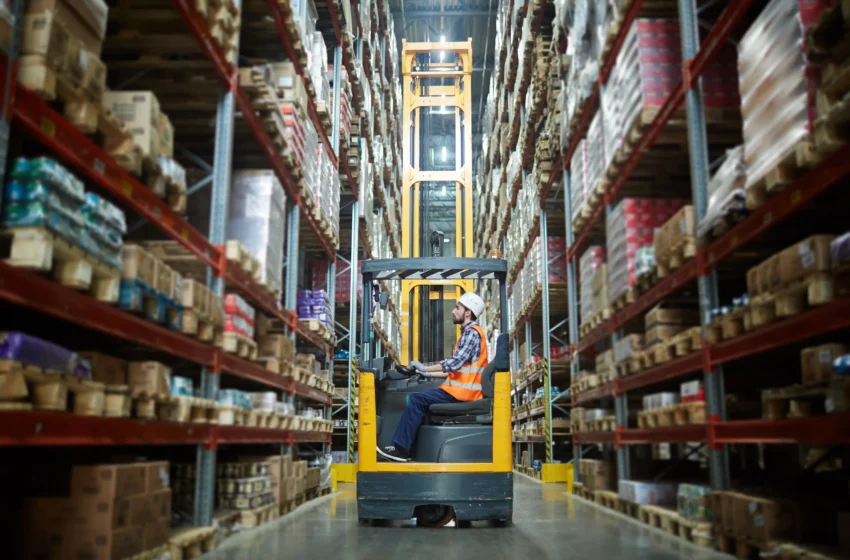
Quick Answer: Warehouse throughput measures how much product, such as pallets, cartons or orders, successfully moves through a warehouse within a defined period. Material handling capacity measures how much work forklifts, reach trucks, pallet trucks and other equipment can realistically perform. Increasing equipment capacity can support higher throughput, but it will not solve bottlenecks caused by poor layouts, congested docks, labour gaps or inefficient processes.
Key Takeaways
- Warehouse throughput measures completed flow, while material handling capacity measures available handling capability.
- More forklifts do not automatically mean more throughput.
- Equipment type, cycle time, utilisation and availability influence MHE capacity.
- Receiving, storage, replenishment, picking and dispatch should be assessed as one connected process.
- Businesses should identify the actual bottleneck before adding warehouse material handling equipment.
For warehouse managers, the words “capacity” and “throughput” can sound interchangeable. They are not.
A warehouse may have enough storage capacity and several forklifts but still struggle to dispatch orders on time. Another operation may appear short of equipment when the real problem is congestion around loading docks or long travel distances between storage and picking zones.
Understanding the difference between material handling capacity and warehouse throughput helps businesses invest in the right operational improvements rather than simply adding equipment.
What Is Warehouse Throughput?
Warehouse throughput is the amount of work successfully completed by a warehouse over a specific period.
Depending on the operation, it can be measured as:
- pallets received per hour
- cartons processed per shift
- orders picked per day
- pallets dispatched per hour
- tonnes handled during a defined period
- vehicle or container loads completed per shift
The right unit depends on the warehouse.
Throughput reflects the performance of the whole operating system, including people, processes, layout, storage, equipment and information flow.
A forklift may be capable of completing another 20 pallet movements, for example, but that extra capacity does not improve dispatch throughput if goods are still waiting to be picked.
What Is Material Handling Capacity?
Material handling capacity is the realistic amount of work that your MHE fleet can perform during a particular operating period.
It depends on more than how many machines are available.
Important factors include:
- forklift or truck type
- rated load capacity
- lift height
- travel distance
- average cycle time
- aisle width
- loading and unloading time
- battery charging or refuelling
- equipment availability
- operator availability
- attachments
- congestion and waiting time
Warehouse Throughput vs Material Handling Capacity
The easiest way to understand the difference is to compare what each measurement tells you.
| Factor | Warehouse Throughput | Material Handling Capacity |
| Measures | Actual goods or orders processed | Available equipment handling capability |
| Scope | Entire warehouse operation | Primarily MHE and operators |
| Influenced by | Layout, labour, systems, stock, docks, MHE | Equipment quantity, type, cycle time and availability |
| Example | 450 pallets dispatched per shift | Fleet capable of 600 pallet movements per shift |
| Main question | How much work is being completed? | How much work can our equipment perform? |
The numbers do not have to be equal.
One pallet may require several MHE movements before it is dispatched, including unloading, put-away, replenishment and transfer to the loading area.
This means businesses should avoid comparing pallet throughput directly with forklift movements unless the complete process has been mapped.
How Material Handling Capacity Affects Warehouse Productivity
Material handling capacity becomes a constraint when available equipment cannot keep pace with required work.
Receiving Can Become the Bottleneck
If inbound vehicles arrive faster than forklifts can unload them, dock congestion develops even if there is plenty of storage space.
Put-Away Can Fall Behind
Insufficient reach-truck capacity can leave received pallets waiting in staging areas rather than moving into racking.
Replenishment Can Restrict Picking
Pickers may appear inefficient when the real problem is that reserve inventory is not reaching pick locations quickly enough.
Dispatch Can Miss Cut-Offs
Completed orders can accumulate in staging if outbound forklifts cannot load vehicles at the required rate.
The important lesson is that material handling capacity should be measured at each stage, not only as one total fleet number.
How to Identify Material Handling Capacity Gaps
A useful assessment starts with five steps.
1. Map the Material Flow
Follow goods from:
receiving → inspection → storage → replenishment → picking → staging → dispatch
Record every point where MHE is required.
2. Measure Cycle Times
A forklift cycle includes more than lifting.
Measure travel, positioning, loading, unloading and return time. Include normal waiting and congestion rather than using an ideal demonstration cycle.
3. Compare Required and Available Equipment Hours
Estimate:
Required MHE hours = expected movements × average cycle time
Then compare the result with realistic productive machine hours available during the shift.
4. Find Queues
Look for pallets, vehicles or operators consistently waiting at the same location.
A repeated queue often provides a clearer indication of the bottleneck than overall fleet utilisation.
5. Check Peak Periods Separately
Daily averages can hide capacity gaps.
Receiving may peak in the morning while dispatch peaks in the evening. Equipment availability should therefore be assessed by time window as well as total daily demand.
More Equipment Does Not Always Increase Warehouse Throughput
This is one of the most important distinctions.
Adding another forklift helps only when forklift capacity is the constraint.
Throughput may instead be limited by:
- narrow or congested aisles
- insufficient loading docks
- slow picking
- poor storage locations
- inadequate staging space
- long travel paths
- stock availability
- operator shortages
- inefficient warehouse procedures
Adding equipment to a congested aisle can actually increase interference between vehicles.
Businesses should therefore diagnose the bottleneck before selecting new material handling solutions.
Matching Warehouse Material Handling Equipment to the Bottleneck
Different bottlenecks call for different equipment.
| Operational Need | Equipment to Evaluate |
| General pallet movement | Counterbalance forklift |
| High-rack storage | Reach truck |
| Restricted aisle operation | Articulated forklift |
| Horizontal pallet transfer | Battery-operated pallet truck |
| Light stacking | Stacker |
| Special load handling | Suitable attachment and forklift |
| Heavy industrial loads | Higher-capacity equipment |
Warehouse Throughput Planning in India
Indian warehouse operations range from space-constrained facilities around major cities to large distribution centres and manufacturing warehouses in industrial and logistics corridors.
A compact urban warehouse may prioritise manoeuvrability and aisle efficiency. A larger facility may be more affected by long travel distances between receiving, storage and dispatch.
Peak production cycles, e-commerce demand and concentrated inbound or outbound schedules can also change handling requirements.
For this reason, warehouse throughput should be measured at the individual site rather than compared against a generic forklift-to-floor-area ratio.
Cost of Getting the Capacity Balance Wrong
Too little MHE capacity can contribute to:
- truck waiting
- staging congestion
- overtime
- delayed put-away
- missed dispatch schedules
Too much capacity can leave rented or owned equipment underutilised.
The better financial approach is to identify the required equipment capacity by process and peak period, then choose a fleet size that provides enough operational resilience without unnecessary idle machinery.
Rental can be particularly useful where demand is temporary, seasonal or still uncertain.
Common Warehouse Capacity Planning Mistakes
Avoid:
- assuming more storage space means higher throughput
- measuring only daily averages
- equating forklift capacity with warehouse capacity
- buying additional equipment before identifying the bottleneck
- ignoring empty travel and waiting time
- overlooking battery charging or maintenance downtime
- using one MHE type for every warehouse task
- failing to reassess the fleet when layouts or volumes change
Industry Insight: What We Look at When Throughput Falls
When businesses approach us about improving warehouse productivity, we often find that forklifts are initially assumed to be the problem.
We prefer to look at where the waiting actually occurs.
If trucks are waiting at receiving while forklifts remain fully utilised, there may genuinely be an equipment-capacity gap. But if forklifts spend significant time waiting for pallets, paperwork or clear aisles, adding another machine may not improve warehouse throughput.
We also see businesses focus on forklift quantity rather than equipment type. A warehouse may not need another conventional forklift at all. The requirement might be a reach truck for racking or a pallet truck for repetitive horizontal movement.
The operating process should therefore lead the equipment decision.
How to Choose a Material Handling Solutions Partner
When evaluating an MHE provider, clarify:
- load types and maximum weights
- warehouse layout and aisle widths
- required lift heights
- current and projected throughput
- shift patterns
- equipment utilisation
- rental duration
- maintenance arrangements
- attachment requirements
- ability to scale capacity
A suitable provider should assess the work before recommending a machine or fleet size.
Why Mazda Movers Can Help Identify the Right MHE Capacity
Increasing warehouse throughput is not always about adding more forklifts. The right equipment depends on where material flow is being restricted and what the operation needs to move, store or dispatch.
Mazda Movers offers a range of material handling equipment, including diesel and electric forklifts, reach trucks, articulated forklifts, pallet trucks and stackers for different warehouse applications.
The rental solutions are available for short- and long-term requirements, allowing businesses to adjust equipment capacity as operational demand changes. A practical assessment can consider factors such as load profile, lift height, aisle configuration, travel distance, operating shifts and peak workloads before selecting equipment. With maintenance and technical support available, Mazda Movers can also support businesses in maintaining equipment availability after deployment, rather than focusing only on increasing fleet size.
Conclusion
Higher material handling capacity does not automatically create higher warehouse throughput. Throughput improves when equipment capacity, warehouse layout, labour and workflow are balanced around the same demand.
Before adding warehouse material handling equipment, identify where work is actually queuing and determine whether the limitation is equipment, process or facility design.
If your warehouse is experiencing capacity gaps, Mazda Movers can review the material-handling application and discuss suitable MHE rental and equipment options for the operation.
Also, follow us on Instagram, Facebook and LinkedIn for insights on fleet modernisation, automation trends, and advanced logistics strategies.
FAQs
Q1. What is the difference between warehouse throughput and material handling capacity?
A. Warehouse throughput measures how much work the complete warehouse actually processes, while material handling capacity measures how much work the available MHE fleet can perform.
Q2. How does material handling capacity affect warehouse productivity?
A. Insufficient MHE capacity can create queues in receiving, put-away, replenishment or dispatch. Excess capacity, however, may increase equipment cost without improving output.
Q3. How can businesses improve warehouse throughput?
A, Identify the actual bottleneck first. Improvements may involve better equipment allocation, shorter travel paths, improved layouts, additional MHE, better dock scheduling or workflow changes.
Q4. What role does material handling equipment play in increasing operational efficiency?
A. MHE moves goods between warehouse processes. Correctly selected equipment can reduce movement time and support faster receiving, storage, replenishment and dispatch.
Q5. How can companies identify capacity gaps in warehouse operations?
A. Map material movements, measure cycle times, calculate required MHE hours and track where pallets, vehicles or employees regularly wait.