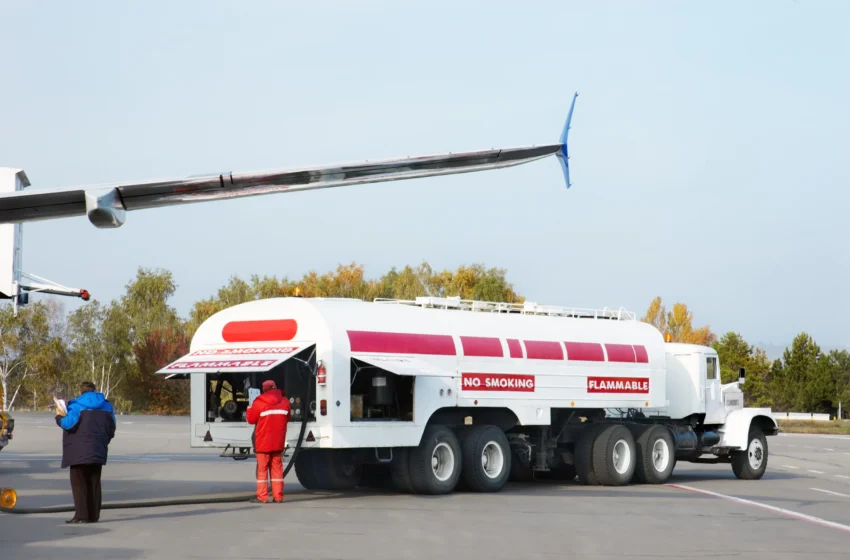
The incident happened at 3:15 a.m. on a Tuesday morning.
A belt loader, reversing away from a cargo aircraft, contacted the lower forward fuselage. No injuries. The aircraft was grounded for inspection. The cargo flight was cancelled. The downstream impact on the customer’s next-day delivery commitments ran into seven figures. The accident report traced the cause to a single discipline gap: the belt loader operator had not waited for the marshalling signal, and the wing-walker had been pulled to another aircraft. Both were standard ramp protocol failures.
This is the post for the ground handling supervisor whose ramp does not yet have the incident report on file. Seven mistakes repeat across Indian cargo ramp operations. Each has a fix that does not need new equipment.
The Ramp Incident That Grounded a Cargo Flight
Airport ramp safety operates in a tight envelope. The aircraft is expensive, the cargo is time-critical, the equipment is heavy, and the operating space is shared between trained personnel, vehicles, and aircraft. A single discipline gap turns a normal ramp operation into an incident report and a customer-relationship problem that lasts longer than the equipment downtime.
The good news is that ground handling incidents follow predictable patterns. Seven mistakes account for the majority of ramp incidents we see in Indian cargo terminal operations. Each is preventable through training, protocol enforcement, and equipment-discipline pairing.
Why Airport Ramp Safety Is a Different Discipline
Warehouse safety and ramp safety share principles but differ in execution. The ramp adds:
- Aircraft proximity, with damage consequences orders of magnitude larger than warehouse damage
- Jet blast and wing-tip vortex risks that change the operating envelope
- Multi-equipment, multi-team coordination around a single aircraft turn
- Time pressure from gate scheduling that warehouse work does not face
- Regulatory oversight from DGCA, BCAS, and airport operator authorities
A ground handling operator transitioning from warehouse to ramp work needs a different operating mindset, not just additional training. The discipline framework has to match.
The Seven Common GHE Mistakes That Cause Ramp Incidents
These seven account for most of the ramp incidents we have seen at the Vile Parle desk supporting Indian cargo operations.
Mistake 1: Belt Loader Speed Discipline
Belt loaders are common on cargo ramps, used for narrow-body lower-hold loading and unloading. The speed discipline at approach and departure determines whether the contact with the aircraft is controlled or accidental.
The mistake pattern:
- Approach speed above five kilometres per hour without marshalling signal
- Departure reversed without dedicated guidance
- Speed governance disabled or non-functional on the equipment
Fix: speed governance enforced at less than five kilometres per hour within ten metres of the aircraft, marshalling signal mandatory for both approach and departure, daily verification of governance functionality.
Mistake 2: Tug Connect-Disconnect Sequence
The tug-aircraft connection sequence is one of the highest-risk moments in ramp operation. The wrong sequence damages the nose landing gear or the towbar attachment, both of which are expensive and aircraft-grounding.
The mistake pattern:
- Towbar attached before tug brake set
- Tug brake released before towbar lock verified
- Aircraft brake released before towbar lock verified
Fix: written connect-disconnect sequence checklist on every tug, signed off by the operator on every connection, supervised verification on first connection of the shift.
Mistake 3: Container Loader Alignment to Aircraft Door
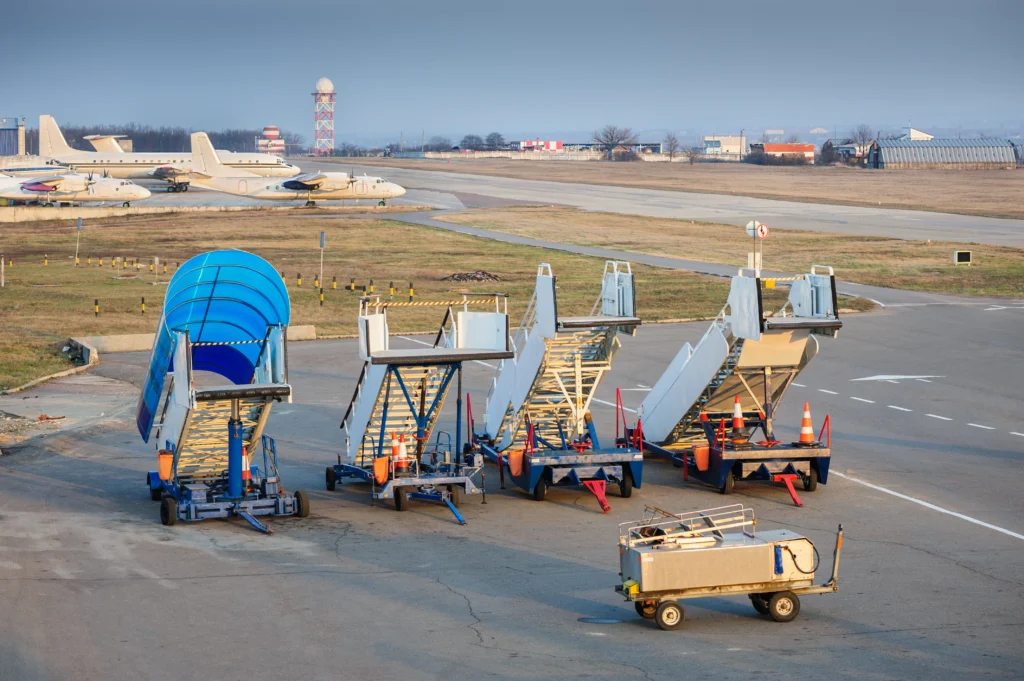
Container loaders (high-loaders) align to wide-body cargo doors at significant height. Misalignment causes container damage, door damage, or platform damage. Each is expensive and incident-reportable.
The mistake pattern:
- Alignment performed by visual estimate without spotter
- Container loader platform raised before lateral alignment verified
- Container released onto platform before lock engagement confirmed
Fix: spotter required for every container loader approach, written alignment check before raise, lock engagement verbally confirmed before release.
Mistake 4: GPU and ASU Cable Management
Ground power units (GPUs) and air start units (ASUs) connect to the aircraft with heavy cables. Cable management failures cause trip hazards, cable damage, and connector damage.
The mistake pattern:
- Cables run across ramp lanes without protection
- Disconnect sequence not followed (aircraft load on cable when disconnected)
- Cable storage on equipment causes mast contact on retract
Fix: cable routing planned for each aircraft stand, disconnect sequence enforced (aircraft load off before disconnect), end-of-shift cable inspection log.
Mistake 5: Tow Bar Locking Verification
The tow bar lock is the connection point between the tug and the aircraft. Lock failure during pushback is a critical incident.
The mistake pattern:
- Lock engagement assumed rather than verified
- Verification performed by single operator without supervisor confirmation
- Lock condition not inspected during equipment pre-shift check
Fix: lock engagement verbally confirmed by operator and supervisor on every connection, pre-shift inspection includes lock condition check, written log of inspection.
Mistake 6: Wing-Walker Coordination Discipline
Wing-walkers are essential for clearance verification during aircraft movement on the ramp. Their absence or distraction has caused fuselage and wing contact incidents at multiple Indian airports.
The mistake pattern:
- Wing-walker reassigned mid-operation without protocol pause
- Communication between wing-walker and operator unclear (visual signals not standardised)
- Single wing-walker covering both wings simultaneously
Fix: wing-walker assigned per side, standardised hand signal protocol, communication discipline that pauses operation when wing-walker is removed.
Mistake 7: Adverse-Weather Operating Limits
Indian airports face monsoon rain, dust storms, lightning warnings, and occasionally cyclone-edge conditions. Equipment and protocol must adapt to weather.
The mistake pattern:
- Standard operating speeds maintained in heavy rain or low visibility
- Lightning protocol not enforced (equipment operation continued during cell within five nautical miles)
- Dust storm wind-speed limits exceeded without operations pause
Fix: written adverse-weather operating limits (speed, visibility, lightning distance, wind speed) with mandatory operations pause when limits are exceeded.
The DGCA + IATA Framework Indian Operators Should Follow
Indian cargo ramp operations sit under multiple regulatory layers:
- DGCA (Directorate General of Civil Aviation) — Indian regulator with oversight on aerodrome operations including ground handling safety
- BCAS (Bureau of Civil Aviation Security) — security clearance and personnel access framework
- Airport Operator (AAI, GMR, AS, etc.) — site-specific operating procedures
- IATA Ground Operations Manual (IGOM) — international standard for ground handling, adopted by most major operators
- IATA AHM (Airport Handling Manual) — operational standards for ground handling activities
A serious ground handling operator references IGOM and AHM as the operational baseline and meets DGCA and airport-operator-specific requirements on top. Equipment and protocol decisions trace to these standards.
The Pre-Shift Ramp Safety Checklist
Before each shift begins, the ramp supervisor should verify:
- All GHE units pre-shift inspected with written log
- Speed governance verified functional on belt loaders, tugs, container loaders
- Tow bar inventory checked for damage and lock condition
- Cable inventory for GPU and ASU checked for damage
- Wing-walker roster confirmed with assignment to specific aircraft
- Weather forecast reviewed against operating limits for the shift
- Communication equipment (radios, hand signals chart) checked
- Spare equipment availability confirmed for breakdown contingency
- Incident escalation contact list current and visible
- Operator licences and currency verified for shift personnel
Ten items. Twenty to thirty minutes. The price of skipping is the 3:15 a.m. Tuesday incident that opens this post.
When to Pause Ramp Operations Entirely
Five conditions where ramp operations should pause entirely, regardless of schedule pressure:
- Lightning cell within five nautical miles of the airport
- Sustained wind speed above the equipment’s certified operating limit
- Visibility below the operating minimum for the equipment type
- Equipment safety system failure that cannot be repaired within the shift
- Operator fatigue or impairment that compromises judgment
A serious ground handling operation has the protocol authority to pause. The operations that do not pause when conditions warrant are the operations that produce the incidents.
Final Thoughts
Airport ramp safety is a discipline business. Equipment specification matters, but discipline of use matters more. The seven mistakes above account for the majority of incidents on Indian cargo ramps, and each has a fix that does not need new equipment.
The ground handling operations that build the discipline into pre-shift checklists, operator training cycles, and supervisor accountability run safer ramps. The operations that treat the discipline as paperwork carry the incident risk as a cost of operation.
For Indian cargo terminals and ground handling agents who want a ramp safety and GHE discipline audit, the Vile Parle desk runs a structured engagement.
Request a ramp safety and GHE discipline audit from Mazda Movers — Vile Parle East, Mumbai.
→ Talk to the Mazda Movers Material Handling Team
Also, follow us on Instagram, Facebook and LinkedIn for insights on fleet modernization, automation trends, and advanced logistics strategies.