Nobody talks about scheduling until something goes wrong.
A container arrives two hours early. Three forklifts are stuck on the opposite end of the facility. The dock supervisor is on the phone with someone who can’t fix the problem anyway. And somewhere downstream, a shipment that was supposed to leave by noon is now leaving at four, if you’re lucky.
This isn’t a rare scenario. In most warehouses operating without intelligent scheduling, it’s Tuesday.
The thing is, warehouses have changed completely over the last decade. The building looks the same. The equipment is familiar. But what’s moving through those facilities — the volume, the variety, the timing expectations, that’s a different animal entirely. At Mazda Movers, we’ve spent 45 years working alongside shipping companies in India, supporting industrial operations and airport logistics. We’ve seen every version of this industry. What’s happening right now with AI-driven scheduling is genuinely different from anything before it.
The Honest Problem With How Most Warehouses Still Plan
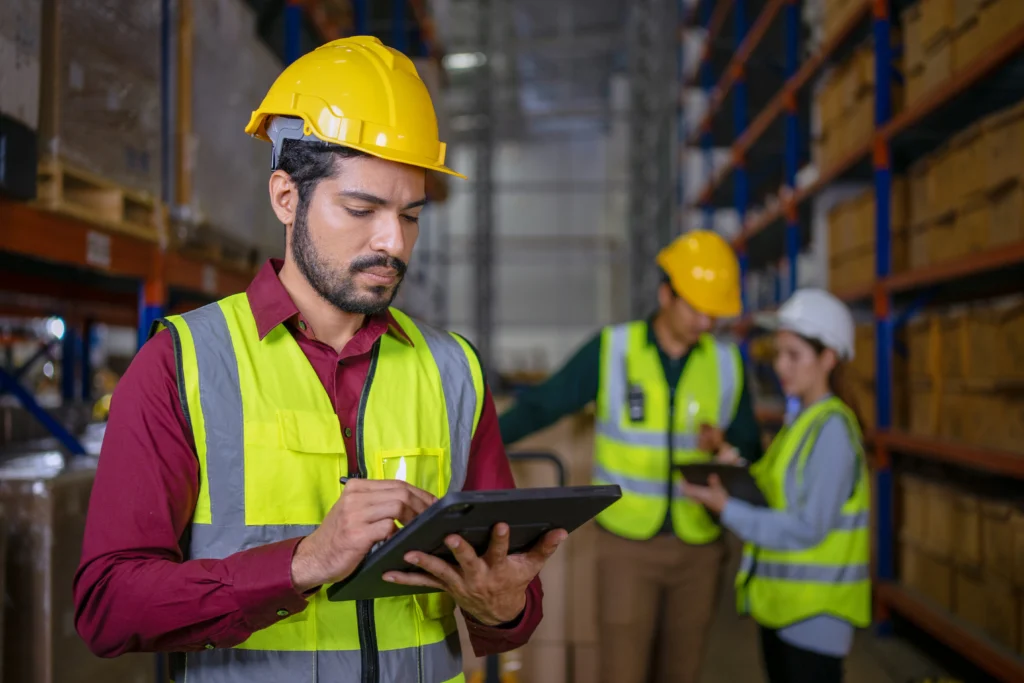
Manual scheduling made sense once. When volumes followed patterns and demand was predictable, experienced supervisors could hold everything together through instinct and routine.
That’s not the environment anymore.
E-commerce doesn’t give you warning before it spikes. Just-in-time models leave no room for the kind of delays that used to be absorbed quietly. Port yards, rail terminals, and airport ground handling equipment zones are all feeding the same warehouse simultaneously and expecting it to coordinate in real time.
Here’s what nobody says out loud: a weak scheduling system makes your best equipment irrelevant. The finest forklift truck fleet, the most reliable forklift rental service, none of it performs at capacity when the planning layer underneath it is operating on guesswork and yesterday’s assumptions.
What Changes When AI Gets Involved
Real-time data replaces the guesswork. That’s the short version.
The longer version is that AI pulls together order volumes, yard congestion, equipment availability, operator allocation, and energy consumption and adjusts deployment continuously rather than once at shift start.
A forklift truck that would’ve sat idle for ninety minutes gets redirected before that window opens. Container handling services allocation responds to actual arrivals, not scheduled ones. Forklift crane units appear near dispatch docks before the outbound rush not during it.
It sounds straightforward. The impact on throughput is anything but small.
Maintenance Stops Being a Crisis
This is the part that doesn’t get enough attention.
Reactive maintenance is expensive in ways that don’t always show up cleanly in a report. The breakdown itself costs money. The missed window costs more. The downstream ripple through the day’s operation costs most of all.
AI detects what humans can’t monitor consistently, gradual drops in lifting efficiency, early-stage vibration changes, brake wear patterns building toward failure. When those signals appear, forklift spare parts get ordered and scheduled before the breakdown happens.
Combined with a structured annual maintenance contract, AI-driven scheduling means forklift service happens during low-demand periods — planned, not forced. For anyone comparing Top-rated forklift service in Mumbai options, that predictive capability is worth factoring into the conversation seriously.
Energy Is Part of the Equation Too
Most warehouse operators think about fuel and electricity as fixed costs. They don’t have to be.
For facilities running electric fleets through an Electric forklift dealer in Mumbai, AI staggers charging schedules across units instead of charging everything simultaneously. Peak electricity load drops. Battery cycles last longer. The investment in electric equipment actually returns what it was supposed to.
Optimized routing reduces unnecessary travel distances too — which compounds those savings across every shift, every day.
Flexibility Over Ownership — AI Makes This Smarter
Owning a large permanent fleet made sense when demand was stable. It makes less sense now.
When AI forecasts a seasonal cargo peak weeks in advance, warehouses can expand through forklift rental service for exactly that window — then scale back cleanly when it passes. This works equally well for forklift rental for construction sites in Mumbai and broader industrial operations.
For procurement teams evaluating a Forklift dealer in Mumbai, a partner who can align fleet deployment with actual data forecasts is fundamentally more useful than one simply offering unit availability.
For businesses working with a Material handling equipment supplier in Mumbai, AI-driven planning means resources follow real cargo movement — not optimistic projections.
Closing Thought
Here’s what 45 years in this industry actually teaches you — efficiency was never really about how much equipment you had. It was always about how intelligently you deployed it.
AI-driven scheduling doesn’t change that lesson. It just finally gives you the tools to act on it properly.
At Mazda Movers, we support warehouses, ports, and airports with scalable fleet options, structured maintenance, and cargo handling services built on genuine operational depth — not just sales literature.
Follow us on Instagram, Facebook and LinkedIn, for real insights on smarter logistics and fleet strategies.
Warehousing is getting more intelligent. The facilities embracing that are pulling ahead. The ones waiting to see how it plays out are already falling behind.