Quick Answer
A warehouse floor can support a loaded forklift only when its structural capacity, surface condition and load distribution are suitable for the combined weight and movement of the equipment. Businesses must assess more than the forklift’s rated lifting capacity. The forklift’s own weight, load, wheel configuration, axle loads and dynamic forces during turning, braking and lifting all affect floor loading.
Before introducing a forklift or changing warehouse operations, businesses should verify the floor’s design capacity with a qualified structural engineer. Equipment selection should then account for the floor assessment, load requirements, travel routes and operating conditions.
Key Takeaways
- Warehouse floor load capacity must account for the loaded forklift, not just the goods being carried.
- Wheel loads, axle loads, floor condition and dynamic forces influence structural safety.
- Slab thickness alone cannot confirm whether a warehouse floor is suitable for forklift operations.
- Structural assessment should cover travel routes, ramps, joints, racks and loading areas.
- Forklift rental services should be planned around the site’s verified floor and equipment requirements.
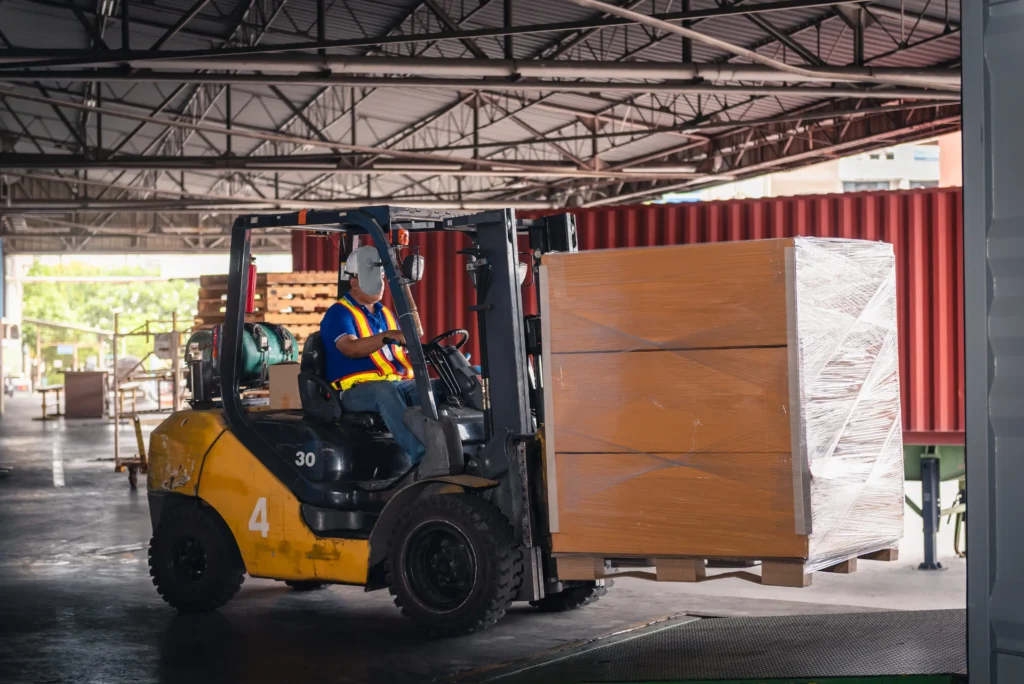
Forklifts make it possible to move heavy materials efficiently across warehouses, manufacturing facilities, aviation support areas and automotive plants. However, introducing a forklift without checking the floor’s load-bearing capability can create serious operational and structural risks.
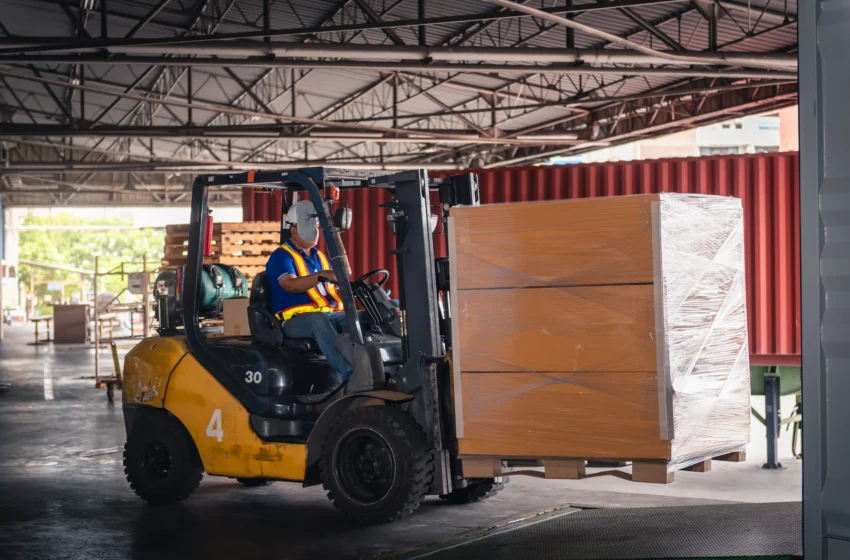
A warehouse floor may appear strong enough for everyday movement, but a loaded forklift concentrates substantial weight through its wheels. Repeated travel, turning, braking and lifting can place additional demands on the floor.
Understanding warehouse floor load capacity for forklifts is therefore an important part of material-handling planning. Businesses should evaluate the building structure and the equipment together before increasing forklift capacity, changing routes or introducing heavier loads.
What Determines Warehouse Floor Load Capacity for Forklifts?
1. Does the Forklift’s Total Weight Matter More Than the Load?
The floor supports the forklift and its carried load, not just the material being transported.
For example, a forklift’s operating weight can be substantial even before goods are added. The combined weight is transferred through its wheels, with the distribution varying between the front and rear axles depending on the load and equipment design.
Businesses should obtain the forklift’s operating weight, rated capacity, axle-load information and relevant manufacturer specifications before assessing floor suitability.
2. Why Are Wheel Loads and Axle Loads Important?
Forklifts do not distribute their weight evenly across the floor. Their wheel arrangement, tyre type, load position and counterweight influence how forces are transferred.
Solid tyres, pneumatic tyres and different wheel configurations can create different contact conditions. A structural assessment should consider the actual equipment rather than relying only on the total vehicle weight.
3. Can Floor Condition Affect Safe Forklift Operations?
Yes. Even a structurally adequate floor can present operational risks if it has damaged joints, cracks, uneven sections, potholes or deteriorating concrete.
These defects can affect forklift stability, tyre condition and load handling. They may also worsen with repeated heavy vehicle movement.
How Can Businesses Check Whether a Warehouse Floor Is Suitable?
A structured assessment should cover the following areas:
| What to check | Why it matters | Recommended action |
|---|---|---|
| Structural floor capacity | Determines whether the floor can support imposed loads | Review structural drawings and obtain an engineering assessment |
| Forklift operating weight | Adds to the weight carried by the floor | Check manufacturer specifications |
| Axle and wheel loads | Shows how weight is distributed | Obtain equipment load data |
| Floor condition | Cracks and damaged joints can affect safe movement | Inspect and document defects |
| Travel routes | Concentrated or repeated movement can affect local areas | Assess routes, turning points and loading zones |
| Ramps and transitions | Gradients and uneven surfaces affect equipment stability | Check structural suitability and operating conditions |
| Storage and racking areas | Rack leg loads may create separate concentrated loads | Assess rack foundation and floor requirements |
A qualified structural engineer should determine whether the floor can safely accommodate the proposed loading. Do not treat a general floor load rating as automatic approval for every forklift or operating condition.
What Operational Problems Can an Unsuitable Floor Cause?
Floor Cracking and Surface Damage
Repeated heavy movement can contribute to deterioration when the floor is not designed for the imposed loads. Damaged surfaces may also create additional vibration and impact during forklift travel.
Forklift Instability
Uneven surfaces, damaged joints and sudden level changes can affect forklift stability, especially when carrying elevated or poorly positioned loads.
Warehouse Bottlenecks
If certain routes or sections cannot safely accommodate the planned equipment, operators may need to change travel paths. This can affect movement efficiency and create congestion.
Equipment Downtime
Poor floor conditions can increase wear on tyres and other components. Repeated exposure to uneven surfaces may also increase maintenance requirements.
Which Material-Handling Equipment Should You Consider?
The right equipment depends on the floor assessment, load characteristics, aisle dimensions and operating environment.
| Handling requirement | Possible equipment | Key consideration |
|---|---|---|
| Heavy pallet movement | Counterbalance forklift | Verify axle and wheel loads against floor assessment |
| Indoor warehouse operations | Electric forklift | Assess equipment weight, battery configuration and floor condition |
| High-rack storage | Reach truck | Check floor flatness, levelness and manufacturer requirements |
| Short-distance pallet movement | Pallet truck | Consider concentrated wheel loads and floor joints |
| Narrow-aisle operations | Suitable narrow-aisle equipment | Check wheel loads, aisle layout and floor tolerances |
| Outdoor material handling | Suitable diesel forklift | Assess pavement, ground condition and route suitability |
Equipment selection should not be based on lifting capacity alone. A forklift with a suitable rated capacity may still be unsuitable for a particular floor.
How Should Businesses Assess Floor and Forklift Compatibility?
Follow a step-by-step process before introducing or upgrading equipment:
- Identify the intended loads: Record the weight, dimensions and handling frequency of the materials being moved.
- Collect forklift specifications: Obtain operating weight, rated capacity, axle loads, wheel configuration and load-centre details.
- Review structural documentation: Check available floor drawings, design information and specified load limits.
- Inspect the floor: Document cracks, joints, uneven areas, ramps and signs of deterioration.
- Assess actual travel routes: Include turning areas, loading bays, storage aisles and locations where forklifts may stop or lift loads.
- Arrange a structural assessment: Have a qualified engineer evaluate the proposed equipment and operating conditions.
- Select suitable equipment: Match the forklift to the verified site conditions and manufacturer specifications.
- Monitor floor condition: Conduct periodic inspections and address deterioration before it affects operations.
When Do Forklift Rental Services Make Sense?
Forklift rental services can help businesses manage changing material-handling requirements without immediately purchasing additional equipment. They may be useful during warehouse expansion, seasonal demand, temporary projects or equipment trials.
However, businesses should complete the floor suitability assessment before bringing rental equipment onto the premises. The rental partner should receive accurate information about load requirements, site conditions and operating routes.
Material handling equipment suppliers can also help identify equipment options that match the intended application. For existing fleets, planned maintenance can help address equipment condition, but it cannot compensate for an unsuitable warehouse floor.
What Costs Should Businesses Consider?
The cost of safe forklift operations extends beyond equipment purchase or rental charges.
- Structural assessment: Engineering inspections and any necessary floor repairs.
- Equipment utilisation: Matching fleet size and capacity to actual workload.
- Maintenance: Routine servicing, tyre condition and component replacement.
- Downtime: Lost productivity when routes or equipment become unavailable.
- Operators: Training and supervision requirements.
- Attachments: Compatibility and any additional equipment requirements.
- Energy or fuel: Electricity, charging infrastructure or fuel expenses.
- Floor upkeep: Repairs, joint maintenance and surface improvements.
Choosing a forklift solely because its rental price is lower can create additional costs if it is unsuitable for the facility.
What Should Indian Warehouses Keep in Mind?
Indian warehouses and industrial facilities often operate across different building types, including older manufacturing units, modern distribution centres and facilities with mixed indoor and outdoor handling areas.
Automotive and manufacturing operations may involve heavy components, repetitive material movement and multiple shifts. Aviation-related facilities may have specialised handling requirements and strict movement controls.
Businesses should pay particular attention to floor condition in older buildings, loading bays, ramps and areas exposed to moisture during the monsoon. Any proposed change in equipment weight, load size or operating frequency should trigger a review of floor suitability.
Common Mistakes to Avoid
- Assuming slab thickness alone determines floor capacity.
- Checking the goods’ weight but ignoring forklift operating weight.
- Treating uniformly distributed floor-load ratings as approval for concentrated wheel loads.
- Ignoring axle-load information and dynamic forces.
- Introducing heavier equipment without a structural assessment.
- Overlooking cracks, joints and damaged floor sections.
- Assuming that rental equipment removes the need for site checks.
Industry Insight: Match Equipment to the Site, Not Just the Load
From our perspective at Mazda Movers, forklift selection should begin with understanding the material-handling application and the conditions in which the equipment will operate.
Load capacity is only one part of the decision. Floor condition, travel routes, equipment weight, lifting requirements and operating frequency must also be considered. A forklift that handles the required load may not be appropriate for a facility if its floor cannot support the equipment under actual working conditions.
This is why site information should be shared before finalising an equipment requirement.
How to Choose the Right MHE Partner
Before selecting a forklift or material-handling equipment partner, check whether they:
- Understand your load and operational requirements.
- Can provide relevant equipment specifications.
- Consider floor conditions and site restrictions during equipment selection.
- Explain equipment limitations and application suitability.
- Offer suitable rental and maintenance support.
- Coordinate with your team on site-specific operating requirements.
A reliable partner should help you make an informed equipment decision while structural suitability is verified by qualified professionals.
Why Mazda Movers?
Mazda Movers provides forklift rental, material-handling equipment solutions and Annual Maintenance Contract (AMC) services for businesses with material movement requirements.
Whether you need equipment for a temporary project or maintenance support for an existing fleet, selecting the right solution begins with understanding your application and site conditions.
Key Takeaway: Check the Floor Before You Move Heavy Loads
A warehouse floor must be assessed for the actual loads and operating conditions created by a loaded forklift. Total equipment weight, axle loads, wheel loads, floor condition and movement patterns all influence suitability.
Before introducing heavier equipment, arrange a structural assessment and share the relevant site details with your MHE partner. Mazda Movers can help businesses evaluate their forklift rental and maintenance requirements as part of their material-handling planning.
Frequently Asked Questions
Q1. What is warehouse floor load capacity for forklifts?
It is the floor’s ability to safely support the loads imposed by a forklift, including its own weight, carried load and wheel or axle loading.
Q2. How do I know if my warehouse floor can support a loaded forklift?
Review structural drawings, obtain forklift load specifications and arrange an assessment by a qualified structural engineer.
Q3. Does forklift weight include the load being carried?
No. The forklift’s operating weight and the carried load are separate values. Both must be considered when assessing floor loading.
Q4. Can a forklift damage a warehouse floor?
Yes. Unsuitable loading, repeated heavy movement, damaged joints and poor floor conditions can contribute to cracking and surface deterioration.
Q5. Should floor capacity be checked before forklift rental?
Yes. Confirm that the site can safely support the proposed equipment and operating conditions before introducing a rental forklift.
Related Reads
Checking the floor is one part of assessing your equipment as a whole. If you read one more guide, we recommend How to Perform a Material Handling Equipment Assessment Before Expanding Your Warehouse, which walks through a structured equipment assessment before you add load or expand. The other two cover how tyre type and rated capacity affect what your floor and forklift must handle together.