Forklifts are essential material handling equipment used in warehouses, manufacturing facilities, construction sites, and distribution centres. They help businesses move heavy materials efficiently while improving productivity and reducing manual handling efforts.
However, safe forklift operation depends on more than just skilled driving. Understanding how much weight a forklift can safely lift is critical to preventing accidents, equipment damage, and workplace injuries. This is where a forklift load chart becomes an important safety tool.
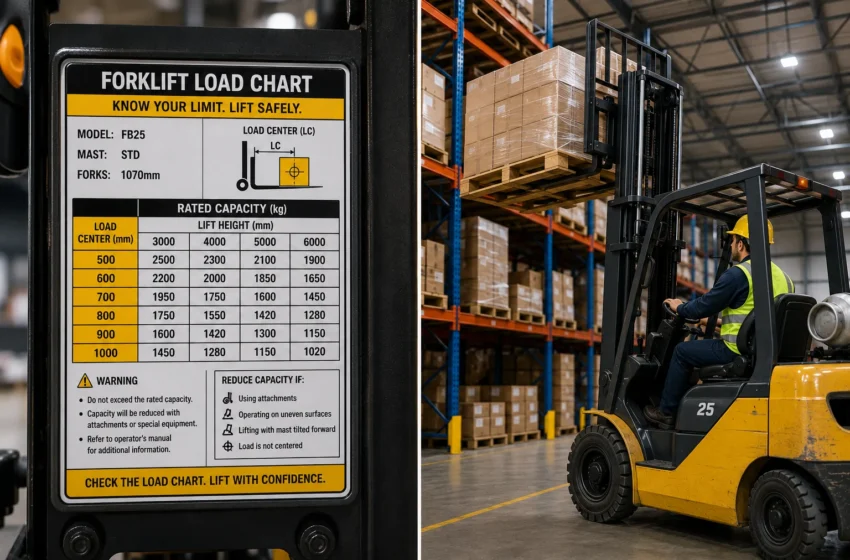
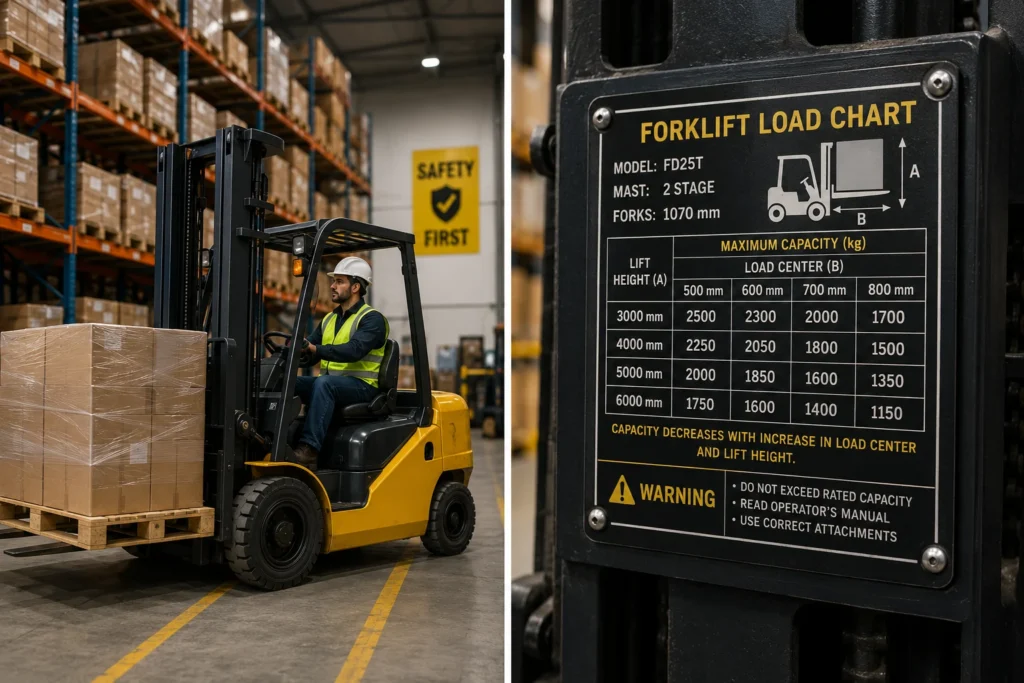
A forklift load chart provides essential information about the machine’s lifting capacity based on factors such as load weight, lift height, load centre distance, and equipment configuration. By understanding and following these specifications, operators can make safer decisions during material handling operations.
What Is a Forklift Load Chart?
A forklift load chart is a guide that shows the maximum weight a forklift can safely lift under specific operating conditions. It helps operators determine whether a particular load can be handled without affecting the stability and performance of the equipment.
Every forklift has a different lifting capacity depending on its design, attachments, and operating conditions. The load chart acts as a reference point to ensure that operators do not exceed the machine’s safe limits.
A forklift load chart generally includes information about:
- Maximum lifting capacity
- Load centre distance
- Maximum lifting height
- Mast position
- Forklift configuration
- Attachment limitations
Understanding these details helps operators maintain balance and prevent forklift-related accidents.
Why Is a Forklift Load Chart Important?
Using a forklift beyond its rated capacity can create serious safety risks. When a forklift carries an excessive or improperly positioned load, it can become unstable and may tip over.
A forklift load chart helps businesses:
- Prevent overloading accidents
- Improve operator safety
- Protect materials from damage
- Maintain equipment efficiency
- Reduce unnecessary wear on forklift components
- Support safe warehouse operations
Following load capacity guidelines is one of the most important practices for maintaining a safe material handling environment.
Key Information Found on a Forklift Load Chart
Understanding the different sections of a forklift load chart allows operators to make informed decisions before lifting materials.
1. Rated Load Capacity
The rated load capacity indicates the maximum weight a forklift can safely lift under specific conditions. This rating is usually provided by the manufacturer and depends on the forklift model and configuration.
Operators should always verify the load weight before lifting and ensure it remains within the recommended capacity.
2. Load Centre Distance
Load centre distance refers to the horizontal distance between the centre of gravity of the load and the vertical surface of the forklift forks.
A load placed farther away from the forklift’s centre of gravity can reduce stability and lower the lifting capacity. This is why operators must consider not only the weight of the material but also how it is positioned on the forks.
3. Maximum Lift Height
A forklift’s lifting capacity can change depending on how high the load needs to be raised. In many cases, the higher a load is lifted, the more stability challenges the forklift may face.
Operators should check the load chart to understand the safe lifting capacity at different heights.
4. Forklift Attachments
Attachments such as clamps, extensions, and specialised lifting tools can affect forklift capacity. Additional attachments may increase the overall weight and change the load centre.
Before using any attachment, operators should confirm the updated capacity information provided by the manufacturer.
5. Mast Position and Configuration
The forklift mast position can also impact lifting capacity. Factors such as mast height, tilt angle, and forklift configuration influence how safely the equipment can handle loads.
Operators should follow the manufacturer’s guidelines to ensure safe operation.
How to Read a Forklift Load Chart Correctly
Reading a forklift load chart requires understanding the relationship between load weight, load position, and lifting height.
Operators should follow these steps:
Step 1: Identify the Forklift Model
Start by checking the forklift identification plate and confirming the equipment specifications. Different forklift models have different load capacities.
Step 2: Check the Load Weight
Determine the total weight of the material being lifted. The load weight should always remain within the forklift’s rated capacity.
Step 3: Measure the Load Centre
Check how the load will sit on the forks and measure the load centre distance. Incorrect positioning can reduce forklift stability.
Step 4: Confirm the Required Lift Height
Review the load chart to ensure the forklift can safely lift the material to the required height.
Step 5: Consider Attachments and Operating Conditions
If attachments are being used, confirm their impact on capacity. Warehouse conditions, floor quality, and load stability should also be considered.
Common Mistakes When Using Forklift Load Charts
Even experienced operators can make errors when interpreting load capacity information. Some common mistakes include:
- Ignoring load centre distance
- Assuming maximum capacity applies at all lifting heights
- Carrying loads beyond recommended limits
- Using unapproved attachments
- Failing to check equipment specifications
- Operating without proper training
Avoiding these mistakes helps improve workplace safety and equipment performance.
How Regular Forklift Service Supports Safe Operations
Understanding load charts is only one part of forklift safety. Regular maintenance and professional servicing also play an important role in ensuring reliable equipment performance.
Routine Forklift service helps identify issues that may affect lifting ability, stability, and overall operation.
Regular service typically includes checking:
- Hydraulic systems
- Braking performance
- Steering components
- Fork condition
- Tires and wheels
- Safety features
- Battery or engine performance
A well-maintained forklift performs more efficiently and reduces the risk of unexpected breakdowns during operations.
Tips for Safe Material Handling with Forklifts
Businesses can improve forklift safety by following these best practices:
- Train operators on forklift controls and safety procedures
- Review load charts before handling heavy materials
- Avoid exceeding recommended capacity limits
- Inspect equipment before daily operations
- Keep warehouse pathways clear
- Secure loads properly before transportation
- Schedule preventive maintenance regularly
Creating a safety-focused workplace culture helps reduce risks and improves overall productivity.
Choosing the Right Forklift for Your Material Handling Needs
Selecting the correct forklift is essential for safe and efficient operations. Businesses should consider factors such as load requirements, lifting height, warehouse layout, operating environment, and frequency of use.
A forklift that matches operational requirements allows businesses to handle materials safely while improving workflow efficiency.
Whether businesses require forklifts for warehouses, manufacturing units, or temporary projects, selecting suitable equipment and maintaining it properly ensures better performance and safety.
Conclusion
A forklift load chart is a crucial safety resource that helps operators understand equipment limitations and make informed decisions during material handling operations. By considering load weight, load centre distance, lifting height, and attachments, businesses can prevent accidents and maintain safer workplaces.
Along with proper operator training and regular Forklift service, following load chart guidelines ensures that forklifts continue to deliver reliable performance while supporting efficient warehouse operations.
Safe forklift usage is not only about moving materials faster. It is about creating a controlled, efficient, and secure working environment for everyone involved.
FAQs: Understanding Forklift Load Charts
Q1. What is a forklift load chart?
A. A forklift load chart is a guide that shows the maximum weight a forklift can safely lift based on factors like load weight, lift height, and load centre distance.
Q2. Why is a forklift load chart important?
A. A forklift load chart helps operators prevent overloading, improve safety, protect materials, and maintain stable forklift operations.
Q3. What factors affect forklift lifting capacity?
A. Forklift lifting capacity depends on load weight, load centre distance, lifting height, forklift configuration, and attachments being used.
Q4. How often should a forklift load chart be checked?
A. Operators should review the forklift load chart before handling loads, especially when dealing with heavy materials, different load sizes, or attachments.
Q5. How does forklift service improve safety?
A. Regular forklift service helps maintain critical components like brakes, hydraulics, forks, and safety systems, ensuring reliable and safer material handling operations.
→ Talk to the Mazda Movers Material Handling Team
Also, follow us on Instagram, Facebook and LinkedIn for insights on fleet modernization, automation trends, and advanced logistics strategies.