Material handling plays a crucial role in warehouses, manufacturing facilities, logistics centres, and industrial operations. From moving raw materials to storing finished products, efficient material handling systems help businesses improve productivity and maintain smooth workflows.
However, material handling activities also involve several workplace risks. Improper equipment usage, lack of employee training, poor warehouse organisation, and inadequate maintenance can lead to accidents, injuries, and operational disruptions.
Understanding common material handling safety hazards and implementing preventive measures helps businesses create safer workplaces while improving equipment performance and operational efficiency. Whether using forklifts, pallet trucks, stackers, or other material handling equipment, safety should always remain a priority.
What Are Material Handling Safety Hazards?
Material handling safety hazards are risks associated with moving, lifting, storing, and transporting materials within a workplace. These hazards can affect operators, warehouse employees, equipment, and stored goods.
Common causes of material handling hazards include:
- Improper equipment operation
- Overloading material handling equipment
- Poor workplace organization
- Lack of employee training
- Unsafe lifting practices
- Equipment failure due to poor maintenance
Identifying these risks early allows businesses to take preventive action and reduce workplace accidents.
Why Is Material Handling Safety Important?
Safe material handling practices protect employees while ensuring uninterrupted business operations. Warehouses and industrial facilities depend on equipment such as forklifts and other MHE solutions to move heavy materials efficiently.
A strong safety approach helps businesses:
- Reduce workplace injuries
- Prevent equipment damage
- Improve employee productivity
- Minimise operational downtime
- Extend equipment lifespan
- Maintain a safer working environment
Safety is not only a compliance requirement but also an important part of efficient warehouse management.
Common Material Handling Safety Hazards and Prevention Methods
1. Improper Use of Material Handling Equipment
One of the most common material handling safety hazards is incorrect equipment operation. Employees who are not properly trained may misuse forklifts, stackers, or other equipment, increasing the risk of accidents.
How to Prevent It:
- Provide proper operator training
- Allow only authorised employees to operate equipment
- Conduct regular safety awareness sessions
- Follow manufacturer operating guidelines
Trained operators understand equipment limitations and can handle materials more safely.
2. Overloading Material Handling Equipment
Every material handling machine has a specific load capacity. Carrying loads beyond the recommended limit can affect stability and increase the chances of equipment failure or accidents.
How to Prevent It:
- Check equipment load capacity before operation
- Use appropriate equipment for specific tasks
- Avoid lifting unstable or uneven loads
- Follow recommended handling procedures
Using equipment within its designed capacity improves safety and performance.
3. Poor Warehouse Layout and Organisation
A cluttered warehouse can create obstacles for equipment movement and increase collision risks. Blocked pathways, poor storage arrangements, and insufficient space can make material handling operations unsafe.
How to Prevent It:
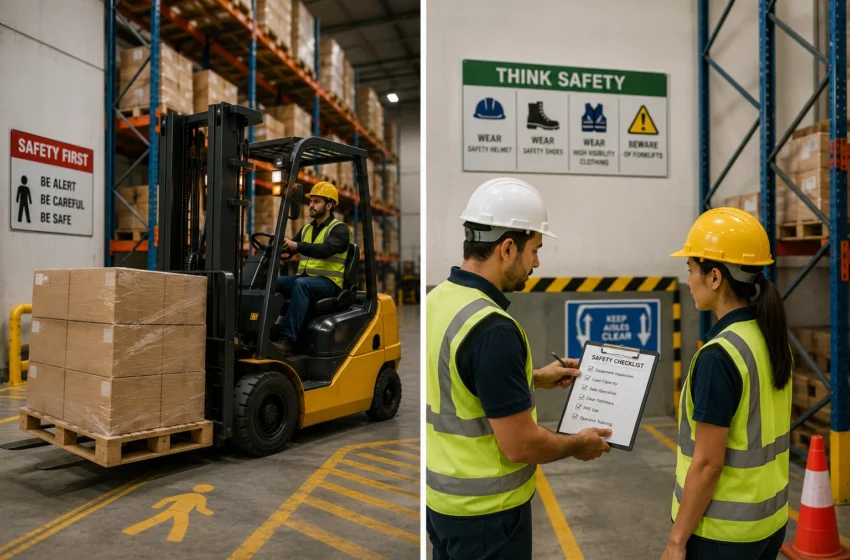
- Keep aisles clear
- Mark equipment movement areas
- Maintain organised storage spaces
- Ensure proper warehouse lighting
- Use visible safety signs
A well-organised warehouse allows employees and equipment to operate more efficiently.
4. Lack of Employee Training
Employees involved in material handling need proper knowledge of equipment operation, safety procedures, and workplace hazards. Lack of training can lead to incorrect handling practices.
How to Prevent It:
- Provide regular safety training
- Train employees on emergency procedures
- Teach correct lifting and handling methods
- Conduct refresher training programs
Continuous learning helps employees identify risks and follow safer work practices.
5. Manual Handling Injuries
Although material handling equipment reduces physical effort, some tasks still involve manual lifting and movement of materials. Incorrect lifting techniques can result in strains, sprains, and other workplace injuries.
How to Prevent It:
- Use mechanical assistance whenever possible
- Train employees on proper lifting techniques
- Avoid lifting excessively heavy materials manually
- Encourage teamwork for large or heavy loads
Using the right handling methods reduces physical stress on workers.
6. Equipment Failure Due to Poor Maintenance
Poorly maintained equipment can create serious safety risks. Faulty brakes, damaged forks, hydraulic issues, or worn-out components can affect equipment reliability.
Regular maintenance is essential to identify problems before they impact operations.
How to Prevent It:
- Schedule preventive maintenance
- Conduct daily equipment inspections
- Replace damaged components promptly
- Partner with reliable service providers
Professional MHE Service helps maintain equipment efficiency and reduces unexpected breakdown risks.
7. Unsafe Load Handling Practices
Incorrectly positioned or unsecured loads can fall during transportation, creating risks for employees and products.
How to Prevent It:
- Secure loads properly before movement
- Ensure balanced weight distribution
- Avoid carrying unstable materials
- Follow safe stacking practices
Proper load handling improves stability and reduces material damage.
8. Insufficient Use of Safety Equipment
Personal protective equipment helps reduce workplace injuries during material handling operations. Employees working around heavy equipment should use suitable protective gear.
How to Prevent It:
Common safety equipment includes:
- Safety helmets
- Protective footwear
- High-visibility clothing
- Gloves
- Safety glasses where required
Using appropriate protective equipment adds an extra layer of workplace safety.
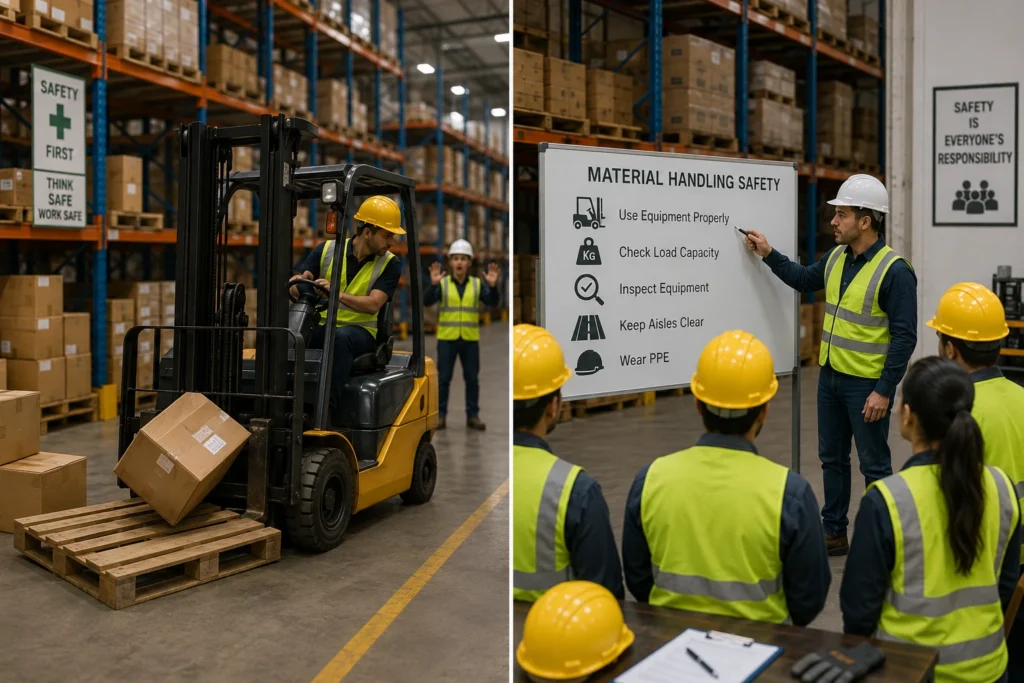
9. Poor Communication Between Workers and Equipment Operators
Material handling operations often involve multiple employees working around moving equipment. Poor communication can result in collisions or accidents.
How to Prevent It:
- Use clear communication signals
- Establish designated equipment zones
- Use warning alarms and indicators
- Maintain awareness of surroundings
Effective communication improves coordination between operators and warehouse teams.
How Regular MHE Service Helps Prevent Safety Risks
Regular maintenance is a key part of preventing material handling safety hazards. Material handling equipment operates under demanding conditions, making routine inspections and servicing essential.
Professional MHE Service helps businesses:
- Identify mechanical issues early
- Improve equipment reliability
- Maintain safety standards
- Reduce unexpected downtime
- Extend equipment operating life
Regular servicing of forklifts, pallet trucks, stackers, and other equipment ensures they continue to perform safely and efficiently.
Best Practices for Improving Material Handling Safety
Businesses can improve workplace safety by following a structured approach:
Conduct Regular Equipment Inspections
Daily checks help identify issues before equipment is used. Operators should inspect brakes, tyres, forks, controls, and safety features.
Create Clear Safety Guidelines
Documented procedures help employees understand correct equipment usage and workplace expectations.
Encourage Safety Reporting
Employees should be encouraged to report damaged equipment, unsafe conditions, or potential hazards immediately.
Maintain Proper Equipment Selection
Using the right equipment for specific applications improves efficiency and reduces operational risks.
Conclusion
Material handling safety is essential for protecting employees, equipment, and business operations. Common material handling safety hazards such as improper equipment use, overloading, poor organisation, and equipment failure can be reduced through proper training, workplace planning, and regular maintenance.
Investing in preventive measures and professional MHE Service ensures that material handling equipment remains reliable, safe, and efficient. By creating a strong safety culture, businesses can improve productivity while maintaining a secure working environment.
Frequently Asked Questions
Q1. What are material handling safety hazards?
A. Material handling safety hazards are risks related to moving, lifting, storing, and transporting materials, including equipment misuse, overloading, and poor workplace organisation.
Q2. How can businesses prevent material handling accidents?
A. Businesses can prevent accidents through employee training, regular equipment inspections, proper load handling, organised workspaces, and following safety procedures.
Q3. Why is MHE Service important for safety?
A. Regular MHE Service helps identify equipment issues, maintain performance, reduce breakdown risks, and ensure safer material handling operations.
Q4. What causes material handling equipment failures?
A. Equipment failures can occur due to poor maintenance, worn-out components, improper usage, and lack of regular inspections.
Q5. How does proper training improve material handling safety?
A. Proper training helps employees operate equipment correctly, understand workplace hazards, follow safety procedures, and reduce the risk of accidents.
→ Talk to the Mazda Movers Material Handling Team
Also, follow us on Instagram, Facebook and LinkedIn for insights on fleet modernization, automation trends, and advanced logistics strategies.