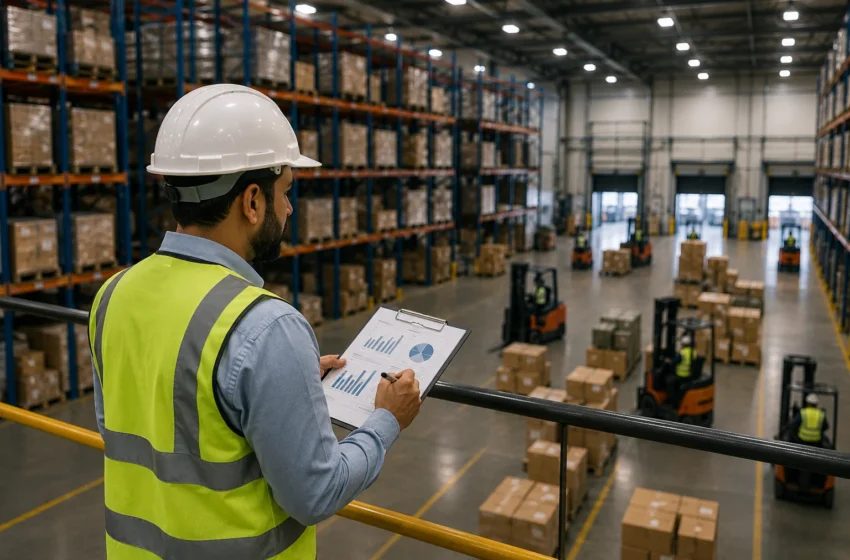
The warehouse capacity doubled. The throughput halved.
We watched this happen at a Mumbai 3PL last year. They added forty thousand square feet of storage. The civil work was perfect. The racking was correct. The team was hired. Six months in, the picking cycle time was up sixty percent and the docks were jammed. The MHE plan had been “we will buy more forklifts when we need them.” That sentence cost them a year of throughput.
This is the post for the operations head who is about to approve an expansion plan and wants to be sure the material handling layer is not the bottleneck that kills the gain.
The Expansion That Doubled Capacity and Halved Throughput
Capacity in a warehouse is not the same as throughput. Capacity is what you can store. Throughput is what you can move. Doubling storage without re-engineering material handling usually means more racks holding more inventory while the forklifts that move that inventory get further apart from each other and slower per trip.
Six bottlenecks repeat across almost every expansion plan we audit at the Vile Parle desk. Each is preventable in the planning phase. Almost none are fixable cheaply after go-live.
Why Material Handling Gets Skipped in Expansion Planning
Material handling sits awkwardly between the civil/structural team and the operations team. Civil owns the building. Operations owns the people. MHE sits between them and gets pushed onto whichever team has less on its plate.
The pattern shows up the same way in expansion after expansion. Three things go wrong:
- MHE specification is delayed until the racking is installed, when fleet sizing options narrow
- Charging infrastructure is bolted on rather than designed in
- Aisle width is set by racking economics, not by equipment reach
By the time the operations team has hands on the building, the structural decisions that determine throughput are already concrete.
The Six Bottlenecks Most Expansion Plans Don’t Catch
These six surface in eight out of ten expansion audits.
Bottleneck 1: Receiving Dock to Storage Lane
The expanded warehouse has more storage lanes. The receiving dock is in the same place. The travel distance from inbound container to deep-storage lane has doubled. Each putaway cycle now takes forty to seventy percent longer.
Fix: dedicated putaway equipment with larger fleet sizing, or a secondary receiving dock at the far end of the expansion.
Bottleneck 2: Aisle Width vs Equipment Reach
The racking team optimises for storage density. Narrower aisles equal more pallets per square foot. The equipment team needs reach. A standard counterbalance forklift needs a 3.3 metre aisle minimum. A reach truck takes that down to 2.7 metres. A turret truck takes it to 1.8 metres.
If the aisle width is decided before the equipment is selected, the fleet mix is forced. Half the time, the forced fleet mix is the wrong mix.
Bottleneck 3: Picking Cycle Time at New Volume
Picking cycle time scales non-linearly with warehouse size. Doubling the storage area does not double the picking time. It often increases it by sixty to ninety percent because:
- Average travel distance per pick increases
- Pick paths cross more frequently with putaway routes
- Queueing at common pinch points (lifts, dock entries) gets worse
The expansion plan that does not remodel the pick zone and the equipment behind it usually delivers throughput well below the new capacity number.
Bottleneck 4: Battery Charging Capacity for the New Fleet
If the expansion adds electric forklifts and reach trucks, the charging infrastructure becomes a real constraint. Charging bay floor area, electrical capacity, ventilation, and battery rotation schedule all need to scale with the fleet.
A common failure: the charging bay is sized for the existing fleet, the new fleet plugs into the same bay, and the rotation schedule breaks down by week three. Equipment sits uncharged during peak shifts.
Fix: charging capacity sized to fleet count, with floor area, electrical loading, and ventilation designed in at civil stage.
Bottleneck 5: Loading Dock to Truck Bay
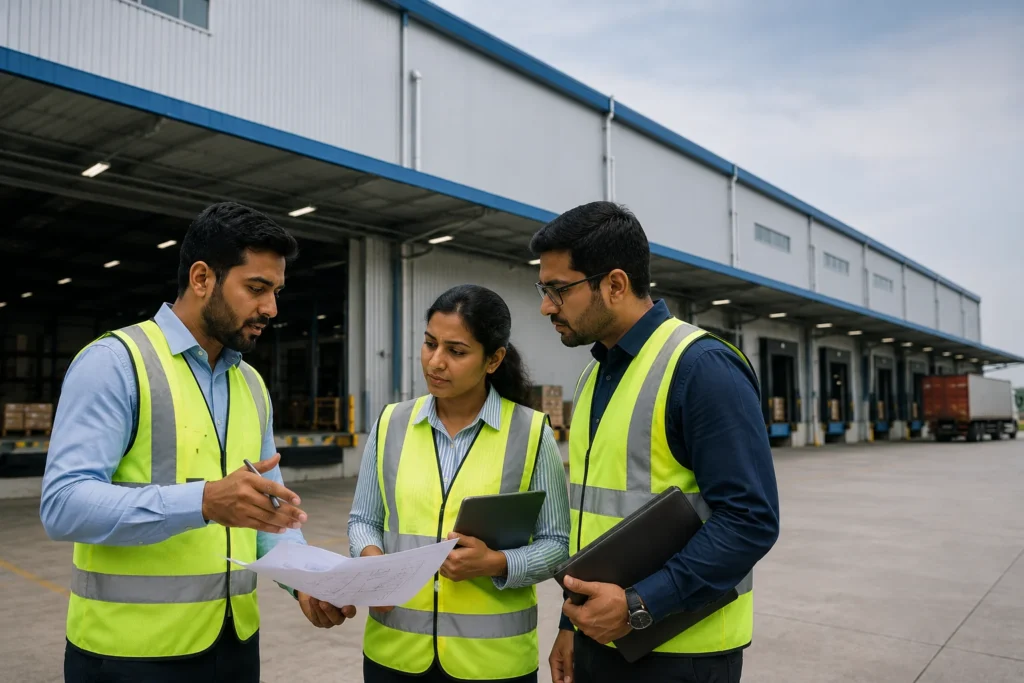
The expanded warehouse generates more outbound volume. The dock count needs to grow with the volume. A common mistake is adding storage area without adding dock doors. The outbound queue lengthens, trucks wait, demurrage costs grow, and the throughput hits its real ceiling at the dock, not at the storage.
A serious expansion plan adds one new dock door for every fifteen to twenty percent of additional outbound volume.
Bottleneck 6: Maintenance Window in the New Schedule
The expanded operation runs more shifts at higher utilisation. The maintenance window for the equipment fleet shrinks. If the equipment fleet doubles but the maintenance window stays the same, breakdowns rise, uptime falls, and the expansion’s throughput gain disappears.
A serious expansion plan extends the maintenance window proportionally or adds a parallel maintenance bay so equipment can rotate through service without blocking operations.
The Pre-Expansion MHE Assessment Checklist
Before the civil drawings are finalised, the MHE assessment should answer:
- What fleet count, type, and aisle width will the expanded operation need at year 1, year 3, year 5 volumes?
- Where will the charging infrastructure sit, what is its floor area, and what is its electrical loading?
- How will the receiving dock to deep-storage travel distance change, and what equipment compensates?
- How will the picking cycle time at year 1 volume compare to current, and what equipment or layout intervention closes the gap?
- How many dock doors does the new outbound volume require, and where do they sit relative to the staging area?
- What is the maintenance window in the new shift pattern, and is it sufficient for the new fleet size?
- Who is accountable for these answers in the project plan, with what review checkpoint?
A serious answer to all seven is a three to six week effort. The cost of that effort is a fraction of one percent of a typical expansion budget. The cost of skipping it is the bottleneck story that opens this post.
Five Mistakes Indian Warehouses Make During Expansion
From the audits we have run at the Vile Parle desk for Indian 3PLs and manufacturers across Maharashtra, Gujarat, Karnataka, and the NCR:
- Treating MHE as a procurement decision instead of a design decision. The fleet gets bought from the lowest quote after racking is in.
- Underestimating battery charging needs. Electric fleet count goes up, charging bay stays the same, mid-shift downtime appears in week three.
- Not modelling picking cycle time at new volume. The pick zone layout is replicated rather than re-engineered for the new geometry.
- Adding storage area without adding docks. Outbound becomes the bottleneck the moment the new storage starts filling.
- Skipping the maintenance window expansion. Breakdowns rise within the first six months; uptime drops; the new capacity sits idle.
Each is preventable at the planning stage. None is cheap to fix after go-live.
When to Bring in the Material Handling Specialist
The right time to involve a material handling specialist in the expansion conversation is when the project brief is being written, not when the racking is being installed. Three triggers:
- Storage area is expanding by more than thirty percent
- Throughput volume is expanding by more than twenty percent
- The operation is moving to a new shift pattern or new product category
Any one of these warrants an MHE assessment before the civil scope is locked. All three together make the assessment non-negotiable.
For Indian warehouse operations planning expansion in the next six to twelve months, the Vile Parle desk runs a pre-expansion MHE bottleneck assessment as a structured engagement.
Request a pre-expansion MHE assessment from Mazda Movers — Vile Parle East, Mumbai.
→ Talk to the Mazda Movers Material Handling Team
Also, follow us on Instagram, Facebook and LinkedIn for insights on fleet modernization, automation trends, and advanced logistics strategies.