Quick Answer
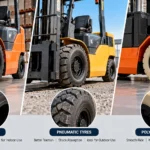
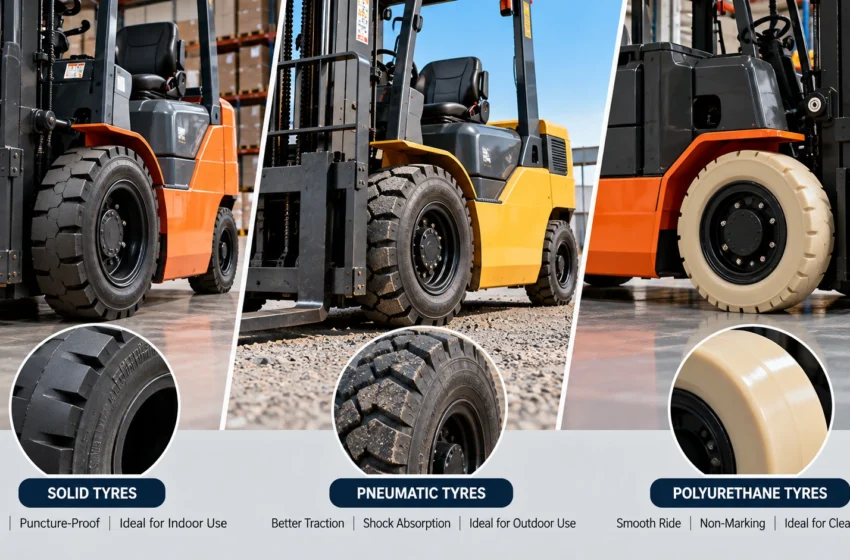
The right forklift tyres depend on the operating surface, load-handling environment, working hours, indoor or outdoor use, and the level of tyre durability required. Solid tyres are suited to demanding environments where puncture resistance is important, pneumatic tyres offer better cushioning on uneven outdoor surfaces, while polyurethane tyres are commonly considered for specific indoor applications where low rolling resistance and floor-friendly operation are priorities.
Choosing tyres should not be based on price alone. Tyre type affects forklift stability, operator comfort, traction, maintenance requirements, productivity and operating costs. The right choice also depends on the forklift and the manufacturer’s specifications.
Key Takeaways
- Solid tyres are useful where puncture resistance and durability are priorities.
- Pneumatic tyres are better suited to uneven outdoor surfaces and applications requiring cushioning.
- Polyurethane tyres can be suitable for selected indoor material-handling applications.
- Tyre selection should consider floor conditions, usage intensity, loads and operating environment.
- Regular inspections and forklift maintenance services can help identify tyre-related issues before they cause downtime.
Introduction
Forklift tyres are one of the most important contact points between a forklift and the operating surface. They influence how the machine moves, turns, brakes and handles loads.
A tyre that works well inside a smooth warehouse may not be suitable for a construction site or an outdoor manufacturing yard. Similarly, selecting a highly durable tyre for a low-intensity indoor application may not always be the most cost-effective approach.
The three common categories, solid, pneumatic and polyurethane, have different characteristics. Understanding these differences helps businesses select equipment according to the actual working environment rather than relying on a one-size-fits-all approach.
Core Challenges When Choosing Forklift Tyres
Which forklift tyre is suitable for indoor operations?
Indoor warehouses generally have smoother, more controlled surfaces. Polyurethane tyres can be considered for applications where smooth movement, low rolling resistance and floor compatibility are important.
Solid tyres can also work in indoor environments, particularly where durability and resistance to punctures are priorities.
When are pneumatic forklift tyres a better option?
Pneumatic tyres are designed to provide cushioning and are commonly used where forklifts operate on uneven outdoor surfaces.
They can be useful in applications such as construction yards, industrial premises and outdoor storage areas where surface conditions can vary.
Are solid tyres better for demanding applications?
Solid tyres eliminate the risk of a conventional pneumatic tyre losing air due to a puncture. This can make them useful in environments where sharp debris, rough surfaces or intensive usage could increase tyre-related downtime.
However, the specific forklift, surface and operating conditions should always be considered before selecting them.
What makes polyurethane tyres different?
Polyurethane tyres are often used in specialised indoor material-handling applications. Their characteristics can make them suitable where smooth floors, frequent movement and controlled operating conditions are involved.
They should be selected based on forklift compatibility and the application rather than simply because they have a particular material composition.
MHE Selection Table
| Operating Requirement | Tyre Type to Consider | Typical Consideration |
|---|---|---|
| Smooth indoor warehouse | Polyurethane | Smooth movement and indoor use |
| Indoor application with high durability needs | Solid | Puncture resistance and durability |
| Uneven outdoor surface | Pneumatic | Cushioning and surface adaptability |
| Construction or industrial yard | Pneumatic / Solid | Depends on surface and debris |
| High-intensity indoor operation | Solid / Polyurethane | Depends on floor and usage |
| Mixed operating conditions | Application-specific | Assess the complete operating environment |
The table is a starting point. Final selection should consider the forklift manufacturer’s recommendations and actual operating conditions.
Operational Challenges
Incorrect tyre selection can create problems beyond tyre wear.
- Traction: The tyre must provide appropriate grip for the surface and operating conditions.
- Stability: Tyre condition and suitability can influence forklift handling, particularly when transporting loads.
- Downtime: Punctures, excessive wear or damaged tyres can take equipment out of operation.
- Operator comfort: Pneumatic tyres can provide cushioning on uneven surfaces, while solid and polyurethane options behave differently depending on the floor.
- Floor condition: Indoor warehouses may require greater attention to tyre-floor interaction, particularly where floor protection and cleanliness are important.
- Productivity: Frequent tyre-related maintenance can interrupt material movement and affect equipment availability.
Practical Solutions: How to Select the Right Forklift Tyres
A simple selection process can reduce avoidable tyre-related problems.
1. Assess the operating surface
Identify whether the forklift works on smooth concrete, rough flooring, outdoor yards, ramps or mixed surfaces.
2. Define indoor and outdoor usage
Determine where the forklift spends most of its operating time. A forklift used primarily outdoors may require a different tyre solution from one operating entirely inside a warehouse.
3. Review operating intensity
Consider operating hours, travel frequency, turning patterns and the overall workload placed on the forklift.
4. Identify environmental risks
Look for sharp debris, uneven surfaces, oil or other conditions that could affect tyre performance and durability.
5. Check forklift compatibility
Tyre dimensions, specifications and compatibility should be verified against the forklift manufacturer’s requirements.
6. Build tyre checks into maintenance
Regular inspection can help identify wear, visible damage, abnormal patterns or other issues before they lead to unexpected downtime.
Commercial Use Cases
Businesses do not always need to purchase additional forklifts or replace equipment immediately when operational requirements change.
Forklift rental services can be useful when additional material-handling capacity is required for seasonal demand, temporary projects, facility changes or replacement of equipment undergoing maintenance.
For existing fleets, forklift maintenance services can help businesses incorporate tyre inspections into broader preventive maintenance activities.
This is particularly relevant when tyre wear is recurring or when equipment availability is critical to warehouse, manufacturing or logistics operations.
Cost Considerations
The cost of forklift tyres should be evaluated as part of the total operating cost rather than as a standalone purchase.
Consider:
- Initial tyre cost
- Expected service life under the actual application
- Replacement frequency
- Maintenance and inspection requirements
- Downtime caused by tyre problems
- Forklift utilisation
- Operator productivity
- Floor-related considerations
- Rental costs when replacement or additional equipment is required
A cheaper tyre may not necessarily be the lower-cost option if it results in more frequent replacements or downtime.
India-Specific Context
Indian businesses often operate forklifts across a combination of warehouses, manufacturing facilities, loading areas and outdoor yards. Automotive, engineering, logistics and general manufacturing operations can have significantly different flooring and working conditions within the same facility.
This makes application-based tyre selection particularly important. A forklift moving pallets inside a finished warehouse may have very different tyre requirements from equipment working around loading bays or outdoor industrial areas.
Businesses should also consider local floor conditions, housekeeping, operating intensity and maintenance practices when reviewing tyre performance.
Common Mistakes to Avoid
- Choosing tyres only based on purchase price
- Using the same tyre type across different operating environments
- Ignoring floor and surface conditions
- Delaying tyre inspections
- Continuing to operate with visibly damaged or excessively worn tyres
- Ignoring forklift manufacturer recommendations
- Failing to investigate repeated tyre damage
- Treating tyre replacement separately from overall forklift maintenance
Industry Insight
At Mazda Movers, we look at forklift tyres as part of the overall material-handling application rather than as an isolated component.
The right choice starts with understanding where the forklift operates, how intensively it is used and what type of surface it encounters. Solid, pneumatic and polyurethane tyres each have their place, but the best option is the one that matches the actual working conditions.
Regular inspection is equally important. Identifying tyre wear or damage early can help businesses address the issue before it develops into avoidable equipment downtime.
How to Choose a Forklift Partner
Before selecting an MHE or forklift partner, check whether they can:
- Understand your operating environment
- Recommend equipment based on application
- Support different forklift requirements
- Provide forklift rental services
- Offer preventive maintenance and repair support
- Inspect tyres and other critical components
- Help reduce avoidable equipment downtime
- Provide clear service and rental terms
- Recommend solutions based on operational requirements rather than only equipment availability
Why Mazda Movers
Mazda Movers provides material-handling solutions including forklift rental services, MHE solutions and forklift maintenance services. For businesses reviewing forklift requirements, tyre selection can be considered alongside equipment suitability, utilisation and maintenance needs.
Key Takeaway
There is no single best forklift tyre for every operation. Solid, pneumatic and polyurethane tyres offer different advantages depending on the surface, environment, usage and maintenance requirements.
If you are reviewing your forklift fleet or need support with equipment rental and maintenance, Mazda Movers can help you assess the requirement based on your operating conditions.
FAQs
Q1. Which forklift tyres are best for indoor warehouses?
A. Polyurethane or solid tyres can be considered depending on the floor, usage intensity, forklift and operational requirements.
Q2. Are pneumatic tyres suitable for outdoor forklifts?
A. Yes. Pneumatic tyres can be suitable for outdoor applications, particularly where surfaces are uneven and cushioning is required.
Q3. Are solid forklift tyres puncture-resistant?
A. Solid tyres do not rely on air in the same way as conventional pneumatic tyres, making them useful where puncture-related downtime is a concern.
Q4. How often should forklift tyres be inspected?
A. Tyres should be checked regularly as part of routine forklift inspections, with frequency based on usage and operating conditions.
Q5. Can forklift tyres be replaced during rental or maintenance?
A. Tyre requirements can be addressed as part of forklift maintenance or rental support, depending on the equipment and service arrangement.