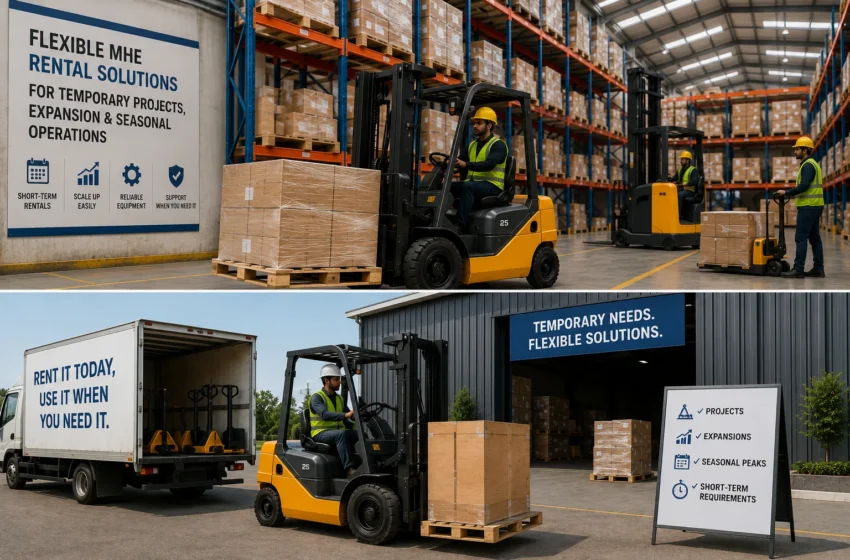
Material Handling Equipment (MHE) is essential for businesses that need to move, lift, and organise materials efficiently. Warehouses, manufacturing facilities, logistics companies, and distribution centres often depend on equipment such as forklifts, pallet trucks, stackers, and reach trucks to maintain smooth operations.
However, equipment requirements are not always constant. Businesses may need additional machines during temporary projects, warehouse expansions, peak seasons, or sudden increases in workload. Purchasing equipment for short-term requirements can lead to unnecessary expenses, storage challenges, and long-term ownership responsibilities.
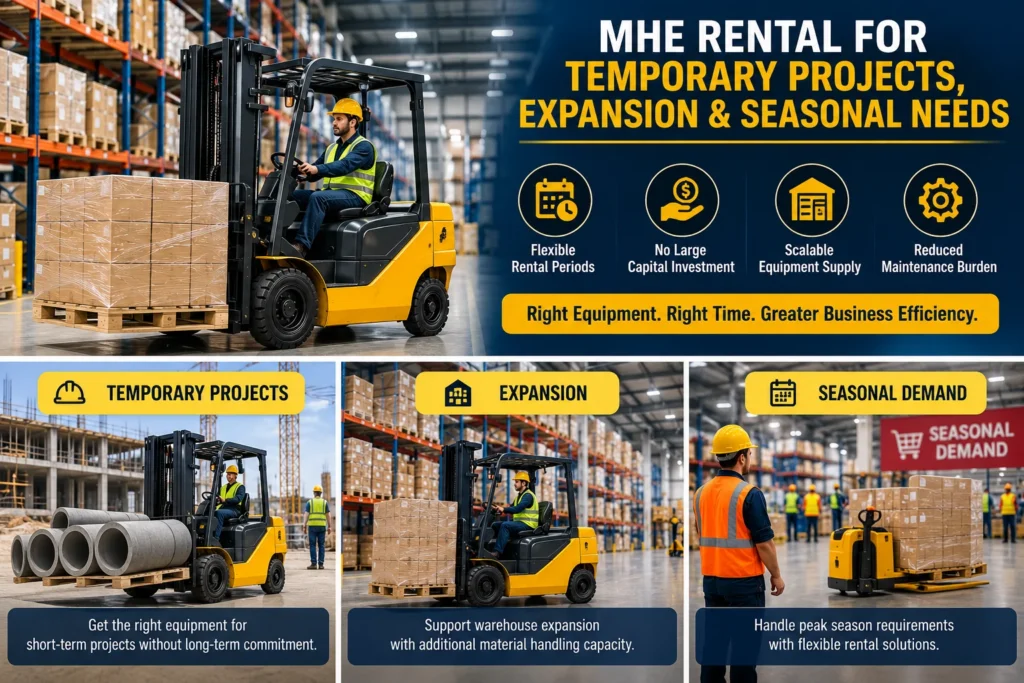
This is where MHE rental for temporary projects becomes a practical solution. By renting material handling equipment, businesses can access the right machines when required without making large capital investments. Flexible MHE rental services help companies manage changing operational demands while maintaining productivity and efficiency.
What Is MHE Rental for Temporary Projects?
MHE rental for temporary projects allows businesses to use material handling equipment for a specific duration based on their operational requirements. Instead of purchasing equipment that may remain unused after project completion, companies can rent suitable machines for short-term or seasonal needs.
Temporary MHE requirements can arise during:
- Warehouse setup projects
- Infrastructure and construction activities
- Manufacturing expansion
- Seasonal inventory handling
- Short-term logistics contracts
- Special business operations
Rental solutions provide businesses with the flexibility to scale equipment usage according to project timelines.
Why Businesses Need Flexible Material Handling Solutions
Modern business operations often experience fluctuations in workload. A company may require additional equipment during certain periods but may not need the same capacity throughout the year.
Traditional equipment ownership can create challenges such as:
- High upfront investment
- Equipment maintenance costs
- Asset depreciation
- Storage requirements
- Limited flexibility
Flexible rental solutions allow businesses to respond quickly to operational changes without committing to long-term equipment ownership.
How MHE Rental Supports Temporary Projects
1. Provides Equipment Without Large Capital Investment
Temporary projects often require additional material handling capacity for a limited period. Purchasing new equipment for short-term use may not provide sufficient value due to high acquisition costs.
With MHE rental services, businesses can access required equipment without investing significant capital in purchasing machines.
Benefits include:
- Better budget management
- Reduced financial pressure
- No long-term asset commitment
- Improved project cost control
This allows companies to focus their resources on completing projects efficiently.
2. Helps Manage Short-Term Increase in Material Movement
During temporary projects, businesses may experience higher material movement requirements. Additional forklifts, stackers, or pallet trucks can help maintain workflow and avoid operational delays.
MHE rental allows companies to quickly increase their handling capacity during periods of increased demand.
For example:
- A warehouse expansion may require extra forklifts for shifting inventory
- A construction project may need lifting equipment for material transportation
- A logistics contract may require additional machines for handling shipments
Rental equipment ensures businesses have the necessary resources when workload increases.
3. Supports Warehouse Expansion Activities
Expanding a warehouse involves several operational challenges, including moving inventory, arranging storage systems, and managing increased material flow.
During expansion, businesses may require additional equipment before their new facility becomes fully operational.
MHE rental for temporary projects helps companies:
- Handle increased inventory movement
- Support warehouse transitions
- Manage temporary storage requirements
- Maintain regular operations during expansion
Once the expansion is complete, businesses can return rented equipment without managing unused assets.
4. Helps Businesses Handle Seasonal Demand
Many industries experience seasonal fluctuations where demand increases during specific periods. E-commerce, retail, manufacturing, and distribution businesses often require additional material handling capacity during peak seasons.
Examples of seasonal demand periods include:
- Festival seasons
- Holiday sales periods
- Year-end inventory movement
- Promotional campaigns
Instead of purchasing additional equipment that may remain idle after the season ends, businesses can use MHE rental services to meet temporary requirements.
5. Reduces Maintenance Responsibilities
Owning equipment requires regular maintenance, inspections, repairs, and replacement of components. These responsibilities can increase operational costs, especially when equipment is used only occasionally.
Rental solutions reduce these challenges by providing access to maintained equipment.
Businesses can benefit from:
- Reduced repair responsibilities
- Lower maintenance expenses
- Less equipment downtime
- Professional service support
This allows teams to focus on operations rather than equipment management.
6. Provides Access to Different Types of Equipment
Different projects require different types of material handling equipment. A warehouse expansion may require forklifts, while a smaller inventory movement project may only require pallet trucks or stackers.
MHE rental allows businesses to choose equipment based on specific requirements.
Common rental equipment options include:
- Forklifts
- Electric pallet trucks
- Reach trucks
- Stackers
- Other specialised handling equipment
Choosing the right equipment improves safety, productivity, and project efficiency.
Benefits of MHE Rental Services for Business Growth
Improved Operational Flexibility
Businesses can increase or reduce equipment availability based on their current needs. This flexibility is especially useful for companies managing changing workloads.
Faster Equipment Availability
Purchasing new equipment may involve longer procurement timelines. Rental services allow businesses to quickly access machines required for urgent projects.
Reduced Equipment Ownership Challenges
Rental eliminates concerns related to depreciation, storage, resale, and long-term maintenance.
Better Resource Utilisation
Businesses can avoid investing in equipment that may not be required after project completion. Rental allows companies to use resources more efficiently.
Choosing the Right MHE Rental Partner
Selecting the right rental provider is important for ensuring smooth project execution. Businesses should consider several factors before choosing a service provider.
Equipment Quality
Ensure that the rental provider offers reliable and properly maintained equipment.
Equipment Availability
Choose a provider that can supply the required machines within the required timeline.
Maintenance Support
Reliable service support helps minimise downtime and keeps operations running smoothly.
Safety Standards
Ensure that equipment meets safety requirements and operators follow proper handling procedures.
Flexible Rental Plans
Select rental options that match project duration, workload, and operational requirements.
Industries That Benefit From MHE Rental Services
MHE rental services support businesses across multiple industries, including:
- Warehousing and logistics
- Manufacturing
- E-commerce
- Retail distribution
- Construction
- Infrastructure projects
- Supply chain operations
Any business facing temporary equipment requirements can benefit from flexible rental solutions.
Conclusion
Temporary projects, business expansions, and seasonal operations often require additional material handling capacity. Investing in new equipment for short-term needs can create unnecessary financial and operational challenges.
MHE rental for temporary projects provides businesses with a flexible solution to access reliable equipment without long-term ownership responsibilities. Through professional MHE rental services, companies can improve productivity, manage costs, and adapt quickly to changing operational demands.
By choosing the right rental partner, businesses can ensure efficient material movement while focusing on successful project completion and long-term growth.
Frequently Asked Questions
Q1. What is MHE rental for temporary projects?
A. MHE rental for temporary projects allows businesses to use forklifts, stackers, and other material handling equipment for short-term operational requirements without purchasing them.
Q2. How does MHE rental support warehouse expansion?
A. MHE rental helps warehouse expansions by providing additional equipment for inventory movement, storage setup, and increased material handling needs.
Q3. Can businesses use MHE rental for seasonal operations?
A. Yes, businesses can use MHE rental services during peak seasons, festivals, and periods of increased demand to manage higher material movement requirements.
Q4. What are the benefits of MHE rental services?
A. MHE rental services help businesses reduce upfront costs, avoid maintenance responsibilities, access suitable equipment, and improve operational flexibility.
Q5. How do businesses choose the right MHE rental equipment?
A. Businesses should consider project requirements, load capacity, equipment type, rental duration, safety standards, and service support when selecting MHE rental equipment.
→ Talk to the Mazda Movers Material Handling Team
Also, follow us on Instagram, Facebook and LinkedIn for insights on fleet modernization, automation trends, and advanced logistics strategies.