Material Handling Equipment (MHE) plays an important role in warehouses, manufacturing units, logistics operations, and distribution centres. Equipment such as forklifts, pallet trucks, stackers, and reach trucks helps businesses move heavy materials efficiently and maintain smooth operations.
However, owning and managing material handling equipment comes with several challenges. High purchase costs, maintenance responsibilities, storage requirements, and equipment depreciation can create financial and operational pressure, especially for businesses with changing requirements.
This is where MHE rental services provide a practical solution. By renting material handling equipment, businesses can access reliable machines without the long-term responsibilities associated with ownership. MHE rental allows companies to improve operational efficiency, manage costs, and scale equipment usage according to their needs.
What Are MHE Rental Services?
MHE rental services allow businesses to use material handling equipment for a specific period without purchasing the machines outright. Companies can rent equipment based on project requirements, seasonal demand, warehouse expansion, or temporary operational needs.
Commonly rented material handling equipment includes:
- Forklifts
- Electric pallet trucks
- Reach trucks
- Stackers
- Battery-operated equipment
- Other warehouse handling solutions
Instead of investing large amounts in equipment purchases, businesses can choose flexible rental options that match their operational requirements.
Why Are Businesses Choosing MHE Rental?
Modern businesses need flexibility to adapt to changing market conditions. Equipment requirements can vary depending on production levels, inventory movement, expansion plans, and seasonal demand.
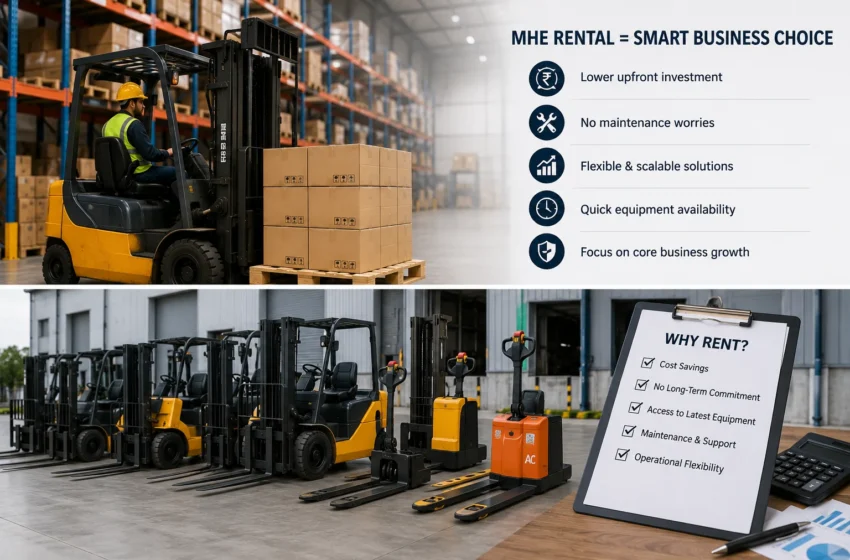
MHE rental helps businesses:
- Reduce upfront investment
- Access updated equipment
- Avoid maintenance responsibilities
- Handle temporary requirements
- Improve operational flexibility
For many companies, renting equipment is a cost-effective alternative to purchasing and managing their own fleet.
Common Equipment Ownership Challenges Businesses Face
1. High Initial Investment Costs
Purchasing material handling equipment requires significant capital investment. A single forklift or specialised machine can involve substantial costs, which may impact business cash flow.
Apart from the purchase price, businesses also need to consider additional expenses such as:
- Insurance costs
- Registration expenses
- Operator training
- Spare parts
- Maintenance setup
For businesses that do not require continuous equipment usage, purchasing may not always be financially practical.
How MHE Rental Helps:
With MHE rental services, businesses can access the required equipment without making a large upfront investment. Rental models allow companies to allocate their budget toward other important operational areas.
2. Maintenance and Repair Responsibilities
Owning material handling equipment means taking responsibility for regular servicing, repairs, and replacement of worn-out parts. Unexpected breakdowns can disrupt warehouse operations and increase costs.
Maintenance challenges include:
- Scheduling regular inspections
- Managing repair expenses
- Keeping spare parts available
- Finding skilled technicians
- Reducing equipment downtime
How MHE Rental Helps:
Rental providers typically handle equipment maintenance and servicing requirements. Businesses can use well-maintained equipment while reducing the burden of managing repairs and technical support.
3. Equipment Depreciation
Material handling equipment loses value over time due to usage, technological advancements, and market changes. Businesses that purchase equipment must consider depreciation as part of ownership costs.
Older equipment may also become less efficient and require more frequent maintenance.
How MHE Rental Helps:
Through MHE rental, businesses can use suitable equipment without worrying about resale value or depreciation. Rental solutions allow companies to access functional equipment without long-term asset management concerns.
4. Changing Operational Requirements
Business requirements are rarely constant. A warehouse may need additional equipment during peak seasons, expansion periods, or special projects but may not require the same capacity throughout the year.
Owning extra equipment can result in:
- Underutilized assets
- Higher storage costs
- Unnecessary maintenance expenses
How MHE Rental Helps:
MHE rental provides flexibility by allowing businesses to increase or reduce equipment availability based on current needs. Companies can choose short-term or long-term rental solutions depending on operational demand.
5. Storage and Space Management Challenges
Unused equipment requires proper storage space and maintenance arrangements. For businesses with limited warehouse space, storing idle equipment can create additional challenges.
How MHE Rental Helps:
By choosing rental equipment, businesses only keep machines when they are needed. This helps optimise workspace and reduces the need for additional storage arrangements.
6. Technology Updates and Equipment Upgrades
Material handling technology continues to improve with better efficiency, safety features, and energy-saving solutions. Businesses that own equipment may continue using older models because replacing them requires additional investment.
How MHE Rental Helps:
Rental services allow businesses to access newer equipment models without purchasing new machines. This helps companies improve productivity while adapting to changing industry requirements.
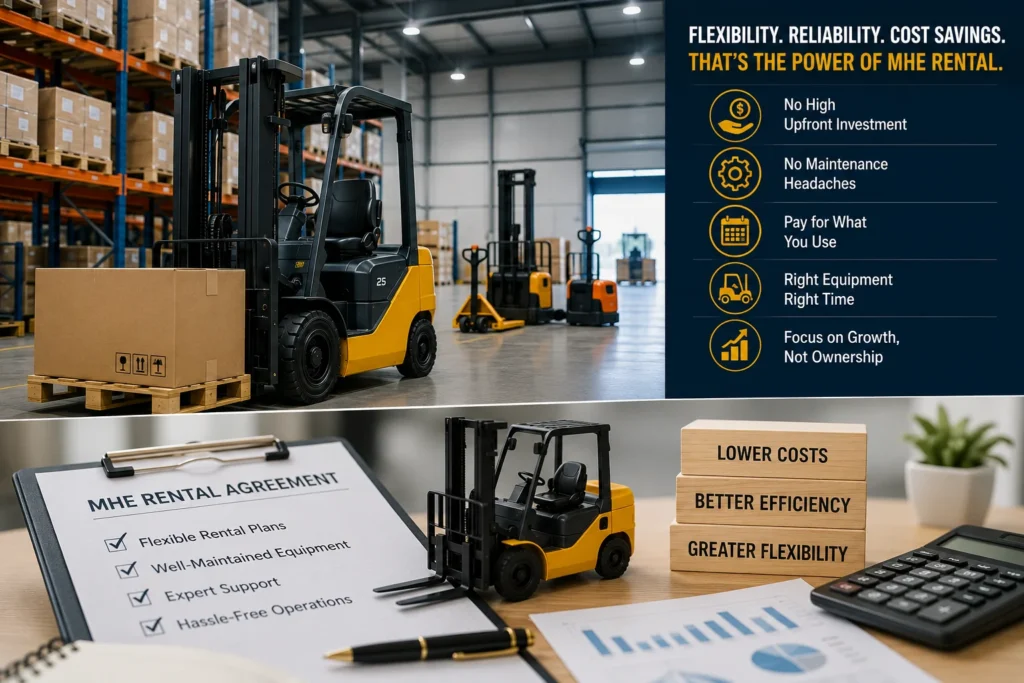
Benefits of Choosing MHE Rental Services
Cost-Effective Material Handling Solution
One of the biggest advantages of MHE rental is cost control. Businesses can avoid major capital expenses and pay only for equipment usage based on their requirements.
Improved Operational Flexibility
Rental solutions allow businesses to adjust equipment availability according to workload, seasonal demand, and project requirements.
Reduced Maintenance Burden
With professional support from rental providers, businesses can reduce the time and resources spent managing repairs and servicing.
Faster Equipment Availability
Purchasing new equipment may involve long procurement timelines. Rental services help businesses quickly access the machines they need to maintain operations.
Better Resource Management
By avoiding unnecessary equipment ownership responsibilities, businesses can focus on improving productivity and managing core operations.
Factors to Consider Before Choosing MHE Rental
Before selecting a rental provider, businesses should evaluate their operational requirements carefully.
Important factors include:
Equipment Requirements
Choose equipment based on load capacity, operating environment, lifting height, and usage frequency.
Rental Duration
Determine whether short-term, long-term, or project-based rental options are more suitable.
Equipment Condition
Ensure the rental provider offers properly maintained and reliable machines.
Service Support
Check whether the provider offers maintenance assistance, technical support, and quick response during operational issues.
Safety Standards
Ensure that equipment meets safety requirements and operators receive proper guidance for safe usage.
Who Can Benefit From MHE Rental Services?
MHE rental services are useful for various industries, including:
- Warehousing and logistics companies
- Manufacturing facilities
- E-commerce businesses
- Construction projects
- Retail distribution centres
- Businesses managing seasonal inventory
Any company that requires flexible material handling solutions can benefit from rental options.
Conclusion
Equipment ownership can create several challenges, including high investment costs, maintenance responsibilities, depreciation, and changing operational requirements. For businesses looking to improve efficiency without taking on long-term equipment commitments, MHE rental services offer a flexible and cost-effective alternative.
By choosing MHE rental, companies can access reliable material handling equipment, reduce operational burdens, and adapt quickly to changing business needs.
With the right rental partner, businesses can maintain smooth warehouse operations while focusing on growth, productivity, and long-term success.
Frequently Asked Questions
Q1. What are MHE rental services?
A. MHE rental services allow businesses to use material handling equipment like forklifts and stackers for a specific period without purchasing the equipment.
Q2. How does MHE rental help businesses reduce costs?
A. MHE rental helps businesses avoid high upfront investment, depreciation costs, and equipment ownership expenses while providing access to required machinery.
Q3. Do MHE rental services include equipment maintenance?
A. Yes, many MHE rental providers offer maintenance and servicing support, reducing the responsibility of managing equipment repairs and downtime.
Q4. Who can benefit from MHE rental services?
A. Warehouses, logistics companies, manufacturing units, e-commerce businesses, and organizations with temporary or changing equipment needs can benefit from MHE rental.
Q5. Why choose MHE rental instead of buying equipment?
A. MHE rental provides flexibility, faster equipment availability, reduced maintenance responsibilities, and access to suitable equipment without long-term ownership commitments.
→ Talk to the Mazda Movers Material Handling Team
Also, follow us on Instagram, Facebook and LinkedIn for insights on fleet modernization, automation trends, and advanced logistics strategies.