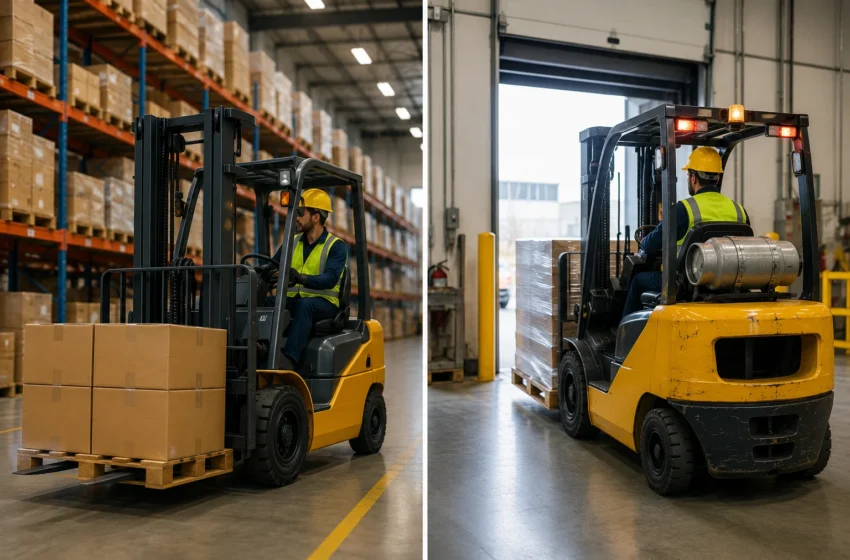
Forklifts play an important role in modern warehouses by helping businesses move, lift, and organise heavy materials efficiently. From loading and unloading shipments to managing inventory within storage facilities, a forklift for warehouse operations improves productivity and reduces manual handling efforts.
However, forklifts can also create serious workplace risks if they are not operated correctly. Poor handling, lack of operator training, improper maintenance, and unsafe warehouse practices are some of the common causes of forklift-related accidents.
Following proper forklift safety rules helps businesses create a safer working environment, protect employees, prevent equipment damage, and maintain smooth warehouse operations. Whether you operate a small storage facility or a large distribution centre, implementing safety guidelines is essential for efficient material handling.
Why Are Forklift Safety Rules Important in Warehouses?
Warehouses often have busy environments where forklifts, workers, storage racks, and moving goods operate together. Without proper safety measures, accidents can occur due to collisions, falling loads, equipment failures, or incorrect forklift operation.
Following structured safety practices helps warehouses:
- Reduce workplace injuries and accidents
- Improve forklift operator awareness
- Prevent product and equipment damage
- Increase operational efficiency
- Extend the lifespan of material handling equipment
- Maintain compliance with workplace safety standards
A well-managed forklift operation is not only about protecting employees but also about ensuring uninterrupted productivity in the warehouse.
Essential Forklift Safety Rules Every Warehouse Should Follow
1. Hire Trained and Certified Forklift Operators
One of the most important forklift safety rules is ensuring that only trained and authorised operators handle forklifts. Operating a forklift requires knowledge of equipment controls, load handling techniques, warehouse layouts, and safety procedures.
Operators should receive training on:
- Forklift operation techniques
- Load capacity understanding
- Workplace hazard identification
- Safe driving practices
- Emergency procedures
A trained operator can make better decisions and reduce the chances of accidents caused by improper handling.
2. Conduct Regular Forklift Inspections
Before using any forklift, operators should inspect the equipment to ensure it is in proper working condition. Daily inspections help identify potential issues before they become major safety concerns.
A forklift inspection checklist should include:
- Brakes and steering system
- Tires and wheels
- Forks and lifting mechanism
- Hydraulic systems
- Warning lights and alarms
- Seat belts and safety features
- Fuel or battery condition
If any problem is identified, the forklift should not be used until necessary repairs are completed.
3. Understand Forklift Load Capacity
Every forklift has a specific load capacity that should never be exceeded. Carrying loads beyond the recommended limit can make the equipment unstable and increase the risk of tipping over.
Operators should always:
- Check the forklift load chart
- Understand weight distribution
- Avoid lifting uneven or unstable loads
- Keep loads within the recommended capacity
Choosing the right forklift for warehouse requirements ensures safer material movement and better operational performance.
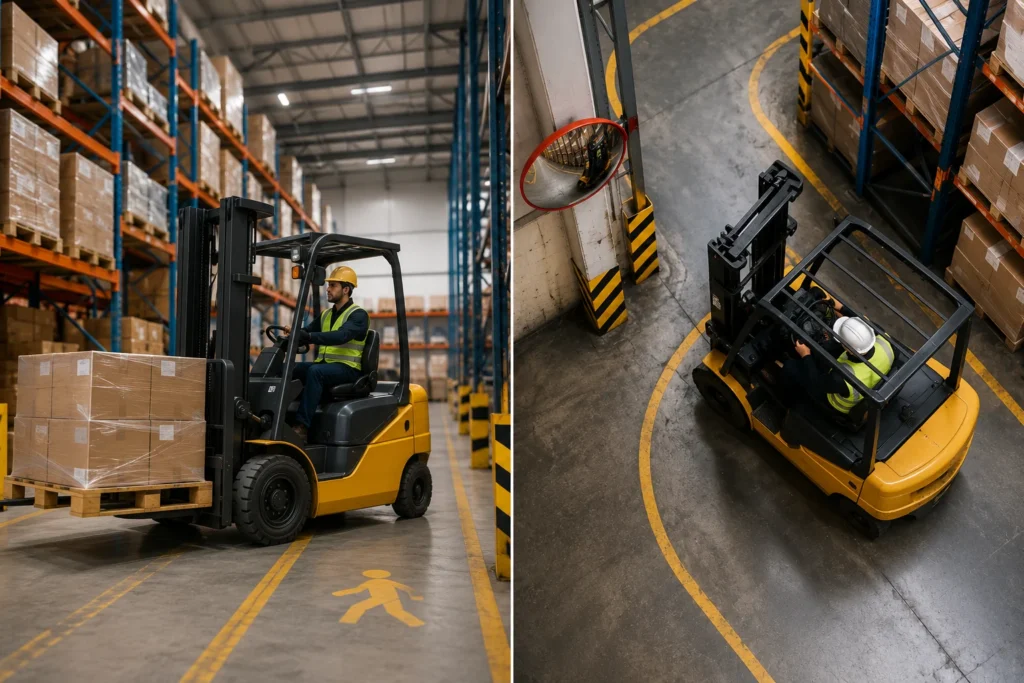
4. Maintain Proper Visibility While Operating
Limited visibility is a common challenge in warehouse environments, especially when transporting large or stacked materials. Operators should maintain clear visibility while driving and lifting loads.
Safety practices include:
- Driving with the load positioned safely
- Using mirrors in areas with limited visibility
- Keeping travel paths clear
- Using spotters when necessary
- Avoiding sudden turns or movements
Good visibility helps prevent collisions with workers, racks, and other equipment.
5. Follow Safe Driving Practices
Forklifts should always be operated at controlled speeds, especially in busy warehouse areas. Speeding, sharp turns, and sudden braking can cause accidents or load instability.
Safe driving practices include:
- Maintaining safe speed limits
- Keeping hands and feet inside the operator area
- Avoiding distractions while driving
- Slowing down near corners and intersections
- Maintaining a safe distance from other vehicles
Operators should treat forklifts as industrial vehicles that require careful handling.
6. Keep Warehouse Aisles Clear and Organised
A properly organised warehouse reduces safety risks and improves forklift movement. Blocked aisles, misplaced inventory, and poor storage practices can create hazards.
Warehouses should ensure:
- Clear forklift pathways
- Properly marked operating zones
- Organised storage areas
- Adequate lighting
- Visible safety signs
A clean and structured workspace allows operators to move materials safely and efficiently.
7. Use Safety Equipment and Protective Gear
Personal protective equipment (PPE) plays an important role in reducing workplace injuries. Forklift operators and warehouse employees should use appropriate safety gear based on workplace requirements.
Common safety equipment includes:
- Safety helmets
- High-visibility jackets
- Safety shoes
- Protective gloves
- Seat belts while operating forklifts
Using proper protective equipment adds a layer of safety during daily warehouse operations.
8. Avoid Carrying Passengers on Forklifts
Forklifts are designed for material handling, not passenger transportation. Allowing additional people on the forklift can increase the risk of falls and accidents.
Only the trained operator should be present in the forklift operating area unless the equipment is specifically designed for multiple occupants.
9. Follow Proper Loading and Unloading Procedures
Loading and unloading materials require careful planning to maintain forklift stability. Improper loading techniques can cause products to fall or affect equipment balance.
Operators should:
- Secure loads before transportation
- Place forks correctly under the load
- Lift materials evenly
- Avoid moving unstable goods
- Lower loads safely before stopping
Proper handling techniques improve both safety and efficiency.
10. Schedule Regular Forklift Maintenance
Routine maintenance keeps forklifts reliable and reduces unexpected equipment failures. A preventive maintenance schedule helps identify mechanical problems before they impact operations.
Maintenance activities may include:
- Checking engine or battery performance
- Inspecting hydraulic components
- Servicing brakes and steering systems
- Replacing worn-out parts
- Testing safety features
A well-maintained forklift performs better and supports safer warehouse operations.
Common Forklift Safety Mistakes to Avoid
Even experienced operators can make mistakes that compromise workplace safety. Some common forklift safety mistakes include:
- Ignoring daily equipment checks
- Overloading the forklift
- Driving too fast
- Operating without proper training
- Leaving raised forks unattended
- Using damaged equipment
- Ignoring warehouse traffic rules
Identifying and correcting these issues helps create a safer workplace culture.
How to Create a Safer Forklift Operation System
A successful forklift safety program requires cooperation between operators, warehouse managers, and maintenance teams. Businesses should regularly review safety procedures and provide refresher training to employees.
Key steps include:
- Developing clear forklift operating guidelines
- Conducting regular safety training
- Monitoring operator performance
- Maintaining proper warehouse layouts
- Encouraging employees to report safety concerns
Safety should be treated as an ongoing process rather than a one-time activity.
Choosing the Right Forklift for Warehouse Operations
Selecting the right equipment is essential for safe and efficient material handling. Different warehouses have different requirements based on load capacity, storage height, floor conditions, and operational needs.
Businesses should consider factors such as:
- Maximum load requirements
- Available warehouse space
- Indoor or outdoor usage
- Operating frequency
- Maintenance requirements
The right forklift for warehouse applications can improve productivity while reducing operational risks.
Conclusion
Forklift safety is a critical part of effective warehouse management. By following proper forklift safety rules, businesses can reduce workplace accidents, protect employees, and maintain efficient material handling operations.
From operator training and equipment inspections to safe driving practices and regular maintenance, every safety measure contributes to a more productive warehouse environment.
For businesses that rely on forklifts for daily operations, investing in proper safety practices is essential for long-term efficiency and workplace protection.
Frequently Asked Questions:
Q1. What are the most important forklift safety rules for warehouses?
A. The most important forklift safety rules include training operators, conducting regular equipment inspections, following load capacity limits, maintaining clear warehouse pathways, and practising safe driving and handling procedures.
Q2. Why is forklift operator training important?
A. Forklift operator training helps workers understand equipment controls, load handling techniques, workplace hazards, and emergency procedures. Trained operators can reduce the risk of accidents and operate forklifts more safely.
Q3. How often should a forklift be inspected?
A. A forklift should be inspected before every use to identify issues with brakes, tyres, forks, hydraulic systems, warning signals, and other safety components. Regular maintenance inspections should also be scheduled to ensure reliable performance.
Q4. How can warehouses improve forklift safety?
A. Warehouses can improve forklift safety by keeping aisles organised, using proper safety signs, maintaining clear travel paths, providing protective equipment, monitoring operator practices, and following regular maintenance schedules.
Q5. What factors should businesses consider when choosing a forklift for warehouse operations?
A. Businesses should consider load requirements, warehouse space, storage height, operating conditions, usage frequency, and maintenance needs when selecting a forklift for warehouse operations. Choosing the right equipment improves safety and efficiency.
→ Talk to the Mazda Movers Material Handling Team
Also, follow us on Instagram, Facebook and LinkedIn for insights on fleet modernization, automation trends, and advanced logistics strategies.