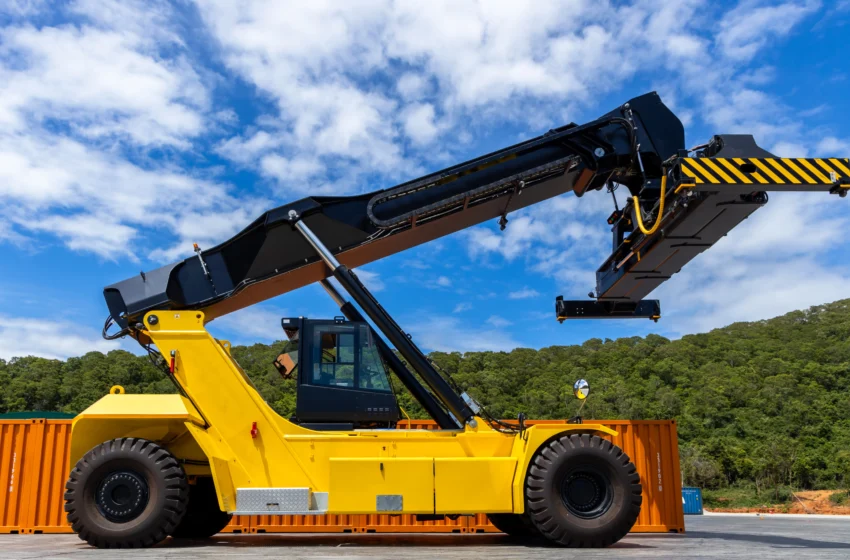
In recent times, logistics, construction, and industrial sectors face continuous pressure to use less space, fewer machines, and meet tighter deadlines. The classical equipment arrangements also tend to compel crews to settle either lifting or move-on, which creates time loss and additional handling work. Forklift crane integration is used here. Using lifting and transport features as a single system, companies would be able to simplify the workflows, as well as enhance agility.
This blog addresses this subject and answers the question: what does forklift crane integration mean, and when should you consider it?How can hybrid operations be improved by using smarter with regards to forklift truck systems and Ground Handling Equipment?
What Is the Integration of Forklift Crane?
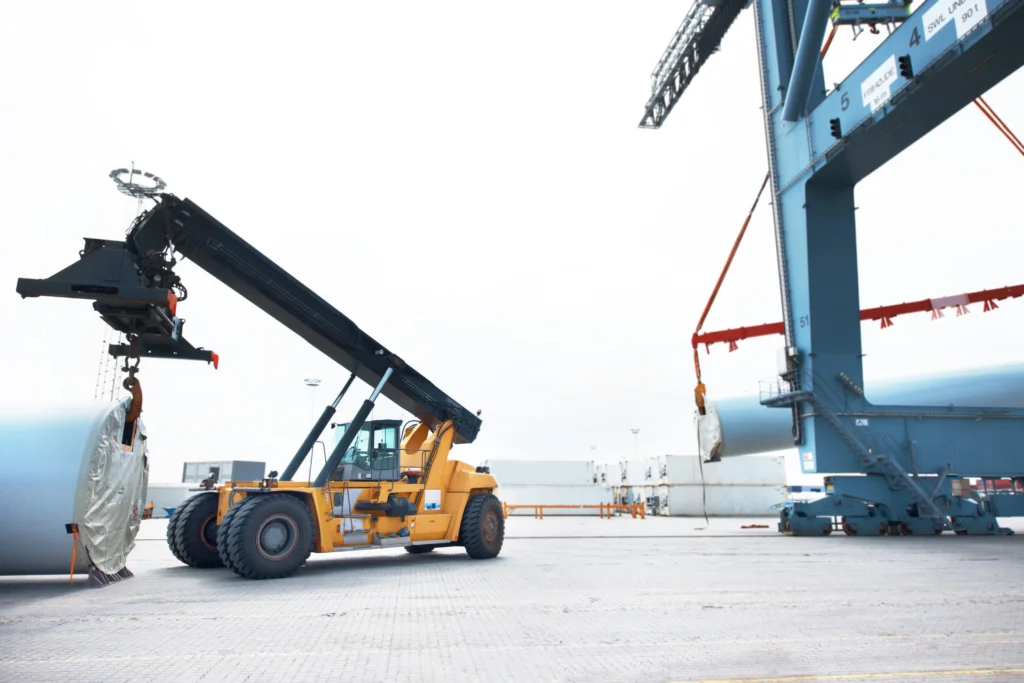
Forklift crane integration combines a crane-like lifting body or links with a standard forklift truck, enabling it to both lift vertically and move horizontally.
This setup typically allows:
- Moving weights that are above regular fork length
- Dealing with clumsy or bulky goods
- Eliminating individual cranes or hoists
This integration in hybrid operations serves to bridging the material handling and lifting operations.
The Relevance of Forklift Crane Integration
Operational Flexibility
A forklift crane will help teams to move and load in and out loads without changing equipment.
Less Equipment Reliability
Minimizing on-site machines reduces capital and rental expenses.
Faster Task Completion
A lift-and-move combination reduces handling procedures and time.
Improved Space Utilization
Hybrid equipment works best in small areas where cranes cannot function effectively.
Diversification in Other Industries
Ground Handling Equipment has a variety of use cases since it features ground handling equipment in warehouses to ports.
Critical Forklift Crane Configuration
Crane Attachments
Hooks, lifting arms and booms that transform a forklift truck into a lifting unit.
Forklift Truck Base
A forklift truck with a stable and rated sufficiently to carry added load moments.
Load Control Systems
Balance assurance of safety through mechanisms.
Operator Training
Operators should competently switch between fork and crane functions.
All components of the hybrid system provide the system with appropriate functioning safety and efficiency.
Operational Process of Forklift Crane Integration
- Assess Load Requirements
Determine weight of loads, shape and height of lift. - Identify Utilities Choices Attachments
Select crane booms / hooks with capacity to fit the forklift. - Validate Safety Ratings
Make sure that the combined load limits are in specification. - Train Operators
Train hybrid operation and loading crew. - Deploy for Specific Tasks
Workers utilize the forklift crane where lifting and transportation overlap.
The gradual process will help reduce the risk and maximize efficiency.
Widespread Dilemmas and Problems
The common error is to go beyond safe load limits by not taking into consideration the effects of long crane attachments. Other problems are the use of under powered forklifts that are incapable of carrying the combined loads safely. The lack of research in the training of operators might cause unsteadiness and danger too.
Teams can manage these risks by planning the work, choosing proper equipment, and maintaining safety standards — particularly when using them alongside other Ground Handling Equipment.
Future Trends and Use Cases
The use of a hybrid material handling system is on the rise in ports, logistics centers, and construction locations. Development of attachment design, load monitoring sensors, and electric forklift truck platforms is rendering forklift crane integration safer and more efficient.
With the move to operations that are more versatile without increasing equipment floor, hybrid solutions will also become an increasingly important part of contemporary material handling approaches.
Taking the Next Step
A task analysis is the first step businesses thinking of a hybrid operation should take though they need to determine where the lifting and movement are similar. This intelligibility assists in shaping up the decisions on the feasibility of forklift crane integration as an investment.
Conclusion
Forklift crane integration conveniently serves operations that require both lifting and transportation within a single working process.With a crane and a forklift truck integrated in a single unit, a company will be able to save on equipment and save on time used and expand the space range.
A forklift crane becomes one of the most powerful components of modern Ground Handling Equipment when trained specialists deploy and operate it properly.With the nature of flexibility and efficiency dictating success in the environment, there is no longer an option of having hybrid equipment, but a strategic choice.
Stay connected with Mazda Movers — follow us on LinkedIn, Instagram, and Facebook for updates, insights, and moving tips.
FAQs
What is the application of a forklift crane?
Workers employ a forklift crane to handle products that are heavy, oversized, or exceed the normal fork length.
Is it possible to convert any forklift truck to forklift crane?
No. Crane attachments should only be attached to forklift truck units that are of good capacity and compatibility.
Is integration of forklift cranes safe?
Yes, when the load attention is observed and training is involved in the administration of the operators.
In what areas is forklift crane prevalence seen?
They are typical in warehouses, construction sites, ports, and logistics yards.
What is the difference with traditional Ground Handling Equipment?
Forklift crane systems combine lifting and movement in one unit, reducing the need for multiple machines.