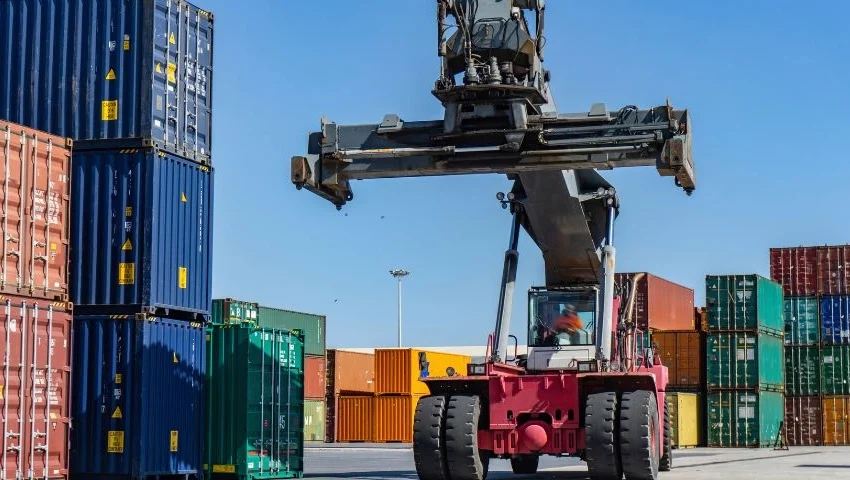
The mixed container volumes pose a special challenge to ports, terminals and shipping companies in India. Since 20-foot to 40-foot TEUs handling, equipment configuration and yard planning are essential towards operational efficiency. The trick is to select the correct container handler with the lift height, the type of spreader and maneuverability to suit the dynamic cargo loading. This blog deconstructs the process of configurating your container handling equipment when operating at mixed volumes so as to balance prices, capacity and performance.
Knowledge in Container Handlers in Mixed TEU
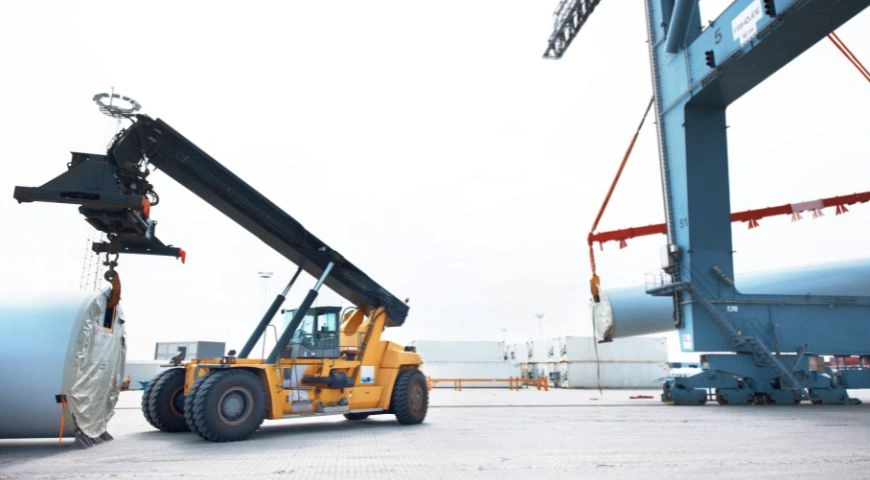
A container handler is a high power truck that is used in the loading, stacking, and carrying of shipping containers at ports, terminals and depots. They are constructed with more load capacities, higher reach and more stability as compared to forklifts.
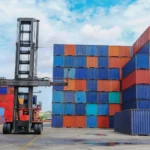
Container handlers have to handle 20-foot containers as well as 40-foot containers sometimes mounted in multiple layers when it comes to operations on mixed TEU volumes. This needs to pay close attention to:
- Stacking efficiency, lift height and stability.
- Suiting of spreaders to deal with various types of containers.
- Planning of the yard to facilitate maximum flow of equipment and goods.
The close working with a certified container handler dealer is a guarantee that the machine chosen meets the yard throughput, terrain and operational safety.
The Importance of Proper Specification
The decision on the choice of the appropriate handler is not only a matter of capacity, but also a long-term choice on productivity and ROI.
Increased Efficiency
- Well-specified handlers reduce dead time and handling effort resulting in shorter turnaround of containers.
Reduced Maintenance Costs
- Sizing of machine and workloads can match to avoid mechanical load and reduce the number of forklift maintenance or repair of the handlers.
Improved Yard Flow
- Streamlined designs minimize the distance travelled between loading and stacking areas particularly when structured with material management systems and traffic control systems.
Safety and Compliance
- The right-sized spreaders, stable lifts, and controlled stacking heights reduce the risks of the operators and satisfy the port safety criteria.
Basic Capabilities to Consider in Container Handlers
- Lift Height and Weight Capacity:
In mixed operations, the lift heights are normally between 9–15 meters and the stacking heights are limited to six containers. The equipment capacity should consider the dynamic loads, wind resistance and irregular ground conditions. - Spreader Configuration:
The contemporary handlers have telescopic spreaders, which change to a 20-ft container and 40-ft container. Other models are also advanced with side-shift and rotation in order to allow more accurate positioning in the stacking process. - Powertrain and Hydraulics:
Hydraulic systems with high performance enhance lifting cycles and performance. The use of authentic forklift spare parts will maintain the long life of forklifts and their consistent performance. - Ergonomics and Visibility:
The design of the cab should enable the operator to have full line-of-sight and ergonomic controls to minimize fatigue due to continuous long working shifts. - Yard Infrastructure Compatibility:
Handlers in combination with forklift trucks, reach stackers and container handling services must work as part of the working process.
Optimization of Yard Layout with Mixed TEU Volumes
- Evaluate Container Flow: Map inbound and outbound flow to reduce the number of bottlenecks.
- Outline Stack Zones: The 20-ft and 40-ft containers should be separated in order to enhance the stacking performance.
- Plan Traffic Routes: Develop one-way traffic routes of forklifts on rent or handlers to avoid congestion.
- Position Maintenance Bays: Have locations of forklift service and inspection near the areas of operation.
- Exploit Technology: Monitor the amount of TEU and performance of handlers using yard management software.
Proper yard layout improves the level of safety and also smooths out the handling of all the material solutions.
Typical Specification Handler Errors
- Excessive Capacity Requirement: Big machines use more fuel and require high service expenses.
- Disregard of Ground Conditions: Unstable yards require stability and suspension.
- Working with Generic Spreaders: Spreaders that cannot be adjusted may slow down the process when changing the size of the containers.
- Failure to Perform Preventive Maintenance: This will decrease reliability and uptime by delaying servicing, particularly in a forklift rental service where equipment is rented.
The procurement of forklift trucks and their maintenance services may be similarly costly mistakes that can be prevented through collaboration with the dealers and service providers experienced in this field.
Future Trends and Innovations
Due to the increase in the global trade, shipping companies in India are also investing in smart container yards and electrified fleet. New container handlers are now characterized by:
- Reduced emission hybrid or electric powertrains.
- Wear and maintenance predictive diagnostics using AI.
- Independent operation support, which improves the safety of crowded yards.
- Connection to container handling services to provide real-time tracking and load management services.
These developments enhance sustainability and transparency in operations, and this guarantees long-term returns on capital investments.
Next Step Thinking: Smarter Fleet Planning
A decision on the proper container handler begins by having knowledge of your yard flow and TEU combination. A reliable dealer in container handlers should be consulted on the spreader types, lift heights, and the material handling solutions that it can handle. Whether it is a port, depot or shipping company in India, the accuracy in equipment acquisition will contribute to safer, faster, and more lucrative operations.
Conclusion
Mixed TEU setting has the correct balance of equipment specification, yard design, and forklift service to preventive maintenance to achieve maximum efficiency, and reduce the cost of operation. By partnering with approved dealers of forklift trucks and container handlers, there is access to expert knowledge and authentic forklift spares to ensure long-term reliability. Smart handling of containers is not merely lifting but it is about strategic movement which leads to business performance.Stay connected with Mazda Movers — follow us on LinkedIn, Instagram, and Facebook for updates, insights, and moving tips