Accidents that occur at workplaces in warehouses, logistics centers, and ports all seem to be caused by one thing and that is the lack of oversight. Bad visibility and human factor can result in severe accidents even with trained operators. In the case of forklift trucks and other material handling equipment, safety technology should not be seen as a mere compliance tool, rather an intelligent business move. The add-ons are blue lights, cameras and proximity alert systems that much minimize accidents, and they have high return on investment (ROI). This blog has elaborated how these technologies keep people, products and profits safe.
Forklift Safety Add-Ons: What Are Forklift Safety Add-Ons?
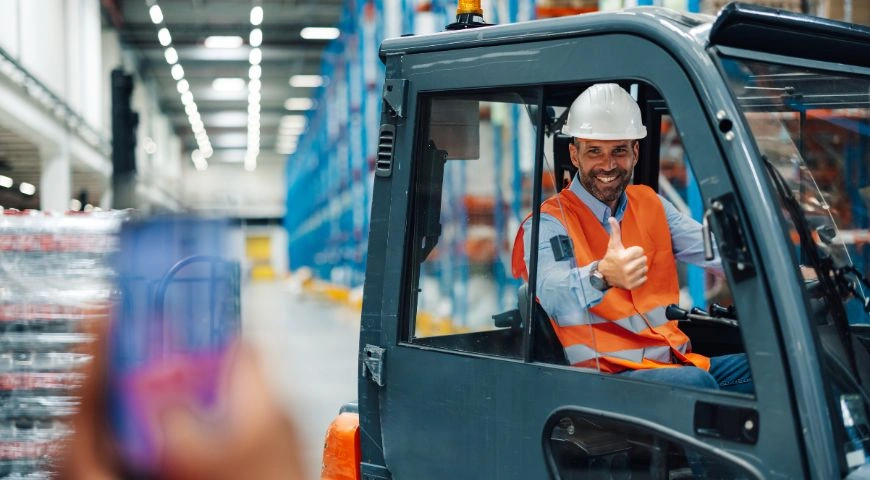
Safety add-ons are a complex of advanced attachments and technologies to forklift trucks and ground handling equipment to improve the level of awareness, visibility, and response time of the operators. They are used to reduce the number of human errors and enhance safety in high-traffic areas of operation such as warehouses, factories, and airports.
Some common add-ons include:
- Blue or Red Safety Lights: Project a warning beam on the floor to warn pedestrians of moving forklifts.
- Cameras and Sensors: Provide improved rear and blind-spot views to the operators.
- Proximity Alert Systems: Sensors that detect nearby people or objects and provide a warning.
- Audible Alarms: Inform employees when a forklift is going towards a crowded area.
All these technologies, combined, form a safer and more productive workplace, as well as maximize the ROI on material handling solutions.
The Importance of Safety Add-Ons: ROI of Prevention
Fewer Accidents, Lower Costs
- Forklift accidents may cause injury, broken inventory, and downtime. Blue lights and alert systems serve as preventive measures to such expensive events, which are good early warning devices. A safer operation will save thousands in medical, repair, and insurance fees each year.
Higher Productivity
- On the one hand, the visibility tools such as sensors and cameras help operators to work more confidently. Reduced hesitation will result in quicker turnaround, and this is beneficial to industries with container handling services as well as those relying on airport ground handling equipment services.
Extended Equipment Life
- Less wear and tear on machines will also imply accident-free operations. These safety upgrades coupled with regular forklift service provide longer and more reliable fleet performance.
Enhanced Conformity and Goodwill
- Companies which are safety conscious draw more client confidence. Much of the current supply chain contracting is now seeking evidence of certified forklift truck dealers and container handler dealers with equipment safety measures.
Critical Forklift Safety Elements to ROI
Blue and Red Safety Lights
- These lights are attached either to the front or the back and are projected to warn other workers who may be passing close to forklifts. They work quite well in noisy environments where audible warnings can be missed.
Proximity Detection Systems
- These are a type of wireless device where the range of detection is restricted to a minimum distance of three feet (0.9 meters).
- The sensors operate in infrared or ultrasonic and once the system detects that somebody or an object is too close, it alerts the driver to act before the accident takes place.
Camera Systems
- Cameras mounted on forklifts enhance the visibility of operators in narrow aisles and stacked pallets. They also help in reverse or container-handling.
Telematics Integration
- Forklifts have telematics that can be used to monitor usage patterns and identify unsafe driving behavior, further minimizing risks and maintenance expenses.
Port and Airport Equipment Safety
- Visibility accessories and automatic braking systems are starting to gain popularity in industries that use airport ground handling equipment and container handlers, which increases the accuracy of operations around containers and aircraft.
The Way These Systems Interrelate to One Another
- Detection: Sensors detect the surrounding obstacles/movement.
- Caution: The system notifies the operator in terms of visual or audible alerts.
- Correction: The cameras as well as proximity systems direct the operator on taking a halt or breaking route.
- Prevention: Integrated alerts prevent risky behavior in the long term by building awareness of it and developing a habit of it.
The technologies combined with frequent forklift service provide a continuous flow of prevention and maintenance.
Likely Problems in the Implementation of Safety Add-Ons
- Installation on the Fly: The operators need to know how to interpret the alerts.
- Neglect of Periodical Checking: The safety measures will depend on clean sensors and operational wiring. Regular inspection must be made during planned forklift service or forklift rental service.
- Add-On Mix: Certified products should be used since dealers of forklift trucks are the approved sites to obtain them.
- Failure to Incorporate Integration: Safety devices ought to be an addition to an existing fleet, be it a forklift on rent or a long-term investment.
These pitfalls are to be avoided, which would guarantee safety and long-term financial gains.
Forklift and Equipment Safety in the Future
Safety in the workplaces is being redefined by emerging technologies. They are AI-enabled sensors, 360° cameras, and IoT-enabled forklifts, which are now a staple of leading dealers in container handling and logistics operations. Airports and seaports are adopting smart ground handling equipment that is capable of communicating with one another to avoid collisions.
The future will come when predictive safety analytics will warn managers of accidents in advance—a real breakthrough in operational intelligence and savings.
Make the Next Move Towards Safer Operations
When you want to upgrade your fleet, then seek the advice of certified dealers of forklift trucks or container handler dealers who can provide advanced solutions to material handling. They are able to suggest tailor-made safety add-ons to your warehouse, port, or airport operations, which would provide as high ROI as possible with minimum risk.
Conclusion
Safety is no cost; it is an investment that will be rewarded in availability, efficiency, and reputation. Having blue lights, cameras, proximity alerts and so on, every safety operation brings quantifiable value to your forklift trucks, airport ground handling equipment, and container handling services. Collaboration with specialists in the field of material handling solutions will help you to make your fleet smarter, safer, and more profitable.
Stay connected with Mazda Movers — follow us on LinkedIn, Instagram, and Facebook for updates, insights, and moving tips