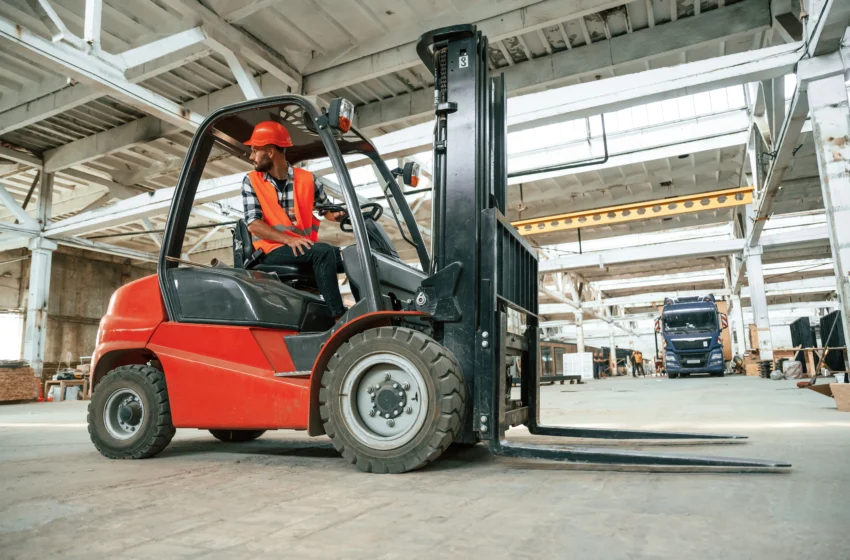
In the modern quick-paced logistics and warehouse settings, the downtime may be converted into lost profits. Most shipping companies in India operate on a 24/7 basis and have a high demand for durable fleets that can be used constantly. However, when machines are not functioning or are waiting to get fixed, the efficiency will be low. Flexibility of forklift renting service comes in there.
This practical example offers an examination into how a top logistics center was able to curb downtime by up to 30 percent by deploying a hybrid fleet, which consisted of both owned and rented equipment in order to maintain continuous performance.
What Do Hybrid Forklift Fleets Mean?
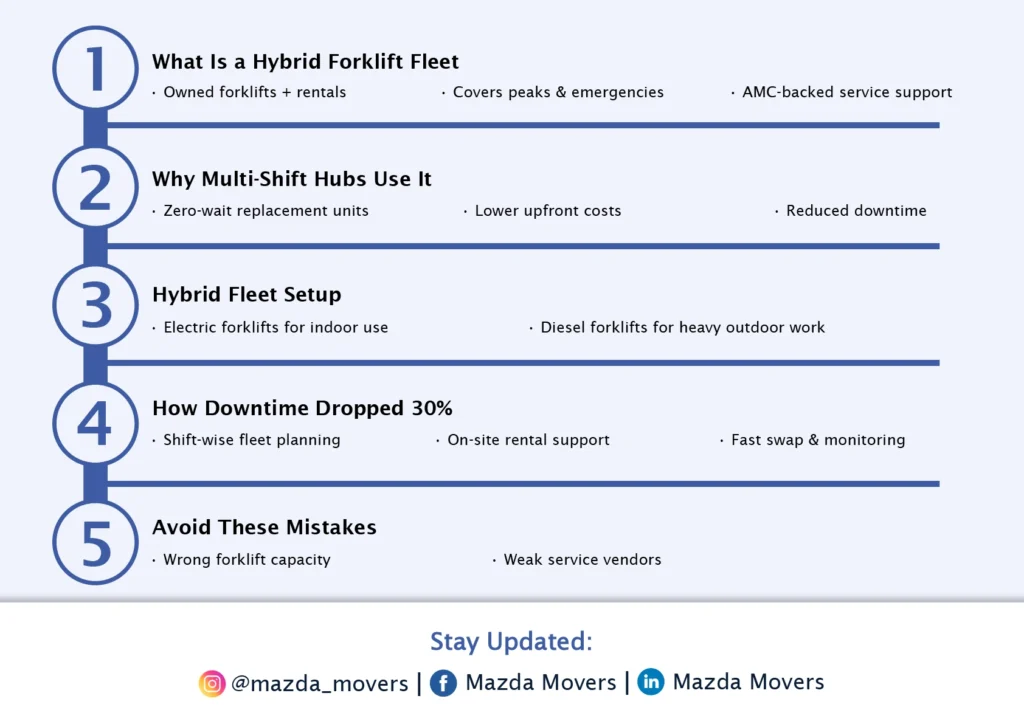
A hybrid forklift fleet refers to a combination of owned and rented forklift trucks that is designed strategically to provide uptime in the most cost-efficient manner.
Particularly instead of depending on outright purchase of equipment, businesses supplement their current equipment with short or long-term forklift on rent options to satisfy varying demand or to substitute under-maintained equipment.
Key elements include:
- Long-term lease plans to ensure good availability during peak shifts.
- Temporary rentals in case of project or seasonal needs.
- Combined package of services by signing yearly service contracts to avoid unavoidable breakdowns.
This combination means that no operation will be stopped because of the shortage of equipment or the slow operation of the forklift.
The Reason Multi-Shift Operations Prefer Hybrid Fleets
Continuous Productivity
- The facility relied on rental units to provide backup in situations that would otherwise result in expensive downtimes in the case of maintenance or change of shift.
Flexibility and Cost Control
- The company took the opportunity of renting out a forklift service to increase temporarily without spending huge sums of money on buying more forklifts.
Less Time Downtime Maintenance
- Rented equipment was also accompanied by planned maintenance, available-on-site support, and reduced the necessity of in-house repair.
Improved Asset Utilization
- Base operations were done with owned forklifts, and high-demand hours were handled with rental units—making the most of the time and avoiding wastage.
Improved Security and Regulatory Compliance
- The new rental models were of the latest emission and safety standards, which assisted in matching corporate sustainability objectives.
Basic Principles of the Hybrid Fleet Strategy
The hybrid structure of the logistics company involved the combination of several assets to provide the highest level of performance:
- Electric Forklifts: Used indoors for pallet movement and packaging lines.
- Diesel Forklifts: Used outside to stack containers and lift heavy items.
- Spare Fleet Forklift Truck Dealers: Provide instant replacement of forklift spare parts during servicing.
- Support Equipment: Built-in container handling services and special attachments for special types of cargo.
All units had been enrolled under an annual maintenance contract that provided proactive maintenance and replacement of specific parts in time.
The Practicality of the System
- Fleet Assessment: The company determined what was required during peak hours and what caused downtime in each shift.
- Hybrid Planning: Coordinated with a trusted container handler dealer to plan a rental scheme in line with workloads.
- Deployment: Forklifts were rented and set up on-site by technicians and checked over.
- Real-Time Monitoring: The health and use of equipment were digitally monitored for predictive service.
- Constant Availability: There was a 24-hour hotline to the forklift truck dealers, meaning that in case of a problem, the dealers were ready and willing to replace or repair the forklift in just a few hours.
This prevention system guaranteed there were no disruptions even during maintenance or emergency scenarios.
The Remarkable Sins and How to Shun Them
- Failure to Observe Load Compatibility: Make sure that the forklifts you rent are compatible with your existing fleet.
- Missing Maintenance Coordination: Add rented units to the same forklift service schedule as owned properties.
- Ineffective Vendor Selection: Select certified forklift truck dealers that can offer authentic parts and quick service.
- Underestimating Total Cost: Include fuel, training of operators and insurance in order to avoid unexpected costs.
A properly coordinated relationship with professional material handling solutions partners can avoid such traps.
Trends in the Industry and Future Prospects
With sustainability and uptime emerging as the main priorities, the use of hybrid fleets is on the rise among Indian shipping companies. The tendency toward electric and hybrid forklifts supported by digital fleet management tools makes logistics smarter.
Also, new container handling technologies have incorporated IoT-based performance monitoring, which guarantees maximum exploitation and minimal carbon emissions.
By 2025, most ports and warehouses will have fully optimized hybrid fleets comprising long-term rentals, predictive maintenance, and integrated systems.
Prepared to Decrease Operation Idleness?
By collaborating with a reputable forklift rental service provider, you will transform your fleet operation. Dealers can provide tailored options and effective assistance whether you require forklift on rent during peak seasons or expert material handling solutions in the case of container yards.
Contact a certified container handler dealer or forklift truck dealer to learn about special-rate rental packages, including full service coverage.
Conclusion
A hybrid fleet is more than a short-term solution—it is a future-proofed approach to high uptime and low cost. By combining appropriate levels of forklift rental service and proactive annual maintenance contracts with reliable forklift service, companies can maintain continuous operation through multi-shift schedules.
Hybrid fleet management is a new dimension of efficient, resilient, and sustainable material handling for ports, warehouses, and shipping companies in India.
Stay connected with Mazda Movers — follow us on LinkedIn, Instagram, and Facebook for updates, insights, and moving tips.