Safety is not a choice in logistics and warehousing, rather a necessity. Thousands of forklift-related incidents occur at the workplace every year, and most of them could have been prevented by the use of organized training and safety measures. Shipping companies in India are growing every day hence there is a demand to train and employ certified operators. The blog discusses how the proper training of a forklift operator with the help of quality material handling solutions, can establish a culture of safety and effectiveness, which actually lowers the number of incidents.
Forklift Operator Training: What Is It?
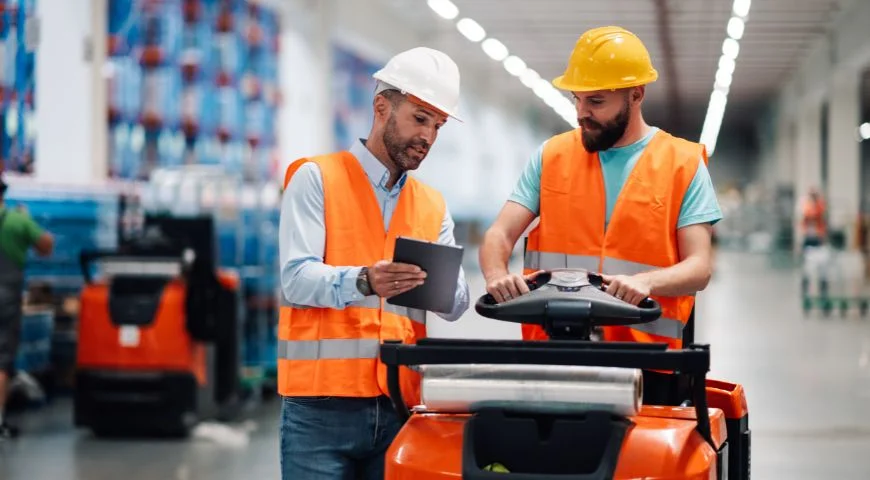
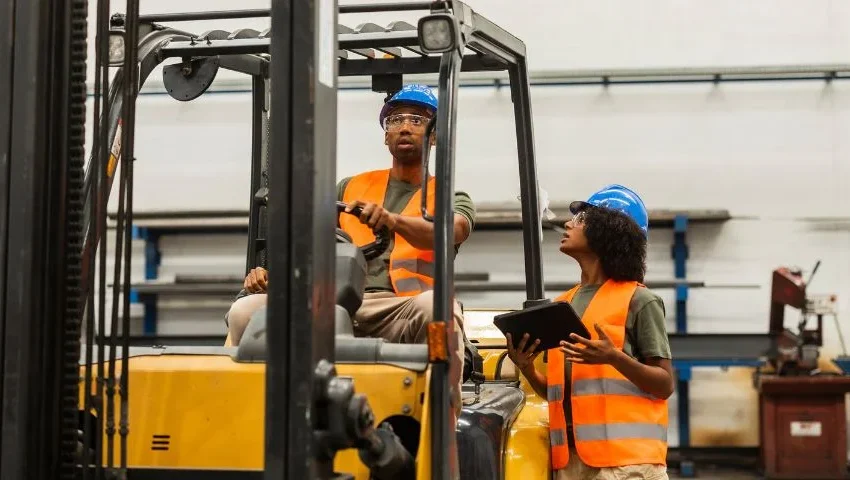
Forklift operator training is an organized course that is aimed at educating the operators on the safe and efficient handling of the forklift trucks, forklift cranes, and other material handling machines.
The effective training programs usually involve:
- Theoretical knowledge: Knowledge of the forklift mechanics, load capacity, and safety laws.
- Practical lessons: Practical driving in controlled conditions.
- Safety practices: Emergency and hazard control and pre-operative inspection.
The training makes sure that the operators are not only aware of how a forklift truck should maneuver but also react to stress in a situation to minimize the risk of accidents and damage of goods.
The Reason Why Forklift Operator Training Is Important
A professional operator may be the difference between a company running without any difficulties and accidents which cost it a lot. Here’s why it’s critical:
Minimizes Accidents and Downtime
- Training will guarantee that the operators are familiar with stability, balance, and load handling. This will avoid tip-overs and collisions which cause most accidents in the warehouses.
Guarantees Equipment Investment
- One incompetent forklift is capable of costing thousands. Frequent operator training, combined with proactive forklift maintenance, increases the equipment life and its productivity.
Improves Productivity
- Trained operators are effective in handling loads and they are safe in their operations—productivity is improved without affecting workflow.
Develops Safety-First Culture
- Once training is incorporated into company culture, the whole company, including floor workers and management, will be responsible in the area of safety and equipment.
Basic Building Blocks of Good Forklift Training
In order to achieve the effectiveness of safety training, companies need to pay attention to the following aspects:
- In-depth Equipment Understanding: The operators ought to be aware of the variations of models, including standard forklift trucks, forklift cranes, and forklift container handlers.
- Pre-Operation Checks: Inspecting tires, brakes, hydraulics, and forklift spare parts on a daily basis in order to avoid any breakdowns.
- Load Management: Correct stacking, weight, and center of gravity training.
- Hazard Awareness: Identification of hazards such as wet floors, obstructions, and unstable pallets.
- Emergency Procedures: Evacuation, spillage controls, and reporting during an accident.
All these elements contribute to a strong and safety-conscious workforce.
The Practical Use of Forklift Training
Building a competent and safe forklift group can be subdivided into steps:
- Evaluation: Determine the level of experience of the operator and the areas of risk.
- Training in the Classroom: Theory of cover, modules of workplace hazards, and equipment.
- Practical Demonstration: Operational demonstration with the use of forklift trucks or forklifts on hire.
- Certification: Determine competency of test operator and grant certification.
- Continued Assessment: Periodical safety service recertification and equipment handling inspections.
A lot of organizations currently contact forklift truck dealers or certified trainers to receive individual training and get access to the latest simulation technology.
Top Ten Forklift Safety Program Errors
The best facilities will not work without proper training, which is not always consistent and complete. The most common pitfalls that companies commit are:
- Failure to attend refresher courses, particularly following near-miss incidences.
- Most recent forklift service and inspection are not performed.
- Sensitizing untrained operators to work on forklifts.
- Disregard of forklift spare parts replacement timetables, which causes mechanical breakdowns.
To avoid such problems, managers ought to incorporate safety audits and planned maintenance with reputed container handler dealers and forklift suppliers.
The Forklift Safety Training Trends and Innovations
The modern material handling solutions are changing the way safety training is done:
- Virtual Reality (VR) Training: Operators can now have the opportunity to simulate warehouse conditions to use it in a safer manner.
- Telematics and Tracking: Intelligent forklifts are able to track operator behavior in real time and detect unsafe behavior.
- AI-Based Risk Alerts: This is predictive software that examines motion patterns and blocks maneuvers that can be dangerous.
- Rental Programs with Training Add-Ons: Numerous forklift rental service contracts include hidden training courses and programs to guarantee safe operation of forklifts on rent.
These tendencies are an indicator of a new period of preventive safety and responsibility in the world of logistics.
Move a Step Further to Safer Operations
It is the best way to minimize risks, no matter whether you run a warehouse, factory, or logistics company. It is better to invest in proper training and maintenance. Consider using approved forklift truck dealers or certified container handler dealers to enter the training, rentals, and convenient material handling options that would be long-term safe and efficient.
Conclusion
It begins with education rather than enforcement in achieving a safety culture. Through organized training of the forklift operators, maintenance of the forklifts on a regular basis, and active maintenance of the equipment, firms would be able to reduce incidents significantly and enhance productivity. With the development of the logistics industry in India, safety should not be viewed as a mere responsibility of the industry but rather a lucrative issue. The highly trained operator today develops a safer and stronger future for all businesses tomorrow.
Stay connected with Mazda Movers — follow us on Instagram, LinkedIn, and Facebook for updates, insights, and moving tips.