Airports are a very high operation with time constraints because any slight delay may create ripples on several flights. The sudden constraint on the airport ground handling equipment occurs during peak times as the arrivals and departures of aircrafts and the movement of cargo collide. Weakness in communication among tugs, loaders and forklifts may increase turnarounds and add to expenses.
This blog elaborates on the appearance of an efficient GSE fleet management, its importance in the current context, and the significance of a coherent application of Ground Handling Equipment in improving its operations and the ability to provide reliable cargo handling services.
Airport GSE Fleet Management Explained
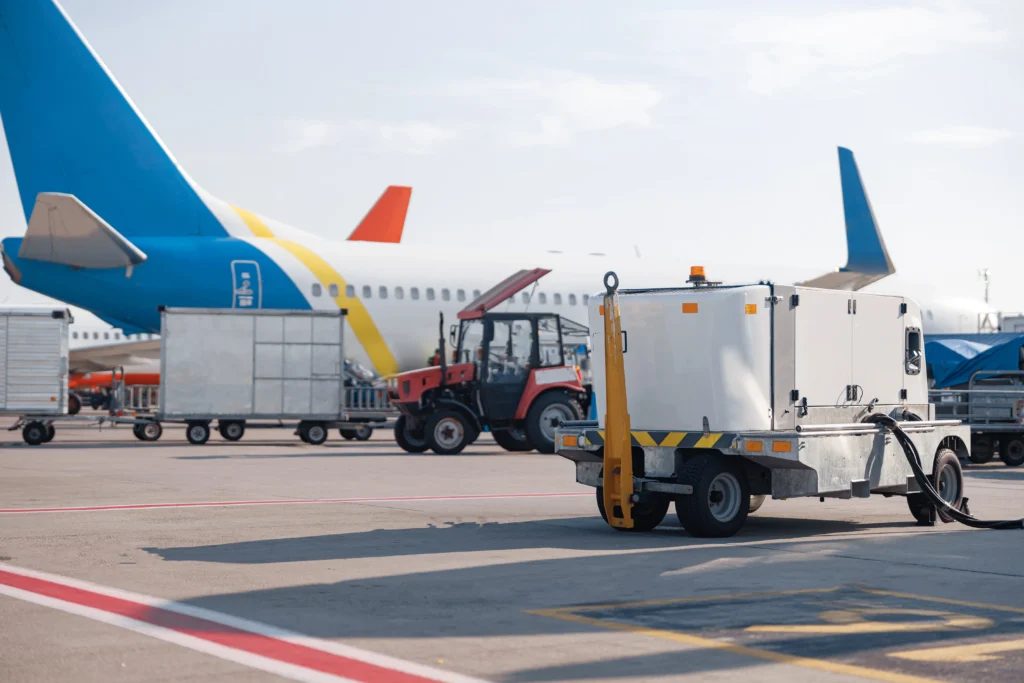
Airport GSE fleet management denotes the planning, deployment and monitoring of Ground Handling Equipment deployed in the airside and the landside.
This includes:
- Pushback aircraft tugs and towing tugs
- Baggage and cargo loading machines
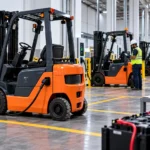
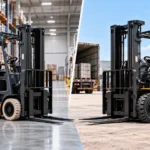
- Forklift devices used in unit load and freight movements
Successful management means that there is the right equipment which can be tasked at the right time to assist aircrafts and cargo operations.
The Importance of Coordinated GSE Management
Quickened Airplane Turnarounds
Effectively coordinated Ground Handling Equipment in an airport minimizes the wastage of time and ensures that aircrafts remain on time.
Lower Operational Costs
Maximum use of equipment reduces the use of fuel, overtime, and emergency rentals.
Improved Safety Standards
Good coordination would lead to minimization of the congestion and chances of airside incidents.
Reliable Cargo Movement
Proper handling of cargos requires availability of loaders and forklifts in time.
Better Asset Utilization
Fleet visibility is given to guarantee efficient use of equipment rather than its lying around.
Principles That Make Up an Effective GSE Fleet
Fleet Visibility
Real time monitoring of Ground Handling Equipment position and status.
Task-Based Allocation
Allocation of equipment depending on the type of aircraft, turn around time, and volume of cargo.
Maintenance Integration
Connecting the fleet programs and preventive maintenance to prevent breakages in the peak times.
Operator Coordination
Effective messages between ramp employees, cargo, and supervisors.
Every element will directly lead to efficiency in operations and cost management.
The Practical Functionality of GSE Fleet Coordination
- Forecast Peak Demand
So as to analyze the flight schedules, cargo volumes to project equipment requirements. - Managerial Assignment by Function
Assign tugs, loaders, and forklifts to certain Aircraft and cargo assignments. - Monitor Equipment Usage
Real-time visibility of ground handling equipments and availability of aircrafts at the airport. - Adjust in Real Time
Redistribute equipment within a short time with any delays or disruption. - Review Performance Data
Use information on the improvement of future fleet planning.
This highly organized system reduces time wastages and enhances predictability in business.
Pitfalls and Common Errors
The most common error is the control over each type of Ground Handling Equipment separately instead of combined into a single coordinated fleet. The underestimation of peak-hour demand and the subsequent bottlenecks and rush operations is another problem. Other avoidable downtimes can also be due to the absence of integration between the operations and maintenance teams.
The challenges may be minimized by centralized planning and improved sharing of data.
Trends in Airport GSE in Future
Digital fleet management systems, telematics and predictive maintenance tools are gaining popularity at airports. There is also an increase in electric and hybrid GSE fleets which are considered to have an impact on reducing emissions and enhancing reliability.
With the increase in air traffic and freight, the airport ground handling equipment and scalable cargo handling services will be incorporated in efforts to coordinate services in order to sustain the quality of services rendered.
Taking the Next Step
The ground handlers and airport operators must start with an audit of the fleet utilization. The first step to optimization would be to know how equipment will be utilized during peak periods.
Conclusion
The management of airport GSE fleet is important in the ease of carrying out peak operations. The synchronization of tugs, loaders, and forklifts into a single coordinated system can lower delays and the costs of the airports and boost safety.
Both the aircraft turnaround and cargo handling services are augmented by Reliable Ground Handling Equipment, which is backed by structured planning and real time coordination. The complexity of smart fleet management is translated into operational advantage in a high-pressure airport setting.
FAQs
What is in the airport ground handling equipment?
It consists of tugs, belt loaders, container loaders, forklifts among other support equipments that are involved in the servicing of aircrafts.
So why should there be fleet coordination in a peak hour?
Peak hours are overlapping operations. Coordination will help in eliminating congestion of equipment due to overbooking or idleness.
What benefits does GSE fleet management bring in reduction of delays?
It reduces waiting time and idle aircraft time through procurement of the appropriate equipment in the right place and time.
Is GSE fleet management beneficial to small airports?
Yes. Even smaller airports will benefit with improved efficiency and saving of costs, owing to improved equipment planning.
What is the dependence of GSE on cargo handling services?
Co-ordination is necessary since a timely loading and unloading of cargo are dependent on co-ordinated loads and forklifts.