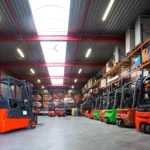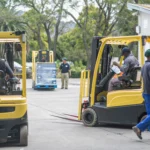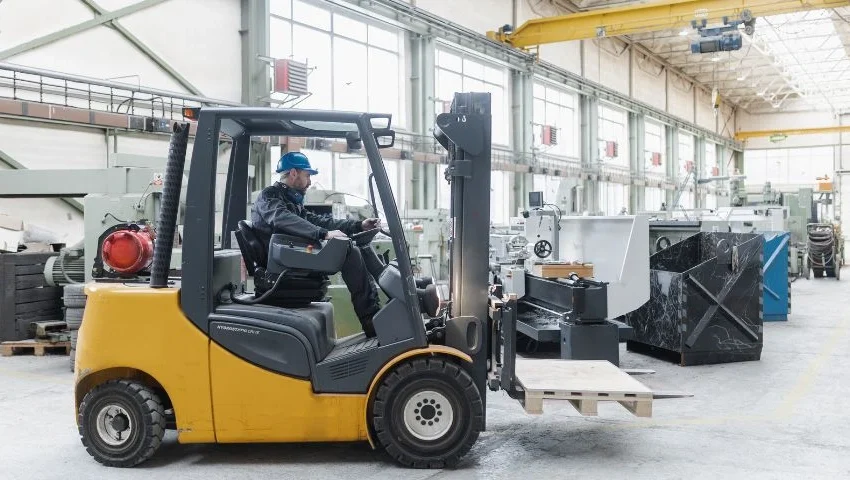
All warehouses, ports, or logistics centers will have one essential question that is, which powertrain provides the optimal strength, efficiency, and cost? The material handling industry in India is increasingly becoming more dynamic and therefore, in selecting a forklift truck, businesses should not simply consider horsepower as the key factor. It is not merely a technical decision of LPG, diesel, or electric as this will determine your performance over time in terms of operations, sustainability, and profitability. This blog will make you know how all the powertrains operate, their benefits, and problems and which is the one that can best fit your operating cycle.
Learning about the Three Powertrains
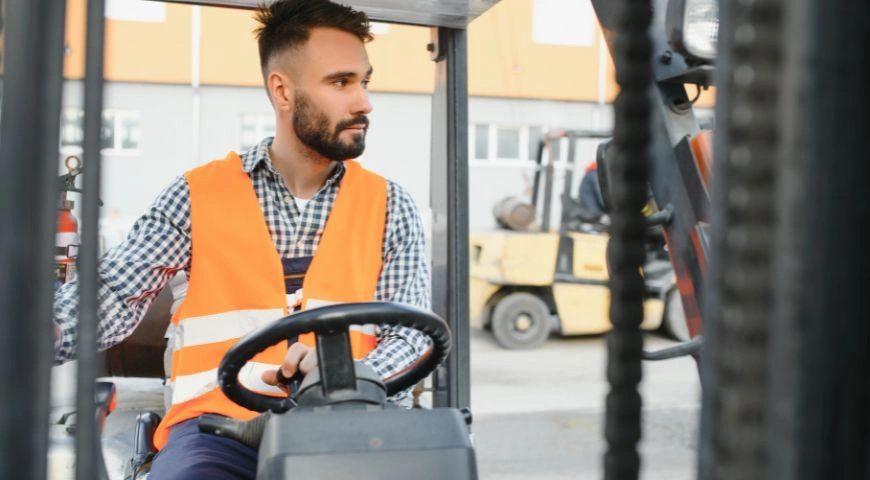
Currently, forklift trucks are available in three major types, namely, diesel, LPG (liquefied petroleum gas), and electronic. Diesel forklifts are propelled by strong internal combustion engines that are resisting to outdoor conditions, which provide the high-torque and lifting force. LPG forklifts operate on combustion engines, only in this case, gas cylinders are used, which results in lower emissions and the smoother engine performance. Electric forklifts use rechargeable batteries to give a zero-emission option that is good in the indoor environment like in warehouses and factory. The advantages of each option are unique and fit within particular material handling solutions and settings.
What Is The Importance of the Selection of the Powertrain
The choice of the powertrain defines the efficiency of your machine, its cost of operation, and its productivity. Diesel forklifts can perform heavy duty tasks like at ports, construction sites and shipping companies in India where toughness and crude power is mandatory. LPG forklifts are suitable both in the outdoor and indoor settings and offer reduced emissions as well as a rapid refueling rate. Electric forklifts on the other hand are preferred in industries which are sustainability oriented, where safety is the concern, and where noise during operation is minimal. Making the wrong choice may add to the time wasted, the cost of fuel, and even the difficulty of the maintenance work itself, so it is critical to match the forklift truck to your needs in the operation.
Essential Performance and Major Characteristics
All types of forklifts have their own peculiarities that affect the cost, efficiency, and maintenance. Forklifts that use diesel have long working periods and increased load weights, which cannot be replaced by small-scale ground handling equipment and logistics. They are however more costly in terms of emissions and maintenance. The LPG forklifts combine with the middle ground of average fuel costs and less polluting operation, and so they can be used in mixed-use areas. Forklifts that are powered by electricity are quiet and they do not need a lot of servicing as they do not have many moving parts. Even though they require battery wellness and chargers, their long-term economic effectiveness is hard to dispute. Forklift rental service providers and dealers of forklift trucks currently have all the three variants and the freedom to provide a business with the opportunity to test various models and decide on the purchase or a long-term lease.
Workflow Impact and Operational Dynamics
Every powertrain has a different impact on workflow. Forklifts that are powered by diesel and LPG will have to have fuel management on site and diesel will need to be stored and LPG will need their cylinders handled. Forklifts powered by electricity do away with the refueling process, but they require a closely controlled charging cycle. The warehouses usually establish special charging areas or implement battery replacement to reduce downtime. Whereas diesel powered forklifts offer unmatched uptime in the outdoor setting, electric versions offer better control in the logistics of a warehouse and temperature sensitive tasks such as the airport ground handling equipment. It is important to know how each of them fits with your daily processes to achieve maximum availability and reliability.
General Problems and Service and Upkeep
Although diesel forklifts are strong, they need regular maintenance to control soot formation, change oil and control emissions. LPG forklifts require gas cyllers to be carefully handled and leaks or pressure problems to be checked on a regular basis. Electric forklifts also experience battery life, charging discipline and cost of initial set up problems. All these can be reduced by regular service on the forklifts, supply of original spare parts of the forklifts, and the selection of good dealers, whose services are 24 hour services. Maintenance and professional operators are the essential factors in all efforts to guarantee that all powertrains provide long-term effectiveness.
What Are The New Trends and Applications
The trend in the world toward sustainability is transforming the material handling industry in India. They are also incorporating electric forklifts into their ground handling equipment fleet due to their quietness and zero emissions. Other shipping firms and logistics centers are also considering adopting a hybrid and solar-assisted charging system to reduce fuel expenses. The LPG forklift is still used in the manufacturing areas and FMCG warehouses due to its power balance and cleanliness. Since the government policy will encourage the green industrial processes, the transition to electric and hybrid types of forklifts will only continue to increase, providing businesses with a long-term payoff.
How To Get Expert Help
Whether you are about to purchase or you just want to research on a forklift and rent it, our professionals can assist you in finding the most appropriate one to fit in your facility. Whether it is the selection of the proper model or upkeep of the forklift rentals, repairs, and spares, we achieve quality performance in all the working cycles. Call our customer support today and maximize your fleet and power your operations to perfection.
Conclusion
The argument between LPG, diesel and electric forklifts is not on which one is the best but it is on the suitable one in your operation. Diesel has brute power, LPG has flexibility, efficiency, and savings and electric have sustainability. When you have the right forklift service partner, actual spare parts and knowledge-based decision making, your business will be highly productive and have a lower total cost of ownership. In the dynamic environment of the material handling solutions in India, the appropriate powertrain decision is what determines not only the performance, but the progress, as well.
Stay connected with Mazada Movers — follow us on LinkedIn, Instagram, Facebook for updates, insights, and moving tips
FAQs
- What is the most suitable type of forklift to use indoors?
Electric forklifts suit well in an indoor setting because they do not leave any emission in the air and they do not make noise. - Are forklifts that utilize LPG economical?
Yes, LPG forklifts have low emissions and can refuel fast hence good efficiency in either the indoor or outdoor task. - What is the frequency of forklifts servicing?
Forklifts are supposed to receive a preventive maintenance after every 250-300 working hours according to the recommendations of the respective manufacturers. - Are diesel forklifts that can be substituted with electric ones?
Not yet everywhere, but in restricted areas, such as in the warehouse and under control, electric forklifts are a very viable option.