With the world industries becoming net-zero oriented, the demand to reduce carbon emissions is no longer confined to the transport and manufacturing industry, but it is now also applied to material handling solutions. Forklift trucks and ground handling equipment are energy-intensive equipment that is essential to warehouses, ports and logistics hubs. The transformation of these operations to the low-carbon mode is not only a matter of environmental responsibility, but also a matter of long-term efficiency, compliance, and cost-saving. This blog presents a sustainability roadmap of decarbonizing material handling by the year 2025 in a step-by-step manner.
Learning about the Decarbonization of Material Handling
Decarbonization of material handling can be defined as the reduction of greenhouse gas emissions in the process of warehouse, port, and cargo. These can be done by providing cleaner sources of power, efficient fleet management, and sustainable equipment management.
It has three major areas of focus:
- Electrification: Replacing diesel or LPG forklifts with electric or hybrid.
- Optimization: Utilization of telematics and intelligent systems to enhance energy efficiency.
- Lifecycle Management: The use of such lifecycle management practices as preventive forklift service and annual maintenance contracts to ensure longer equipment life and reduce waste.
Combined, these measures will achieve a quantifiable decrease in operational expenses and their environmental impact.
The Reason Makes Sustainability Important to Material Handling in 2025
Global Standards and Regulatory Compliance
- India is also mandated by governments and trade bodies to use cleaner technologies in their logistics operations and shipping companies in India. Meeting the standards of emissions will not only prevent fines, but it will also build brand loyalty.
Efficiency and Cost Reduction in Operations
- Forklift trucks and electric ground handling equipment that use less power and have fewer moving parts are more energy efficient and will have less downtime and lower costs of maintenance.
Enhanced Brand Reputation
- Businesses that invest in eco-friendly material handling solutions act as sustainable partners within the global supply chain and attract those clients who are environmentally conscious of their logistics.
Employee Health and Safety
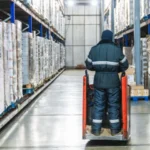
- Electric forklifts produce no exhaust fumes and less noise in the workplace, which enhances the working conditions and morale.
Basic Building Blocks of a Decarbonization Strategy
- Conversion of Fleets to Electrification:
The first step and probably the most effective one is to transition to battery-powered or hybrid forklift trucks. Electric fleets emit no tailpipe emissions and they are optimal indoors. - Energy-Efficient Infrastructure:
There is also the integration of renewable energy sources such as solar-powered charging stations, which ensures that the dependence on fossil fuels is minimized. - Intelligent Fleet Tracking Systems:
With IoT-based sensors and telematics, it is possible to track the energy consumption, idle time, and maintenance schedules and enable data-driven decision-making. - Green Procurement and Servicing:
A joint venture with qualified forklift truck dealers and container handling services with eco-compliant components, recycling schemes and eco-friendly services lowers the lifecycle emissions. - Training and Building Culture of the Employee:
Sustainability can be achieved by making employees trained to use equipment efficiently, comply with annual maintenance contracts and report inefficiencies in time.
The Implementation of a Decarbonization Roadmap
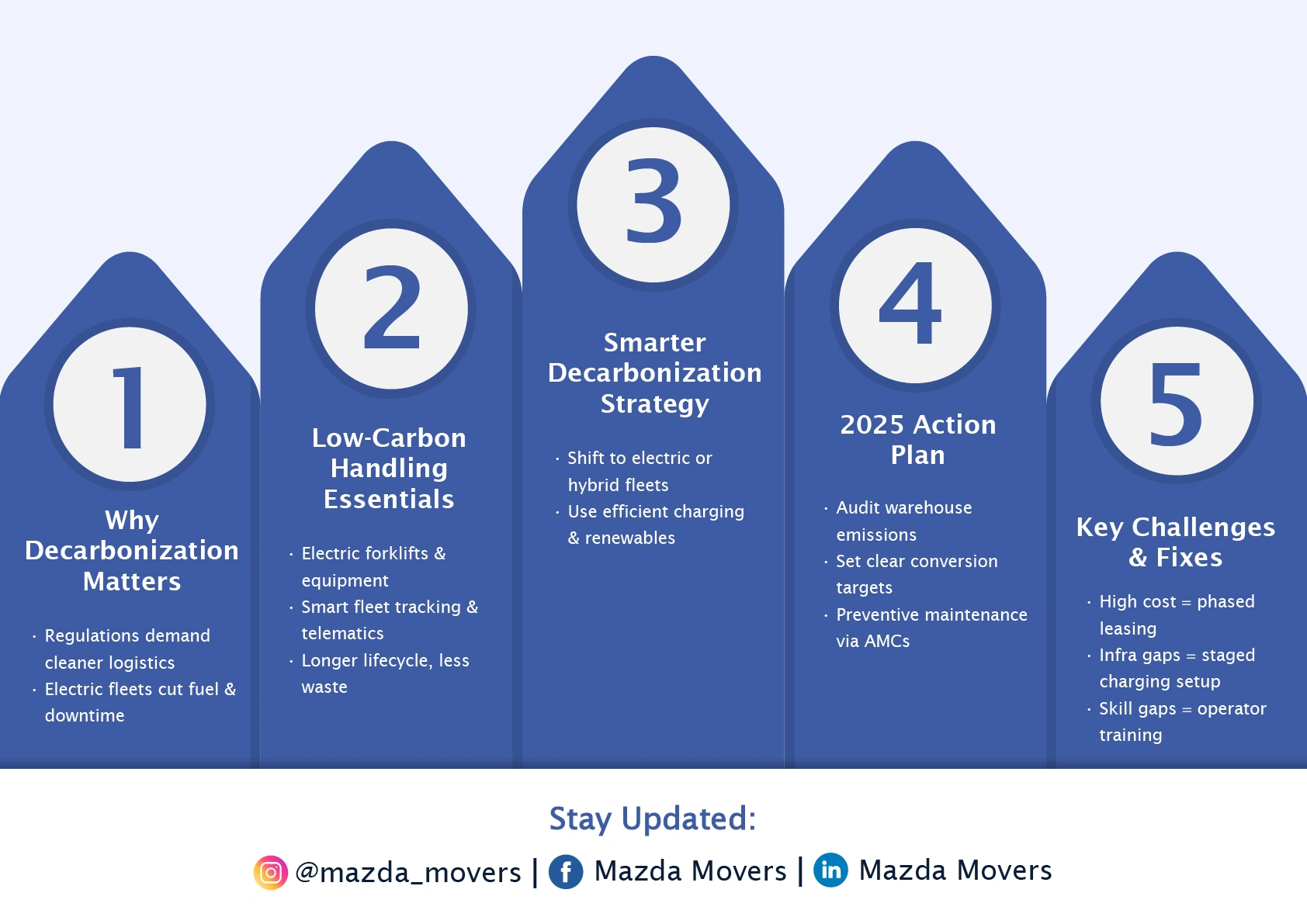
- Assess Your Base: Carry out an audit of your current carbon footprint of your forklift rental service, warehouse and logistics operations.
- Establish Achievable Goals: Establish 2025 goals – e.g. 30% fleet electrification or 20% fuel economy.
- Use Cleaner Technologies: Replacement of forklifts or hybrid container handlers with electric ones.
- Use Smart Scheduling: Smart scheduling can help prevent wastage through control of idle time and optimize load distribution.
- Make Sure Preventive Maintenance: Find professionals to service the forklift at the appropriate time to reduce the emission of ineffective machines.
- Monitor and Report: Measure critical operating factors using digital instruments and sustainability dashboards.
Potential Problems and Effective Remedies
- High Initial Costs: Finance capital investment using leasing or on rent forklift services using sustainable dealers.
- Infrastructure Gaps: Prepare step-by-step implementation of infrastructure converting charging stations and a common power grid.
- Skill Gaps: Workforce training on certified material handling solutions providers.
- Maintenance Issues: When it comes to maintaining the equipment, purchase an annual maintenance contract to make sure that everything is in perfect condition and consumes minimal energy.
Future Trends of Sustainable Handling of Material
More technological and renewable energy integration will occur in the future of decarbonization:
- Hydrogen Fuel Cell Forklifts: Forklifts will have more time to operate because of longer refueling periods and the capability to work hard.
- Self-driving and Artificial Intelligence Equipment: Reduced idle operations and maximized energy consumption.
- Circular Economy Practices: Forklift spare parts recycles, as well as components that can be re-used to achieve reduced waste.
- Environmentally-friendly Lubricants and Components: A smaller impact on the environment without affecting performance.
These innovations are heralding the net-zero logistics of shipping companies in India and warehouse operators.
Go a Step Further Towards a Greener Fleet
Begin by engaging reputable dealers of forklift trucks that focus on energy-efficient ones and green container handling services. You require a forklift rental service, ground handling equipment, or even the full material handling solutions, but switching nowadays will make sure that you remain compliant, efficient and future-oriented in your operations.
Conclusion
The process of decarbonizing material handling is no longer a choice as it is now a crucial component of operational excellence. Electrifying fleets, announcing annual maintenance contracts, and each small step will help to create a cleaner and more profitable future. Through association with sustainable forklift truck dealers and adoption of smart material handling solutions, industries will be able to record actual carbon savings without compromising speed, safety and reliability in 2025 and beyond.
Stay connected with Mazda Movers — follow us on Instagram, LinkedIn, and Facebook for updates, insights, and moving tips.